


 For all latest news, follow the Daily Sun's Google News channel.


The parliamentary election in Bangladesh in February 2026 is mentioned as though it is a panacea, the definitive restoration of electoral politics that will rectify the years of shocks. But when you go through the streets of Dhaka or you overhear a conversation in one of the tea stalls of Rangpur, you will hear something more delicate. People are hopeful, all right, but it is a discreet sort of hope. They have been witnessing elections in the past with more promises and fewer deliveries. The Election Commission gets into gear to finalise voter lists, conduct hearings on the constituencies and mobilise the tremendous numbers of police, army and paramilitary. The government has declared charters and declarations of state reforms. On paper, this looks like development, but elections are never won on paper; they are lived through the trust or mistrust of citizens. They are experienced events, related to the mistrust and weariness of average citizens. And the question that must be asked is not whether February will result in a parliament, but whether it will restore people’s faith in politics as such.
The suspension of the Awami League has naturally polarised opinion. Some may say democracy no longer feels whole without them; while, others may argue this was the only way to break a cycle of impunity. But the larger question is whether this act of suspension can be about more than punishment. Can it signal the start of a fairer system, in which rules are applied even-handedly and not based on who one favours? In that case, February would be a turning month. Otherwise, it can be etched in the memory as part of an endless sequence of manoeuvres.
But we must be frank, eliminating a strong party is not synonymous with constructing democracy. A vacuum is not renewal in itself. It is mere vacuum space. Then in politics, space never long remains vacant. The old characters reemerge, partnerships are redefined, and old habits insidiously recur. Already, citizens are seeing some of the same players coming around, and the question is, is this reform, or is it just rearrangement? Especially the young are unsettled. They do not lack speeches, but only a few doors are open to allow them to have a role. Such a transition cannot be serious unless it authenticates new voices in the political landscape, such as students, women, professionals and rural leaders who have remained on the fringe. Otherwise, we will have the stages of the same play, but the play is performed by other actors.
Reforms are on the table. Imagine a parliament where rural farmers actually see their struggles reflected, or where young people in small towns feel their voices carry weight. People may not sit around debating constitutional clauses, but they do care deeply about whether the local clinic has the right medicine, whether the paddy fields survive the next flood, and whether their children will find decent work. If reform is tied to these everyday concerns, then trust begins to grow in places where it has long been missing. Elections, of course, bring authority for a season. But when that authority is paired with visible and concrete change, then it does not just hold but it lasts.
Trust is the biggest challenge. Years of questionable elections and shaky institutions have worn people down. Folks are not cynical because they enjoy complaining; they are cynical because they have been let down too many times. Grand promises mean little when experience tells a different story. Rebuilding that kind of broken confidence takes more than speeches; it needs something you can see and touch. Imagine students and community elders sitting with policymakers and arguing their case in public, without fear. That is when politics begins to feel real again. When people see even a small piece of their frustration turned into action, they start to believe. Without that, an election becomes just another ceremony, something we all go through, but few feels in their hearts.
Frustration needs to be seen differently this time. For years, anger has been treated like a threat, as if raising your voice meant you were against the nation itself. But that is not true. Dissatisfaction can be the start of real change. It is often the only way people can signal that something is broken. When leaders listen, frustration can push reforms forward; when they do not, it sinks into despair or bursts out violently in the streets. That is why the February election must be more than just counting ballots. People want to feel that their complaints and their disappointments actually carry weight. If a system treats criticism like an enemy, it will always tilt towards control. If it learns to hear that criticism, it can keep renewing itself. But there is another danger we know too well: the heavy burden of one chair. For decades, too much has rested on one person’s shoulders, whether it was Sheikh Mujibur Rahman, Major Ziaur Rahman, Khaleda Zia, Hussain Muhammad Ershad, Sheikh Hasina, or now Muhammad Yunus. Each time, people believed the leader could fix everything. Each time, the institutions around them crumbled the moment that the leader faltered. We cannot keep repeating this cycle. What we need are courts that cannot be bent, councils that do not wait on Dhaka to act, and newspapers that do not hesitate before printing uncomfortable truths. If power keeps piling up in one chair, the weight becomes unbearable, and whoever sits there, no matter how honest, will eventually collapse under it.
And democracy is not only about what leaders do at the top; it lives in the daily actions of ordinary people. Security forces will guard the polls, yes, but real democracy is protected in smaller, quieter acts. A villager standing up in a council meeting, a teacher reminding her class that rights are theirs to claim, a journalist writing a story that unsettles the powerful—these moments do not make the headlines, but they are the lifeblood of freedom. Without them, even the fairest election feels hollow. With them, even a less perfect election breathes life into democracy. That is why February is not just another event on the calendar; it is a chance to prove that Bangladesh can finally move beyond the cycle of strong leaders and fragile institutions, and begin sharing the work and the weight of democracy across its people.
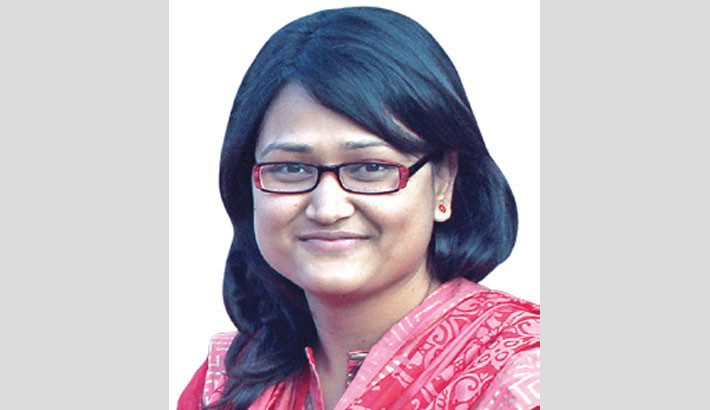
The writer is an Assistant Professor in the Department of Philosophy at IUBAT and pursuing a Master’s in Human Rights and Multiculturalism at University of South Eastern Norway