


 For all latest news, follow the Daily Sun's Google News channel.


Savar has been declared a ‘degraded airshed.’ What is it?
A degraded airshed refers to a geographic area (an airshed) where the air quality has deteriorated due to high levels of pollution
Daily Sun Report, Dhaka
Published: 19 Aug 2025, 01:00 PM
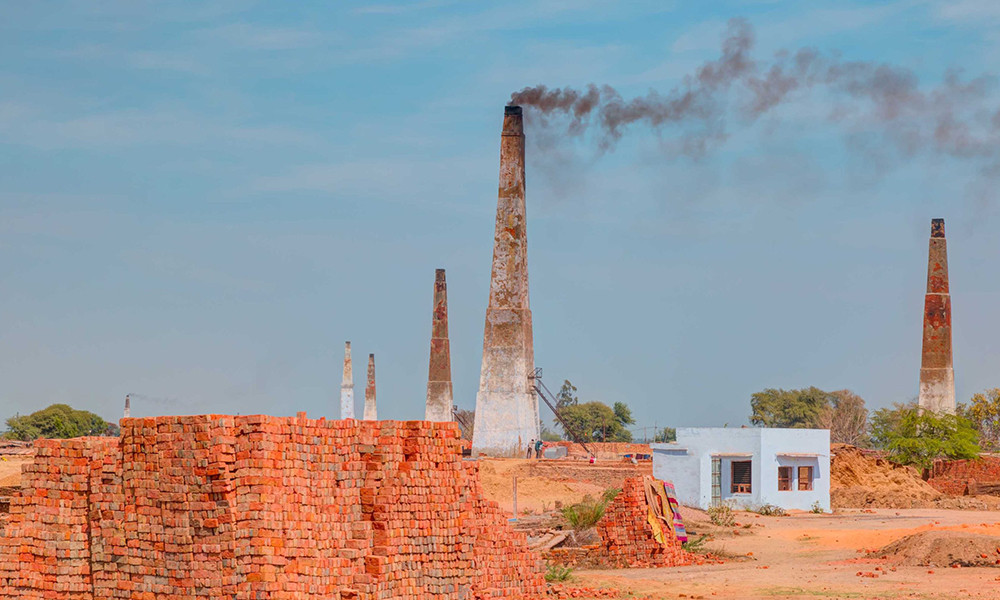
Photo: Collected
The Environment Ministry on Sunday declared Savar as a “degraded airshed” for containing high pollutants and posing serious risks to the capital, in a first such move in the country. Officials said that from now strict actions will be taken to reduce air pollution in the upazila.
A degraded airshed refers to a geographic area (an airshed) where the air quality has deteriorated due to high levels of pollution, often beyond acceptable or safe standards.
An airshed is like a watershed, but for air—it’s a region where the movement of air pollutants is relatively contained because of local geography, weather, and wind patterns.
When it is called degraded, it usually means:
• The concentration of pollutants (like PM₂.₅, PM₁₀, NOx, SO₂, CO, ozone, etc.) regularly exceeds national or international air quality standards.
• The area is suffering from persistent smog, haze, or other harmful atmospheric conditions.
• Human health, ecosystems, and visibility are negatively affected.
For example, large urban or industrial zones (like Delhi, or Los Angeles) are often referred to as degraded airsheds because the air is continuously polluted due to traffic, industry, and sometimes topographical factors that trap pollutants.
What the ministry said...
The issued circular states that analysis of data from the Department of Environment’s continuous air monitoring centers shows that Savar’s annual air quality level has exceeded the national standard by nearly three times. During the dry season, for about five months, winds flow from the northwest and northeast toward the southeast and southwest, carrying Savar’s pollution into Dhaka city, which significantly worsens the capital’s air pollution.
Why Savar?
A major source of air pollution in Bangladesh is brick kilns. A 2023 study by Stamford University’s CAPS found that brick kilns are responsible for 28% of air pollution. According to the Department of Environment, there are 7,086 kilns in the country, of which 4,505 lack clearance. In the last four years, about 1,500 illegal kilns have been added, and though nearly 1,000 were shut down, 75% resumed operations. Most brick kilns reportedly operate in violation of rules, using low-quality coal. Around Dhaka alone, kilns emit some 53,000 tons of PM10 and 17,000 tons of PM2.5 annually. In Savar, only 2 out of 107 kilns use environment-friendly methods.
A global report by the University of Chicago states that polluted air reduces average life expectancy in Bangladesh by six years and eight months.
Corrective steps
Under the Air Pollution (Control) Rules 2022, once an area is declared a degraded airshed, an action plan must be taken to improve air quality, with polluting industries required to adopt corrective measures. As per Sunday’s circular, several pollution-causing activities have been banned in Savar until further notice, including brick burning in all kilns except tunnel and hybrid Hoffmann kilns, open burning of solid waste, approval of new polluting industries, and other actions specified in the action plan.