


 For all latest news, follow the Daily Sun's Google News channel.


10,000 youth activists ask govt to swiftly amend tobacco control act
Daily Sun Report, Dhaka
Published: 17 Aug 2025, 08:14 PM
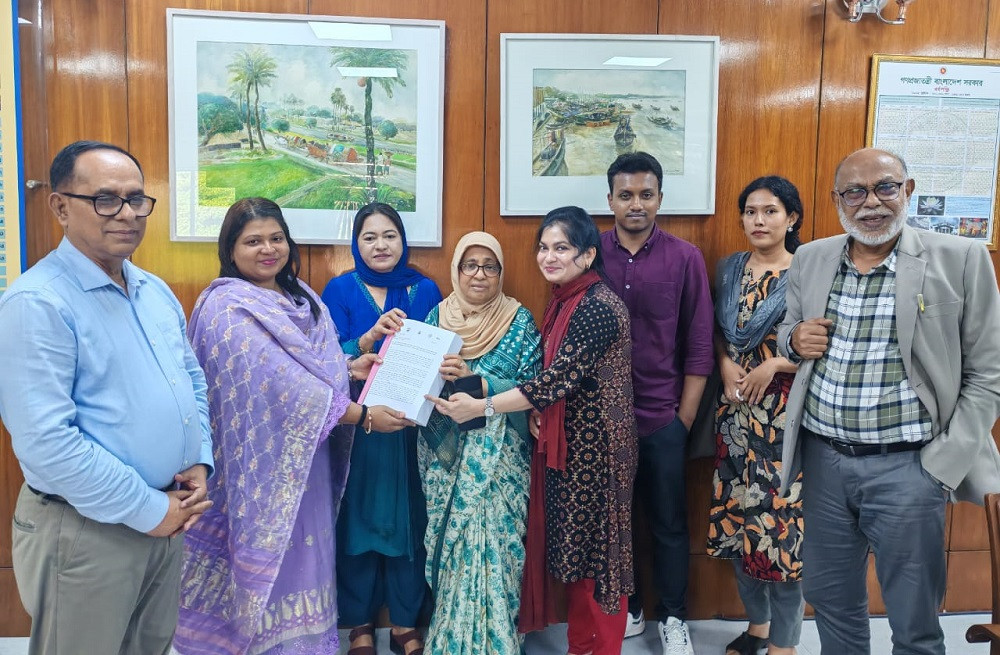
Photo: Collected
Nearly 10,000 anti-tobacco youth activists have submitted a petition to the chief adviser and four other advisers, demanding immediate amendments to the tobacco control law.
They also called for the cancellation of the government’s upcoming meeting with tobacco company representatives in violation of the international treaty “WHO FCTC Article 5.3.”
Copies of the petition were also submitted to the Finance Adviser, Health Adviser, Information and Broadcasting Adviser, and Youth and Sports Adviser.
The petition was formally handed over on Sunday (August 17) by Nari Maitree, Development Organization of Rural Poor- DORP, Dhaka Ahsania Mission, and National Heart Foundation.
The petition was endorsed by around 10,000 students from various public and private universities and colleges in Dhaka. Through this initiative, they expressed their demand for a tobacco-free Bangladesh and urged the government to immediately revoke its recent decision to hold discussions with tobacco companies, which contravenes international commitments.
To align the existing Tobacco Control Act of 2005 (amended in 2013) with the WHO Framework Convention on Tobacco Control (FCTC), the Health Services Division has proposed several amendments.
Key proposals include: banning smoking zones in public places, completely prohibiting tobacco product displays and advertisements, protecting youth from the harmful impacts of e-cigarettes, banning the sale of single-stick or loose cigarettes, outlawing tobacco companies’ corporate social responsibility (CSR) activities, and expanding pictorial health warnings on packaging to 90%.
The draft was developed through multiple consultations with health experts, civil society, and other stakeholders, and was later published online for public opinion before finalization. In line with this, the government has already banned the import of e-cigarettes and announced a halt to domestic production.
If approved, the proposed amendments will protect non-smokers from the harms of secondhand smoke, safeguard youth from tobacco’s toxic grip, and strengthen Bangladesh’s position in global tobacco control.
Mohammad Zobair Hasan, deputy executive director of DORP, remarked: “According to Article 18(1) of the Constitution, the state has the responsibility to safeguard citizens’ health. But recently, the passage of the amendments seems to have turned into a bargaining process between the government and tobacco companies.”
He added: “Today’s youth are vocal against all forms of irregularities. In that spirit, authorities must take this demand from anti-tobacco youth seriously.”
Youth representative Naimur Rahman Emon said, “According to the WHO Tobacco Atlas, nearly 161,000 people die each year in Bangladesh due to tobacco-related diseases — which means 442 deaths every single day. GATS 2017 also shows that 38.4 million people are exposed to secondhand smoke in public transport, restaurants, and public places despite being non-smokers. This alarming reality makes amending the law an urgent necessity.”
Shahin Akhter Dolly, executive director of Nari Maitree, said, “Bangladesh was the first country to sign the WHO FCTC in 2004 and consented to its Article 5.3 implementation guidelines in 2008, which clearly require policymaking to remain free from tobacco industry interference. Yet we see that the government’s decision to meet with tobacco companies violates this treaty. This decision must be revoked immediately.”
She also said, “We have submitted the petition signed by 10,000 students to the Finance Adviser and four other advisers. We hope the government will take this strong message from the younger generation seriously and pass the proposed amendment without delay.”
Passing the amendments will significantly reduce tobacco use in Bangladesh, improve public health outcomes, and help build a healthier, tobacco-free nation.