


 For all latest news, follow the Daily Sun's Google News channel.


Chief Justice marks a year in charge
New era ushers in judicial reform, technology, transparency, and justice
Daily Sun Report, Dhaka
Published: 12 Aug 2025, 12:10 AM
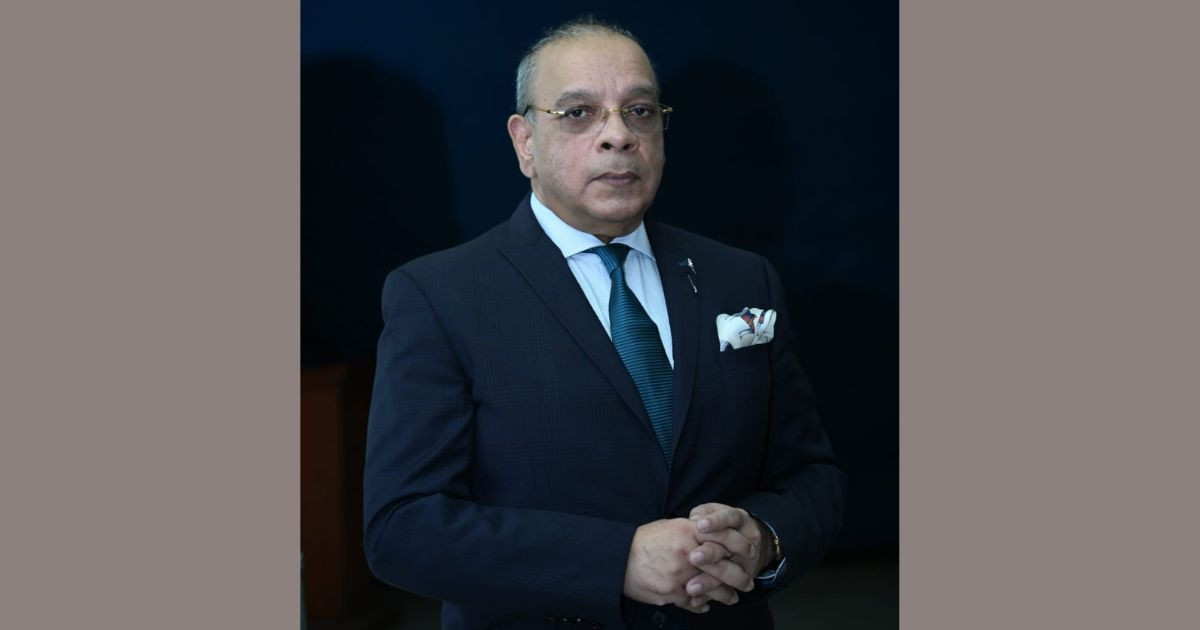
Chief Justice Syed Refaat Ahmed. Photo: Courtesy
Chief Justice Syed Refaat Ahmed completed his first year in office on Monday. He took charge as the 25th chief justice of Bangladesh exactly a year ago on 11 August 2024.
Since taking office, the chief justice has launched a wide range of reform initiatives aimed at bringing about positive changes to the judiciary. The extensive changes that have taken place in the judiciary under his leadership are not only limited to mere policy reforms; rather, the steps he has taken have set a new precedent in the effective implementation of the desired reforms in the judiciary.
He has taken various initiatives with emphasis on transparency, efficiency, accountability, technology integration and a people-friendly justice system.
Roadmap for Judicial Reform
In an address on 21 September 2024, Syed Refaat Ahmed announced the roadmap for judicial reform in order to properly uphold the constitutional responsibilities of the judiciary in establishing justice in the country and to improve its overall quality.
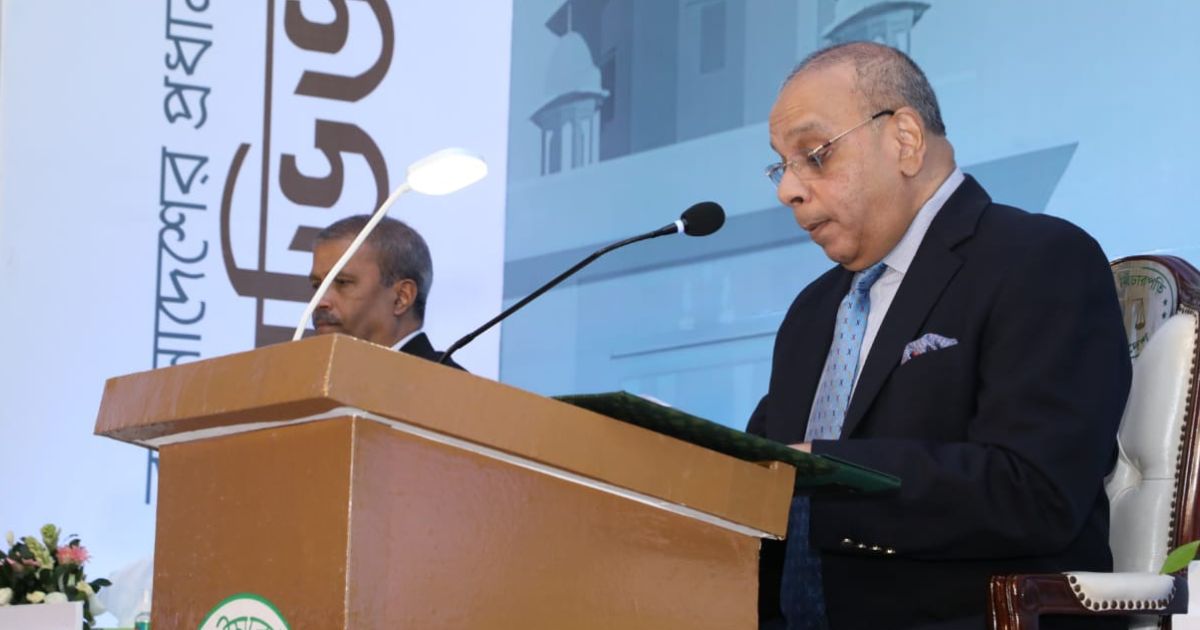
In his address, he provided important guidelines on taking initiatives to implement the necessary reforms in order to ensure the independence of the judiciary and to establish a separate judicial secretariat to implement the verdict of the Masdar Hossain case.
He also provided guidelines to allocate an independent and adequate budget for the judiciary, formulate relevant policies to ensure transparency, promote the practice of merit in the judiciary through research and training, formulate specific laws like those in developed countries, and ensure transparency and accountability in judicial services and the emergence of a culture of justice in the country.
12-Point Instructions to Bring Transparency
The chief justice has taken various initiatives since assuming office to ensure transparency and accountability of judicial services for the justice seekers by eliminating all forms of corruption. He placed twelve-point instructions to improve the quality of services of the Bangladesh Supreme Court.
With the aim of implementing the instructions, monitoring meetings are being organised regularly in the Supreme Court every month with the chief justice in the chair.
In these meetings, officials concerned of the Supreme Court administration report to the chief justice about the steps taken by their respective offices to facilitate services. Similar activities have been taken in the district courts, like the apex court. As a result, greater transparency and accountability have been ensured in the country’s judiciary.
Paperless HC Bench
On the initiative of the chief justice, various plans have been adopted to bring judicial services to the doorsteps of the people. As a part of this, a completely paperless judicial process has been started in a company-related bench of the High Court from 2 January this year.
For this purpose, a digital platform has been prepared under the supervision and innovation of the Supreme Court for submitting all the papers of that bench online. Later, on 20 July, paper-free trial activities were started in another company bench of the High Court. The chief justice has a plan to gradually run paperless activities in other benches as well.
Capacity Test Launched for Providing Legal Aid
On 25 August 2024, a circular was issued instructing all concerned that since it is necessary to ensure legal assistance to all defendants present in the court for the establishment of the rule of law and justice, in order to ensure that none of the defendants present in the court is deprived of legal assistance, if there is no lawyer for the defendant present in the subordinate court/tribunal, a lawyer should be appointed for that defendant from the Legal Aid Lawyers Panel.
The circular also instructed all concerned to cooperate in ensuring that the lawyer can perform his/her professional duties smoothly without hindrance.
The initiative taken by the chief justice has already been implemented, and the National Legal Aid Services Organization has given necessary instructions to the legal aid offices across the country in this regard.
Separate Secretariat for Judiciary
In order to ensure the institutional independence of the judiciary, a proposal regarding the formation of a separate judicial secretariat was sent to the Ministry of Law, Justice and Parliamentary Affairs on 27 October 2024.
This included a draft of an ordinance that was sent to establish a separate secretariat for supervising subordinate courts and tribunals by the High Court as well as to create an organogram of the proposed secretariat, and a complete proposal regarding possible reforms of the Rules of Business and Allocation of Business.
It is to be noted that Article 22 of the constitution declares the separation of the judiciary as one of the fundamental principles of the state. Therefore, if a separate secretariat is established, the existing dual rule in issues of posting, transfer, promotion, discipline, leave, etc, of judges of subordinate courts will end, and it will be possible to ensure the true independence of the judiciary.
In the meantime, with the positive cooperation of the interim government, significant progress has been made in preparing the necessary legal framework for the establishment of a separate secretariat.
Transfer and Posting Policy
A policy has been formulated to eliminate discrimination regarding the transfer and posting of judges of subordinate courts as mentioned in the roadmap for judicial reforms announced by the chief justice. The transfer and posting policy has already been sent to the law ministry for implementation.
Ordinance for Appointment of SC Judges
In continuation of the roadmap announced on 21 September 2024, the Supreme Court took the initiative to formulate a law for the appointment of judges of the top court. To this end, after analysing all the processes followed in the appointment of judges of the top court in developed countries of the world, including neighbouring countries, a draft of an ordinance was prepared in this regard.
After taking the opinions of the judges working in both divisions of the apex court, the draft was sent to the law ministry in the form of a proposal on 28 October last year.
Later, the draft of the “Supreme Court Judge Appointment Ordinance, 2025” was approved by the Advisory Council, and the ordinance was passed. The Supreme Judicial Appointment Council has been formed under the ordinance. The chief justice is leading the council, while judges have been appointed to the Appellate Division as per the recommendations of the council. In addition, the matter of appointment of additional judges to the High Court Division through the council is currently in process.
Supreme Court Helpline
On 25 September 2024, Chief Justice Syed Refaat Ahmed launched a helpline to assist any litigant or service recipient who faces any obstacle in receiving services at the apex court.
A judicial officer working as an assistant registrar of the Supreme Court operates the helpline and provides necessary assistance to the service recipients.
The helpline gained wide popularity in a short time, and the second helpline of the Supreme Court was launched in January this year.
Services can be received through the helpline from 10am to 4pm every Sunday to Thursday, except on public holidays. At the same time, WhatsApp and mobile app services are available via the helpline.
Helpline Launched in Courts in Country
On 14 May 2025, the chief justice announced the launch of a helpline modelled after the Supreme Court in 64 districts and eight metropolitan areas of the country with the aim of ensuring accessibility to judicial services for all citizens.
A circular was issued from the Supreme Court on the previous day, giving necessary instructions in this regard.
In order to make the helpline service effective at the district level, the circular mentioned that a committee consisting of three members would be formed in each district. A nominated judicial officer will act as the representative of the helpline.
The committee will send the monthly report of the services provided through the helpline to the people seeking justice to the Supreme Court by the seventh of every month by the district and sessions judge.
In the meantime, a mobile phone with a SIM card has been provided by the Supreme Court to the judge of each district judgeship for the purpose of launching the helpline.
Reorganisation of Supreme Judicial Council
Due to the 16th amendment to the constitution, the power to remove the judges of the Supreme Court was vested in parliament instead of the Supreme Judicial Council. Later, the amendment was declared invalid by the High Court and the Appellate Division, but the review petition in this regard was pending.
On 20 October 2024, the Supreme Judicial Council regarding the removal of judges was revived after the review petition was disposed of by the Appellate Division.
The three-member Supreme Judicial Council, headed by Chief Justice Syed Refaat Ahmed, has already started its activities.
In continuation of that, three judges of the High Court expressed their desire to resign from their posts through a letter addressed to the president, and their resignations were accepted on 19 November 2024. In addition, the activities of the council are currently ongoing in the case of several judges.
Reform of the International Crimes Tribunal
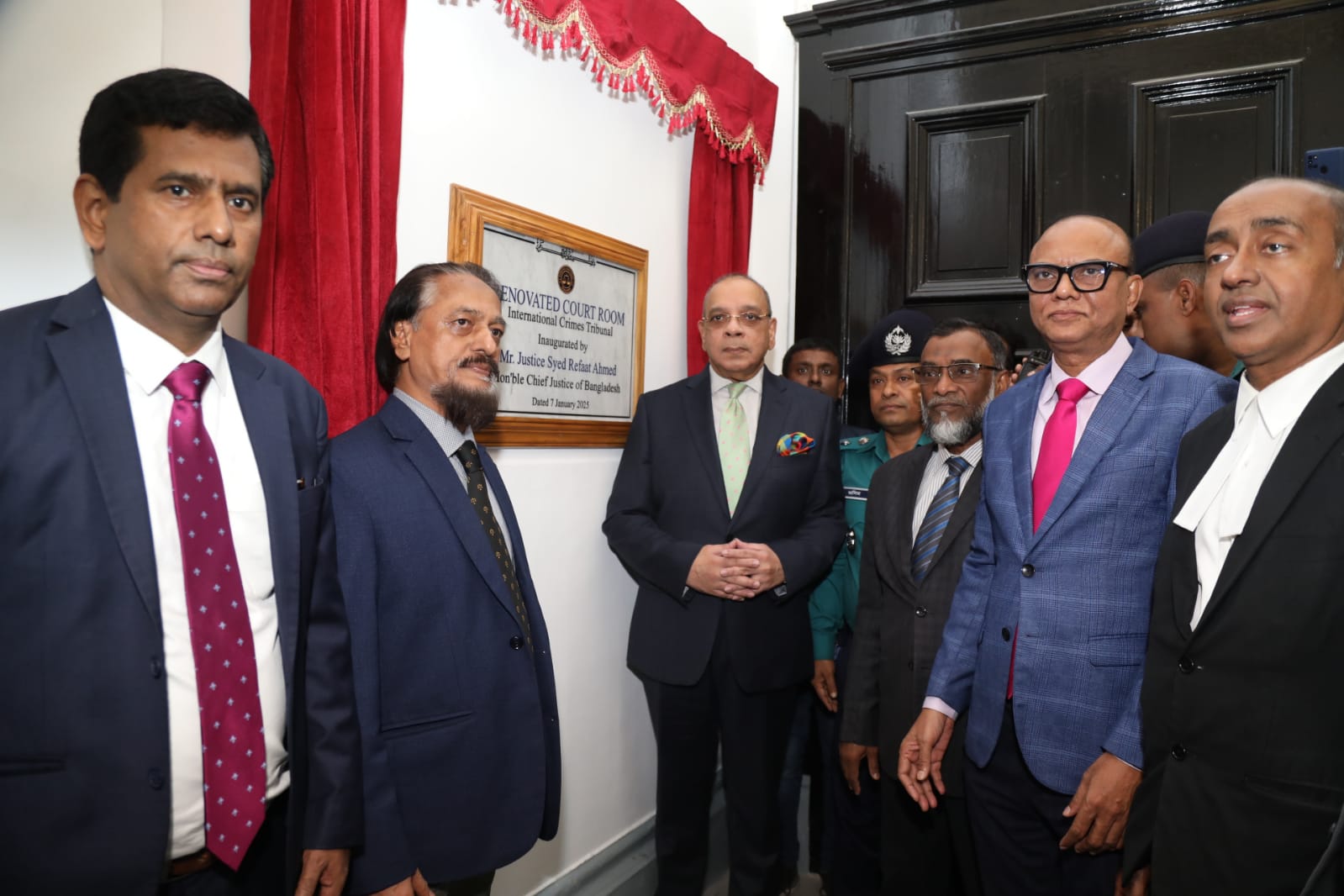
On 7 January 2025, the chief justice inaugurated the main building and courtrooms of the renovated International Crimes Tribunal.
During the inauguration, he said a new era has begun with the inauguration of the renovated main building and courtroom of the ICT to conduct trials of mass killings and crimes against humanity committed in July-August 2024.
Nationwide Awareness Activities
The judiciary has been formed primarily to serve the people of the country. Therefore, in order to gain first-hand experience about what the people expect from the judiciary and what kind of capacity the judiciary needs to achieve to fulfil those expectations, the chief justice organised stakeholder meetings in all the divisional cities of the country this year with the support of UNDP.
The stakeholder meetings are playing an important role as the main basis for creating a practical outline for the implementation of the roadmap announced by the chief justice.
Int’l Seminar on Environmental Justice: Role of Judges
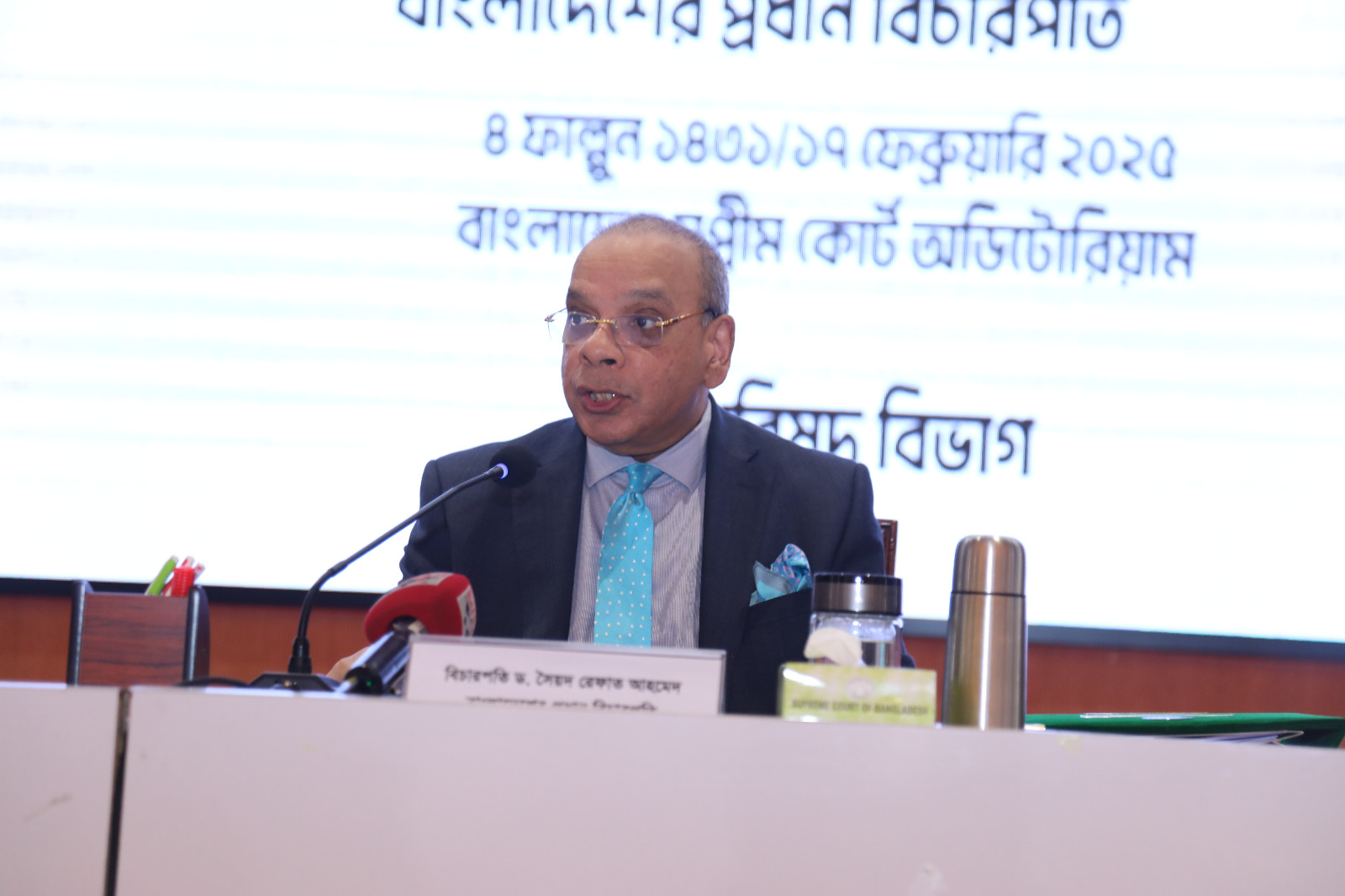
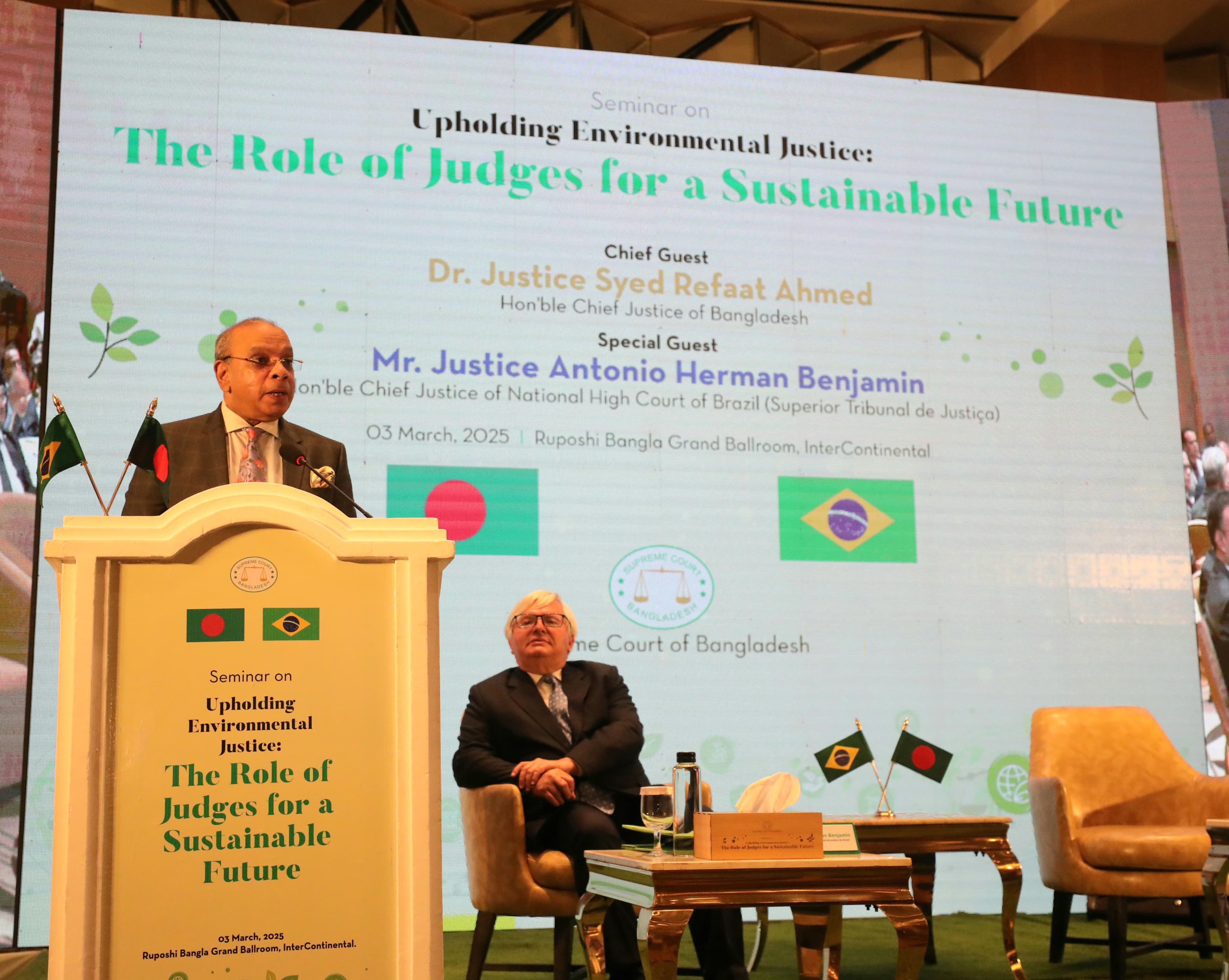
On 3 March 2025, the Supreme Court organised a seminar titled “Upholding Environmental Justice: The Role of Judges for a Sustainable Future” at the InterContinental Dhaka.
Chief Justice Syed Refaat Ahmed was present as the chief guest in the seminar, while Chief Justice of the National High Court of Brazil Justice Antonio Herman Benjamin was present as the special guest.
Judges of the Appellate Division and the High Court Division of the Bangladesh Supreme Court and their officials were present.
Seminar on Judicial Independence and Efficiency
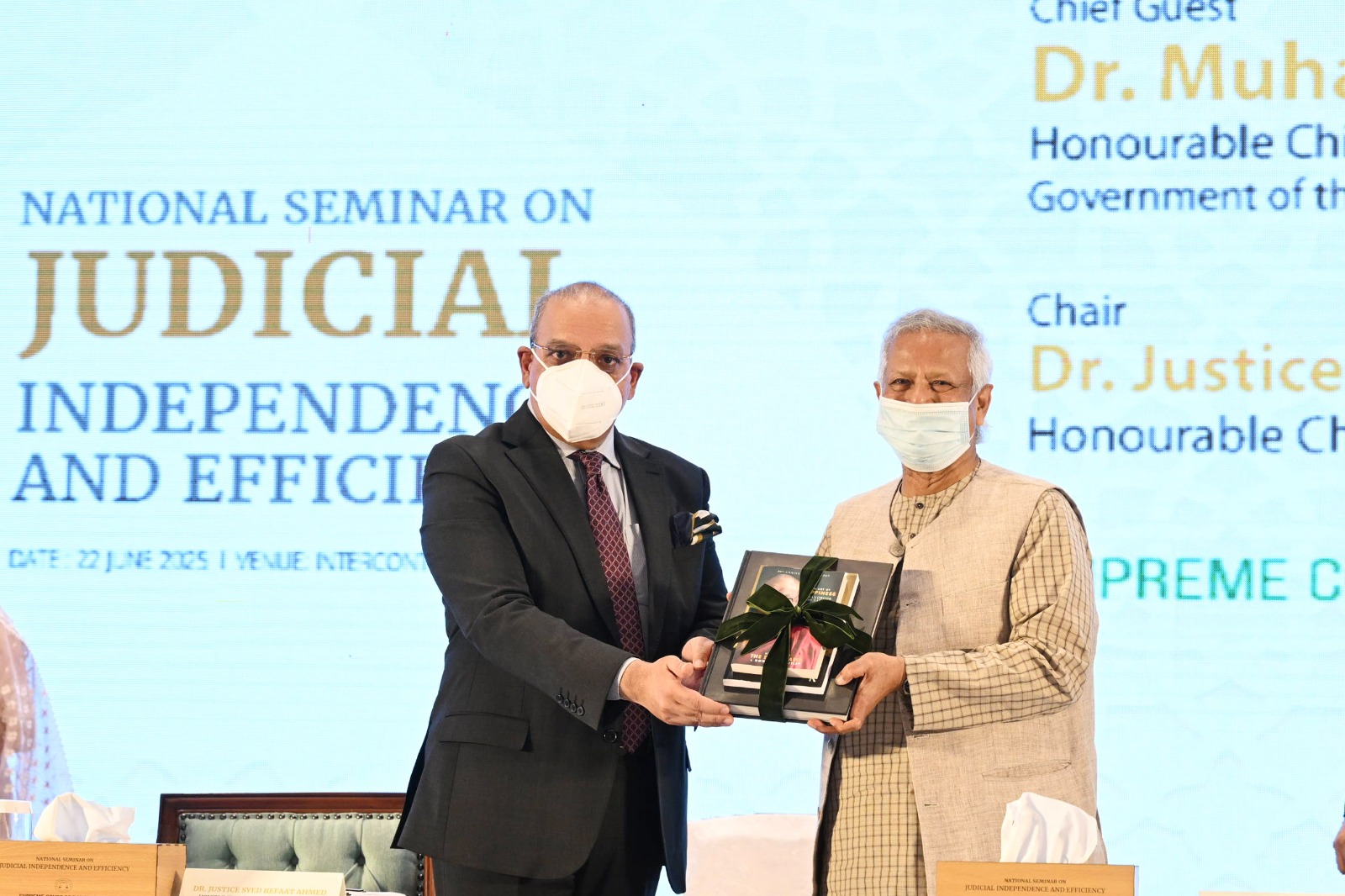
A national seminar titled “Judicial Independence and Efficiency in Bangladesh” was held on 22 June 2025 at the same venue in the capital.
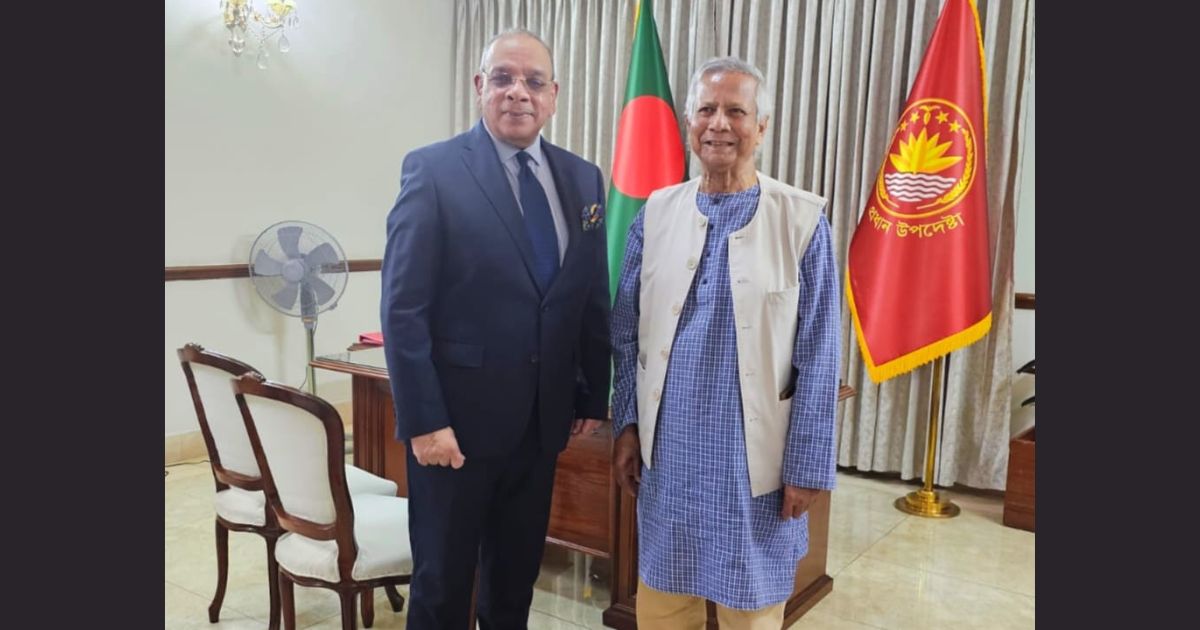
Chief Adviser Prof Muhammad Yunus was present as the chief guest with the chief justice in the chair. Law Adviser Asif Nazrul was present as a special guest. Attorney General Md Asaduzzaman, Bangladesh Supreme Court Bar Association President AM Mahbub Uddin Khokon, Bangladesh Bar Council Vice-Chairman and Supreme Court senior lawyer Zainul Abedin were also present.
The seminar was attended by judges of the Appellate Division and the High Court Division, lawyers, invited guests, and officials of the Supreme Court, as well as district and sessions judges, metropolitan sessions judges, chief judicial magistrates, and chief metropolitan magistrate-level judicial officers working in various districts of Bangladesh.
Initiative to Launch Separate Courts for Civil and Criminal Cases
As per the instructions of the chief justice, a letter was sent to the law ministry on 21 April 2025 to take necessary steps to separate courts for civil and criminal jurisdiction and to create the required number of posts by changing the organisational structure of the Judgeship and Sessions Division concerned.
In the subordinate courts of the country, joint district and sessions judges, additional district and sessions judges, and district and sessions judges are currently performing the duties of dealing with cases as judges of civil appeal, civil revision, criminal appeal, criminal revision as well as various special courts and tribunals.
As a result, despite the goodwill of the judges, it is not possible to dispose of the expected cases. So, the backlog of lawsuits and delays are increasing day by day. Especially in the case of civil cases, delays are being created.
In this context, this step was taken on the initiative of the chief justice in order to facilitate the exercise of separate jurisdiction and to resolve the backlog of cases.
Providing Computers to Chowki Courts
Chief Justice Syed Refaat Ahmed gave instructions to provide the necessary desktop computers from the Supreme Court in order to ensure that the trial seekers coming to the chowki courts located in various remote areas of the country receive the desired judicial services, and to increase the capacity of the said courts.
In light of the instructions, on 2 July 2025, a total of 71 desktop computers were provided to 40 chowki courts in the country.
It is to be noted that currently, a total of 40 chowki courts are being conducted in 23 districts of Bangladesh. The activities of civil and criminal courts are conducted in these outpost courts located in relatively remote areas.
Judicial officers of the rank of senior assistant judge, senior judicial magistrate, joint district judge and additional district judge are working in these courts.
Supply of Computers to Subordinate Courts
Since Syed Refaat Ahmed assumed office as the 25th chief justice of Bangladesh on 11 August 2024, as per his instructions, a total of 400 desktop computers have been provided to the district courts by the Supreme Court to bring dynamism to the judicial work.
In addition, 120 judicial officers of the country have been provided with laptops by the apex court.
The progress made in the judiciary under the leadership of the chief justice in the last one year is not limited to administrative and technical development; rather, it is a clear reflection of the restoration of public trust and implementation of the concept of justice.
It is expected that if it continues, the judiciary of Bangladesh will be able to reach world-class heights as a more efficient, transparent, and people-friendly judicial system in future.