


 For all latest news, follow the Daily Sun's Google News channel.


There is a quiet reckoning unfolding in the hearts of many Bangladeshis today— one not always spoken aloud but deeply felt. As the country moves forward with rapid development, political tensions and growing global visibility, many of us are pausing to ask: is this the life we chose, or the life chosen for us? Did we pursue our dreams, or did we inherit a script already written by history, society and expectations we never agreed to but still carried out? In a culture where duty often speaks louder than desire, the lives we did not live sometimes shape us just as much as the ones we do.
Take the story of countless women across urban Dhaka or rural Bogura, who studied literature or loved music and who dreamed of teaching, travelling or simply living on their own terms. Many of them were never told “no” directly. But they were surrounded by a system that whispered, “This is not for you.” Marriage came early. Careers were postponed and then quietly buried under layers of childcare, family obligations and unspoken expectations. To choose differently, to walk away and to prioritise selfhood, they would have required not just courage but the willingness to carry the lifelong burden of being misunderstood. And so, they stayed. Not unhappily always but not freely, either. In the trade-off between freedom and belonging, many chose the latter, but the former never stopped calling. Even in the most loving homes, the question lingers: what might her life have been if she had the space to dream louder?
And it is not just women. Young men in Bangladesh today also struggle with a different kind of inheritance. They are expected to become providers, achievers and protectors— strong, unshakable. But who teaches them to grieve the dreams they had to let go of? The ones who wanted to write poetry chose banking. The ones who felt suffocated by the pressure to succeed, to send money home, to remain strong even when their spirit faltered. Mental health remains a hushed topic, and vulnerability is too often mistaken for weakness. Many carry this burden silently, performing roles that win applause but slowly detach them from their deeper selves. The emotional cost of being the “ideal son” or “perfect husband” is rarely acknowledged in a society that still places outer performance above inner truth.
Bangladesh is a country with a complicated relationship to freedom. We fought for it, bled for it, still remember it with pride. But on an intimate level, are we truly free? Our personal lives are deeply entangled with social scripts—what a “good daughter” does, what a “respectable” job looks like, how a marriage should function, when to speak up and when to stay silent. Even in 2025, freedom often feels conditional: available to the privileged, negotiable for the rest. Especially for the young generation caught between modern ambition and traditional loyalty, freedom becomes a balancing act—an internal tug-of-war between wanting to break norms and fearing the cost of doing so. And this negotiation doesn’t happen once—it happens daily, in small decisions and quiet hesitations that accumulate into an entire way of life.
And yet, even within these constrained realities, there is quiet rebellion. A young woman teaching in Khulna starts reading again after her children sleep. A rickshaw-puller in Sylhet sends his daughter to college, despite being mocked by neighbors. A widow in Rajshahi reopens the sewing business her husband once ran. These stories may never make headlines, but they are revolutions in their own right. Creative expression, small acts of autonomy, and moments of truth-telling—these are how people in Bangladesh resist the quiet erasure of self. Not all rebellion looks like protest. Sometimes, it looks like persistence. Sometimes it is simply the act of saying, “I want something different,” even if that wish stays inside for now. These quiet acts of self-preservation remind us that even within deeply rooted systems, people find ways to breathe, to hope, and to remember who they are.
Perhaps the tender truth we must face as a society is that the lives we did not live matter, too. They are not failures, but signposts. They remind us of our complexity—of all the things we could have been if the world had been kinder, if we had been braver, or simply luckier. As Bangladesh grows, industrialises and transforms, we must create a culture that makes space for reflection, not just progress because growth without introspection risks becoming hollow. We need to teach our children not just how to compete, but how to ask: What parts of me have I silenced? What dreams still wait quietly within me? What would it mean to live more fully, more honestly, even now?
In the end, the story of Bangladesh is not just one of poverty or prosperity, tradition or technology. It is also a story of countless inner lives—half-lived, redirected, postponed, or quietly fulfilled in unexpected ways. And if we begin to honour those hidden narratives—the roads not taken, the selves that waited—we might just begin to build a society that values not only success, but meaning. Not only duty we perform, but dignity. Not only the life we live, but the deep, human truth of the lives we still carry within us. And perhaps that is where the future of our nation quietly begins—not in grand declarations, but in honest reckonings with all the lives we still long to live.
______________________________________
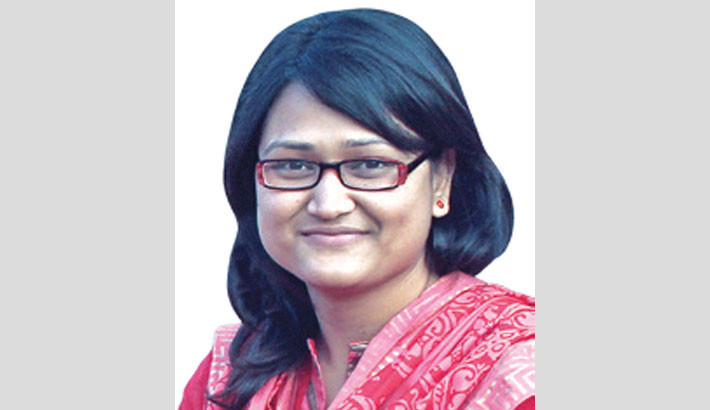
The writer is an Assistant Professor in the Department of Philosophy at IUBAT and pursuing a Master's in Human Rights and Multiculturalism at University of South Eastern Norway