


 For all latest news, follow the Daily Sun's Google News channel.


Uncertainty has long been stitched into the fabric of Bangladesh—woven through our floods and elections, through factory floors and university halls. But in July 2024, uncertainty became something more: a teacher. The streets of Dhaka, illuminated not by slogans but by purpose, offered the country a rare reflection. The student-led movement, born from protest against the reinstated job quota system, was not merely a rejection of a single policy—it was an uprising against years of deferred responsibility, broken promises, and institutional indifference. And crucially, it was an embrace of the unknown. These young people stepped into a future that was not guaranteed and showed us what it means to lead, not from certainty, but from courage. In doing so, they revealed that it is not perfection that defines leadership—it is presence.
In a society trained to fear unpredictability, July redefined what the unknown could look like. It was not chaos—it was clarity. In those uncertain days, the youth showed what it means to be radically honest in a political culture addicted to control. They admitted to being angry, tired, and anxious—not to win sympathy, but to reclaim their stake in the nation's future. Their power lay in vulnerability, and their uncertainty became their strength. As James Baldwin once wrote, “Not everything that is faced can be changed, but nothing can be changed until it is faced.” July forced the nation to face itself. And in doing so, it revealed a hard truth: that certainty can be oppressive when it silences the questions that most need asking. Uncertainty, on the other hand, invites inquiry—and in inquiry lies transformation. The protests may have quieted, but the questions remain loud: What kind of leadership are we cultivating? What kind of future are we willing to imagine?
This willingness to stand in the gap between what is broken and what is possible echoes across sectors. Our struggling health system, our fragile education institutions, our overwhelmed public services—all reflect a nation too often driven by habit rather than reflection. And yet, even here, we see the upside of uncertainty. When the old scripts fail, people begin to write new ones. Community health workers, underpaid and often overlooked, continue to show up in remote clinics not because they are certain of outcomes, but because they believe care itself is worth the risk. A new generation of rural innovators is turning climate threats into opportunities, experimenting with saline-resistant crops and solar irrigation. These are not signs of a nation in crisis—they are signs of a people learning to move through crisis with imagination and moral grit. Innovation, in Bangladesh, rarely begins in laboratories. It begins in response to need—and uncertainty is often the condition that awakens our most creative responses. And the gendered resilience of Bangladesh’s women—especially in informal sectors and disaster-prone zones—offers another testimony to how uncertainty, when met with community and courage, can become a source of renewal.
But for uncertainty to be a space of growth rather than despair, our institutions must learn to listen. July’s most painful revelation was not just how absent leadership had been—but how uninterested it had become in truly hearing. The students were not voiceless—they were unheard. And that gap between voice and impact continues to haunt our policymaking. The most enduring lesson of July may be this: small neglects build into large explosions. Corruption in recruitment, delay in legal reforms, disregard for mental health in schools—these are not footnotes. They are fault lines. And when leadership delays action not out of strategy, but fear or indifference, it does not preserve stability—it erodes trust. The path forward is not paved in grand gestures, but in quiet, difficult decisions to lead with conscience rather than convenience. We must not confuse silence with peace, nor mistake quietude for consent. In both rural hinterlands and urban sprawls, people are speaking—through activism, through migration, through quiet forms of refusal. Are we ready to listen?
As a nation, we are now standing in a space of deep uncertainty—and therein lies our greatest opportunity. July was not a climax; it was an invitation. A call to embody presence, not only during moments of protest, but in the mundane acts of public service. Leadership must now be reimagined not as control from the top, but as care across the spectrum—from the classroom to the clinic, from the policymaker’s desk to the parent’s struggle. The future of Bangladesh will not be built on the illusion of certainty. It will be built by those who dare to step forward even when the path is unclear. As Václav Havel once said, “Hope is not the conviction that something will turn out well, but the certainty that something is worth doing, no matter how it turns out.” That is the promise within the unknown—and it is ours to carry. If we are brave enough to keep asking, listening, and acting in the dark, we may just find our way to a more luminous tomorrow. Uncertainty, after all, is not the absence of direction—it is the birthplace of possibility.
_____________________________________
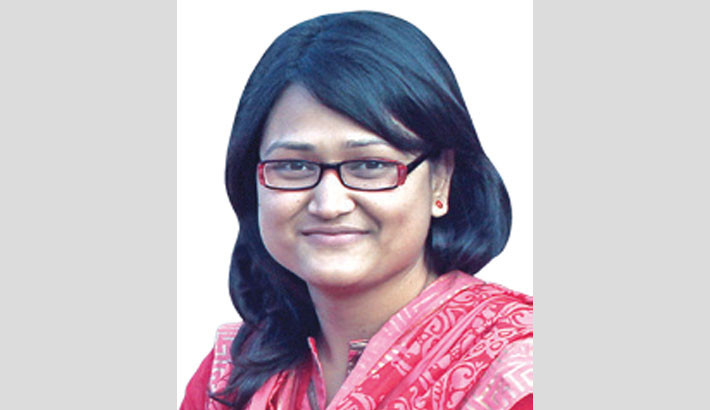
The writer is an Assistant Professor in the Department of Philosophy at IUBAT and pursuing a Masters in Human Rights and Multiculturalism at University of South Eastern Norway