


 For all latest news, follow the Daily Sun's Google News channel.


Bangladesh is in a moment of reckoning. The mass uprising of July 2024 was not a sudden surge of discontent, but the result of years of accumulated silencing. What erupted last year was not simply a protest against an overstaying government; it was a refusal to continue living in a political system that denied recognition to its people. From students in Shahbagh to farmers in Sirajganj, garment workers in Gazipur to religious minorities in Netrokona— millions poured onto the streets to declare: we are here, we matter, we are different, and we must be seen. Their uprising was a declaration of democratic selfhood in a country where difference has often been viewed with discomfort, if not outright suspicion. To call this a “second liberation” is not exaggeration; it reflects a deep hunger for a society where political loyalty does not require uniformity, and citizenship is not conditioned on silence. The protests were not simply against one political party, but against a culture of exclusion that had allowed difference to be sidelined for too long.
The recent Honourable Mention received by AFP’s Bangladesh team in the 2025 SOPA Awards confirms how vital it is to document, rather than distort, democratic ferment. The team’s coverage of the uprising captured not just the scale of the protests, but the diversity that gave it strength. Unlike the dominant narratives of the past (when dissenters were painted as agitators or outsiders), these journalists bore witness to the genuine hopes and righteous anger of a cross-section of Bangladeshi people. Their reporting did not flatten the complexity of events—it amplified it. In doing so, they affirmed something essential: that journalism is not just about reporting the facts; it is also about recognising the full range of human experience behind those facts. In politically tense moments, such recognition becomes a form of resistance. It reminds us that a functioning democracy cannot thrive without truth-tellers who reflect the people in all their complexity—not just those who fit the preferred narrative.
This national push for dignity and truth has already begun to impact state institutions. On 26 June, the interim government announced the formation of a five-member committee to investigate irregularities in the 2014, 2018 and 2024 national elections. Led by former High Court Justice Shamim Hasnain, and joined by legal experts and scholars, the committee is tasked with probing allegations of voter suppression, administrative misconduct and breaches of constitutional norms. For the first time in recent memory, a government instrument has openly acknowledged that the electoral process may have been compromised. The gazette refers to “the suppression of voters’ rights” and raises concerns about the erosion of democracy and the misuse of public institutions for political consolidation. This is a remarkable shift from the previous climate, in which such concerns were dismissed as unfounded or politically motivated. It reflects the growing realisation that without electoral integrity, democratic legitimacy remains fragile. But institutional recognition must lead to institutional repair. The committee’s work must be more than symbolic. It must help rebuild public trust and ensure that future elections are truly participatory, transparent and inclusive.
To ensure that this moment leads to transformation, not just transition, we must broaden our understanding of recognition. Electoral reform is critical, but the deeper democratic challenge lies in creating space for difference within our institutions and political imagination. Bangladesh has a rich legacy of cultural diversity, and in recent years, there have been commendable efforts in expanding inclusive narratives through textbooks, public discourse and media platforms. However, pockets of exclusion and marginalisation persist not due to deliberate omission, but often due to structural limitations and uneven implementation. In this pivotal moment, there is an opportunity to build on that foundation by fostering a political culture where difference is embraced not just in law or formality, but in spirit and everyday interaction. True recognition means creating systems that actively listen to and learn from diverse experiences— rural and urban, religious and secular, majority and minority, as well as mainstream and fringe. It means valuing the full spectrum of participation in our democracy not through paternalistic inclusion, but through meaningful engagement and equitable access.
This moment offers Bangladesh a rare opportunity to build something fundamentally different: a society not built on the fear of difference, but on its embrace. The uprising made it clear: the future will not be forged by one ideology, one identity or one voice. It will be shaped by dialogue, dissent and democratic multiplicity. Recognition is not about agreeing with everyone; it is about accepting that everyone matters. As the election committee prepares to submit its report by September, we must ask: will this be a turning point or another detour? The people of Bangladesh have already spoken— on the streets, in their silence, in their resilience. Now it is time for the state, and all of us within it, to listen. And not just to the loudest voices but to those that have been kept quiet for far too long. If we are to truly honour this “second liberation”, then we must create a Bangladesh where difference is not just tolerated, but celebrated as the lifeblood of democracy.
_____________________________________
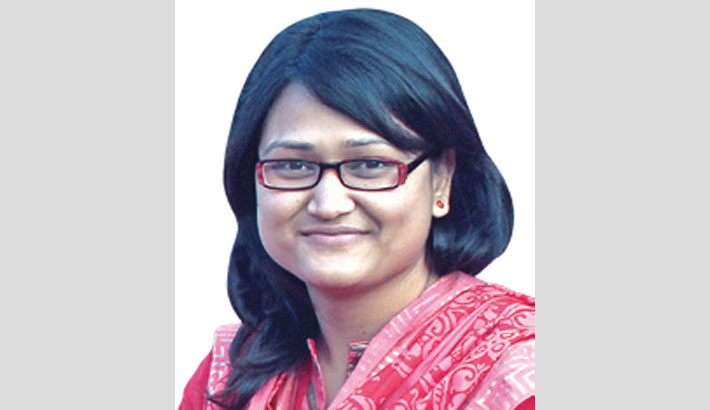
The writer is an Assistant Professor in the Department of Philosophy at IUBAT and pursuing a Master’s in Human Rights and Multiculturalism at University of South Eastern Norway