


 For all latest news, follow the Daily Sun's Google News channel.


Even after five decades of liberation, Bangladesh remains trapped in invisible chains — not colonial chains, not overt fascism, but a subtler and far more dangerous captivity: the slavery of political loyalty. The fear patterns and authoritarian habits learned during the dark years have calcified into a culture where many citizens still equate blind obedience with civic duty. Loyalty to political parties – no matter how oppressive their actions – has been mistaken for patriotism. But true democracy demands the opposite: the courage to think freely, to question the powerful and to insist that the dignity of every citizen be respected. Until we dismantle this inherited mental prison, our nation will remain free only in appearance, but enslaved in spirit. Without deep reform, elections will only tighten the chains we were meant to break. As a nation, Bangladesh resembles a bird freed from its cage but still too afraid to fly, circling endlessly within the familiar walls of captivity.
When Dr Muhammad Yunus interim government took office following the collapse of Sheikh Hasina’s long and controversial rule, it raised hopes of a profound democratic rebirth. For the first time in many years, there seemed a chance to pause, to reflect and to rebuild Bangladesh on more just and sustainable foundations. Yet old political parties, whose hands are stained with the failures and betrayals of the past, have wasted no time in demanding immediate elections. Their cries for democracy are hollow; where was their respect for democratic principles when dissenters were silenced, opposition voices crushed and institutional checks eroded? Bangladesh must not be fooled again: the same hands that broke the nation cannot be trusted to rebuild it. History warns us that authoritarian tendencies can easily cloak themselves in democratic slogans. Trusting these forces blindly once more would not be an act of democratic renewal; it would be a repetition of national betrayal, dressed up in the appearance of legality.
At this fragile crossroads, what Bangladesh desperately needs is not another hurried election but courageous, sweeping reform. First, the cancer of corruption must be rooted out at every level of government and society, recognising that without judicial independence and institutional transparency, any political change will be superficial. Second, the crushing burden of international debt must be addressed, as an indebted nation can never exercise full policy sovereignty. Third, national reserves must be strengthened strategically, ensuring economic resilience not only against political instability but also against global market fluctuations. Elections without reform are not democracy; they are just the recycling of old corruption in a new disguise. Structural problems require structural solutions. A genuine democracy is built on the rule of law, equitable distribution of power, economic justice and an empowered, educated citizenry capable of critical thought, not merely on the procedural act of voting. Reform is not a decorative ribbon for the old political package; it is the rebuilding of the foundation itself, stone by stone.
The situation is even more sinister than it appears. The same political forces calling for elections are counting on the nation’s short memory and wounded pride, gambling that old habits of fear, loyalty and resignation still run deep within the citizenry. This is the real evil chain we must break: a vicious cycle of betrayal, manipulation and blind allegiance that keeps Bangladesh trapped in a loop of false hope and repeated collapse. Breaking this chain is not merely a political necessity; it is a moral imperative. A democracy where citizens are hypnotised into partisan worship is a democracy in name only. To truly reclaim sovereignty, citizens must reject the binary thinking fostered by old parties and instead embrace a culture of critical engagement, where no leader is above scrutiny and no political promise escapes accountability. Bangladesh must recognise that democracy is not a gift but a garden— one that demands constant tending, weeding and care, or else it will quickly be overrun by the vines of tyranny once more.
Today, Bangladesh stands on a historic knife’s edge. One path leads back to the familiar darkness of political slavery— where elections are staged performances and leaders rule unchecked. Though more challenging and steeper, the other leads towards the real dream: a democracy built on transparency, accountability and civic empowerment. The interim government must resist the siren call of old politics and focus steadfastly on completing the urgent structural reforms the nation demands, even in the face of orchestrated pressures. And the people must realise that this time, Bangladesh must not just change its rulers — it must change its destiny. This rare moment must not be wasted, for in it lies the unique chance to finally break free from the cycles of the past and build a nation worthy of the sacrifices, dreams and boundless potential of its people. In this moment of painful rebirth, Bangladesh’s question is simple yet profound: will it dare to fly? As Simon and Garfunkel poignantly sang in their iconic 1964 song ‘The Sound of Silence’, “And the people bowed and prayed to the neon god they made.” Bangladesh must resist the temptation to worship false idols once again and instead summon the courage to build a future grounded in freedom, justice and dignity for all.
_____________________________________
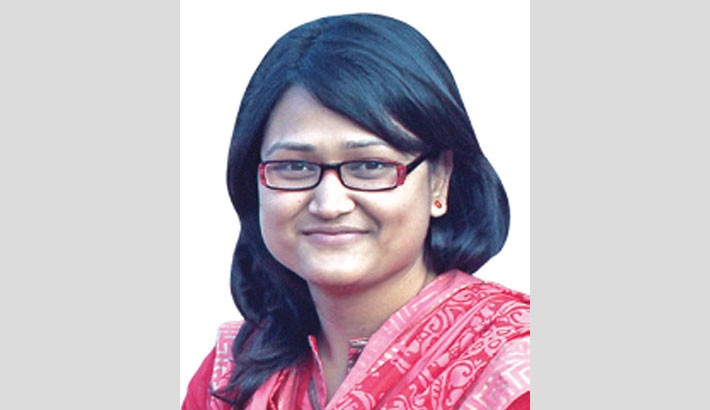
The writer is an Assistant Professor in the Department of Philosophy at IUBAT and pursuing a Masters in Human Rights and Multiculturalism at University of South Eastern Norway