


 For all latest news, follow the Daily Sun's Google News channel.


Bangladesh stands at a pivotal moment in its history. With over 65% of its population under age 35, the country enjoys a unique demographic dividend that can shape the nation’s future in unprecedented ways. However, leveraging this potential requires more than traditional education, infrastructural development or economic policies. A crucial yet often overlooked skill – emotional intelligence (EI) – could be the defining factor that determines whether Bangladesh’s youth rise as resilient leaders or remain stuck in cycles of frustration, impulsivity and disillusionment. Daniel Goleman, a renowned psychologist and science journalist, popularised the concept of emotional intelligence in his 1995 book, Emotional Intelligence: Why It Can Matter More Than IQ. His research emphasised that success in life is not solely determined by intellectual ability but also by an individual’s capacity to understand, manage and respond to emotions effectively. He identified self-awareness, self-regulation, motivation, empathy and social skills as the five key components of EI, which are crucial for handling personal, professional and social challenges. In Bangladesh, where academic success is prioritised over emotional agility, many young people remain unequipped to navigate the complexities of modern life. By fostering emotional intelligence, Bangladesh can bridge divides, strengthen leadership, create a mentally healthier society and drive holistic national development in ways that IQ alone never could.
At the helm of governance, Dr. Muhammad Yunus, the present Chief Advisor of Bangladesh’s government, serves as a powerful example of EI-driven leadership. His ground-breaking work in microfinance was not simply an economic intervention; it was an emotionally intelligent solution that recognised the deep-seated fears, aspirations and psychological barriers of marginalised communities. His ability to balance vision with empathy, resilience with adaptability and governance with compassion demonstrates how emotionally intelligent leadership can transform societies at both micro and macro levels. He did not merely provide financial resources; he created a trust-based system where people felt empowered rather than dependent. Now, as he leads the nation, his governance style presents an opportunity to model a new leadership framework for Bangladeshi youth— one that values emotional intelligence as much as technical expertise. If the younger generation adopts this approach– whether in politics, business, or activism, Bangladesh could witness a more harmonious and progressive era, where reforms stem from collaborative solutions rather than emotional outbursts.
Beyond governance, the workplace is undergoing a silent revolution where EQ (Emotional Quotient) is increasingly outweighing IQ. The rise of automation and artificial intelligence means that technical skills alone are no longer enough; adaptability, empathy and emotional resilience are now the most valued qualities in employees. In Bangladesh’s booming freelancing sector, for instance, thousands of young professionals compete on global platforms. The difference between a struggling freelancer and a successful one often comes down to emotional intelligence: Can they handle cultural misunderstandings professionally? Can they manage stress effectively? Can they negotiate contracts confidently without frustration or fear? Those who excel in these areas often build long-term client relationships and sustainable careers, while those who lack EI may struggle with burnout, communication breakdowns or self-doubt.
Similarly, in Bangladesh’s garment industry, emotional intelligence can redefine workplace dynamics. Factory supervisors with strong EI foster a more productive and motivated workforce. Instead of enforcing rigid discipline through intimidation, they can create a culture of trust, collaboration and growth, which leads to higher efficiency and employee satisfaction. Studies have shown that workplaces with emotionally intelligent leadership experience lower employee turnover, higher innovation rates and better crisis management. This shift is essential, as the future of work in Bangladesh depends on creating emotionally intelligent professionals who can thrive in diverse environments. The government and corporate sector must recognise that an investment in EI-based leadership training is not just a humanitarian effort but an economic necessity.
A critical yet often overlooked consequence of low emotional intelligence is the growing mental health crisis among young Bangladeshis. As societal expectations mount and competition intensifies, issues like depression, anxiety and impulsive decision-making have become increasingly common. The rise of social media has only exacerbated these struggles, creating an environment where young people are constantly comparing themselves to others, leading to feelings of inadequacy, stress and burnout. Schools and universities must integrate conflict resolution training, mindfulness and self-awareness modules to equip students with the ability to handle adversity without resorting to aggression or disengagement. Moreover, public policies that normalise mental health discussions and create accessible support systems will ensure that Bangladesh’s youth are not just academically competent but emotionally resilient enough to lead a balanced and fulfilling life.
Ultimately, Bangladesh’s progress will not be measured solely in GDP growth, infrastructural advancements or political stability; it will be defined by the emotional maturity of its people.
Emotional intelligence is not just a personal skill; it is a national asset. If cultivated properly, it can bridge divides, strengthen governance, redefine workplaces and create a mentally healthier and socially harmonious society. As Kahlil Gibran wisely noted, “Your living is determined not so much by what life brings to you as by the attitude you bring to life.” The time has come for Bangladesh’s youth to embrace emotional intelligence not as a soft skill but as a fundamental tool for national transformation. In doing so, they will ensure that the nation’s future is not just successful, but equitable, harmonious and truly ground-breaking.
_____________________________________
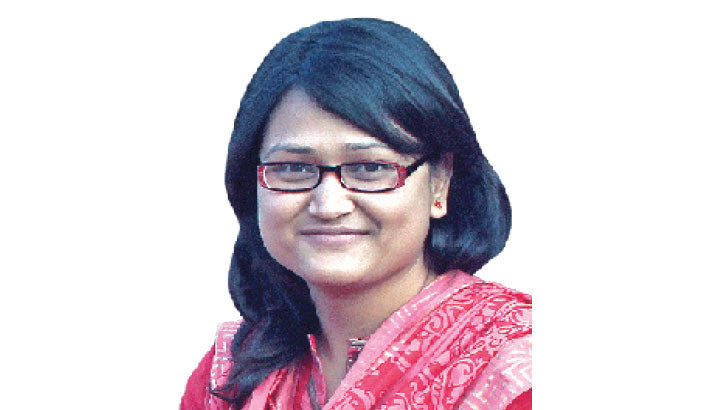
The writer is an Assistant Professor in the Department of Philosophy at IUBAT and pursuing a Masters in Human Rights and Multiculturalism at University of South Eastern Norway