


 For all latest news, follow the Daily Sun's Google News channel.


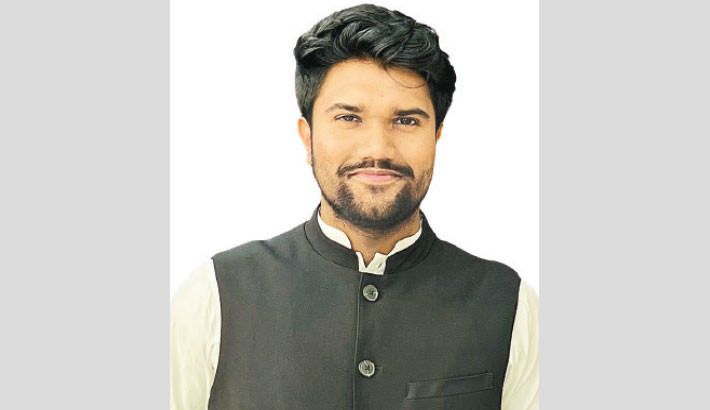
Nafew Sajed Joy
The Amar Ekushey Book Fair 2025 has sparked significant dissatisfaction due to perceived irregularities in pavilions and stalls allocation. Notably, 14 prominent publishing houses received stall allocations but were excluded from pavilion assignments—a deviation from past practices. Alarmingly, one major publishing house received neither a stall nor a pavilion, while three others had their pavilion sizes reduced. These developments raise serious concerns about the fairness and transparency of the allocation process.
Following the fall of the Awami League government, two organisations, the “Creative Publishers’ Association against Discrimination” and the “Nationalist Creative Publishers’ Forum”, criticised certain publishing houses for alleged affiliations with the previous regime. This backlash led to a reduction in pavilion and stall allocations for these establishments. In response, a group of affected publishers, under the banner of “Publishers Seeking Justice”, submitted a letter to the Bangla Academy, urging redress.
The publishers demanded the reinstatement of previously allocated spaces and outlined ten key reforms. These included allowing accused publishers to defend themselves, removing unregistered representatives from the organisers and requiring accusers to substantiate claims of political affiliations. They also requested enhanced security measures for targeted publishers.
The final allocation list, released last Friday, allocated 901 units to 555 publishing houses. However, 15 prominent publishers were conspicuously absent, and the pavilion sizes for three others—Anupom, Anyaprokash, and Agami Prokashani—were reduced from 24x24 feet to 20x20 feet. These decisions have fuelled suspicions of political motives.
A case in point is "Journeyman Books," owned by poet Tariq Sujat, a known Awami League member, which was denied both a pavilion and a stall. Similarly, other publishers such as Anindya Prokash, Kakoli Prokashoni, Annesha Prokashon, Pathak Shamabesh, Puthiniloy, Mizan Publishers, Tamralipi, Somoy Prokashon, Genius Publications, Charulipi Prokashon, Nalanda, Bishwa Sahitya Kendro, Pearl Publications, and Shabdashaili were also left out of pavilion allocations. This pattern of exclusion mirrors controversies from the 2024 book fair, where Adarsha Prokashoni was barred after its book "In Search of Mediocrity" was deemed non-compliant with fair rules. Despite agreeing to comply with guidelines later, the publisher remained excluded, exemplifying the long-standing issue of political interference.
In the case of Adarsha Prokashoni in 2024, the book "In Search of Mediocrity" by Faham Abdus Salam violated sections 14.14 and 14.15 of the Amar Ekushey Book Fair rules. Organisers contacted the owner of Adarsha Prokashoni, requesting that the book not be displayed, but the publisher refused. As a result, the house was declared disqualified for the stall allocation lottery. Even after the publisher later agreed to comply with the rules, their application was still denied. This raises serious concerns about inconsistency and political bias in the decision-making process. For general readers like us, this is deeply troubling, as we want to access books from all publishers, regardless of political affiliation. Such exclusions limit our choices and undermine the fair’s role as an inclusive platform for diverse voices.
Looking back further, controversies have marred the fair in previous years. In 2023, several stalls were flagged for selling pirated books, which led to temporary suspensions but failed to result in lasting reforms. In 2022, a dispute arose when established publishers accused newer entrants of bypassing quality standards. Additionally, certain publishers, including Puthiniloy and Nalanda, have long complained about being sidelined despite meeting participation criteria. These recurring issues highlight a systemic problem in ensuring fairness and enforcing rules consistently.
The recurring challenges at the Amar Ekushey Book Fair highlight the urgent need for reform. The fair should embody inclusivity and fairness, but the allocation process has often been clouded by accusations of bias and favouritism in previous years. The rules for participation—requiring at least 25 quality books, a valid business license, and tax compliance—must be consistently enforced. However, some stalls continue to sell pirated books, ISBN-less publications, or even unrelated items like notepads and diaries, which undermines the fair’s integrity. These issues must be addressed this year.
In previous years, a task force report flagged several stalls for violating fair guidelines, including those from Rabeya Book House, Sampreety Prokash, Microtech Publications and Mahi Prokashoni. Despite receiving show-cause notices, these publishers participate in the fair every year, perpetuating a cycle of rule-breaking. This ongoing negligence not only tarnishes the fair’s reputation but also undermines its cultural significance. The lack of consistent enforcement of rules creates an environment where such violations go unaddressed, diminishing the trust and integrity that the fair should stand for.
The Amar Ekushey Book Fair is more than just an event; it is a celebration of literature and a reflection of our nation’s cultural identity. To preserve its core values, the organisers must prioritise fairness and transparency. This means creating a strong, unbiased allocation process and enforcing the rules consistently. Only then can the fair truly serve as a platform for diverse voices, free from political interference or bias.
We must learn from past mistakes and take bold action to ensure the Amar Ekushey Book Fair remains a symbol of inclusivity and cultural pride. The time for meaningful, collaborative reform is now. We must remain vigilant about the issue of tagging, ensuring that no one can exploit this system to exclude others simply because their views or philosophies differ. It is crucial that we move away from the mindset of silencing voices that are different from the mainstream. Ultimately, our goal is to create a society that is free from discrimination, where every voice is heard and valued.
The writer is a researcher. Email: [email protected]