


 For all latest news, follow the Daily Sun's Google News channel.


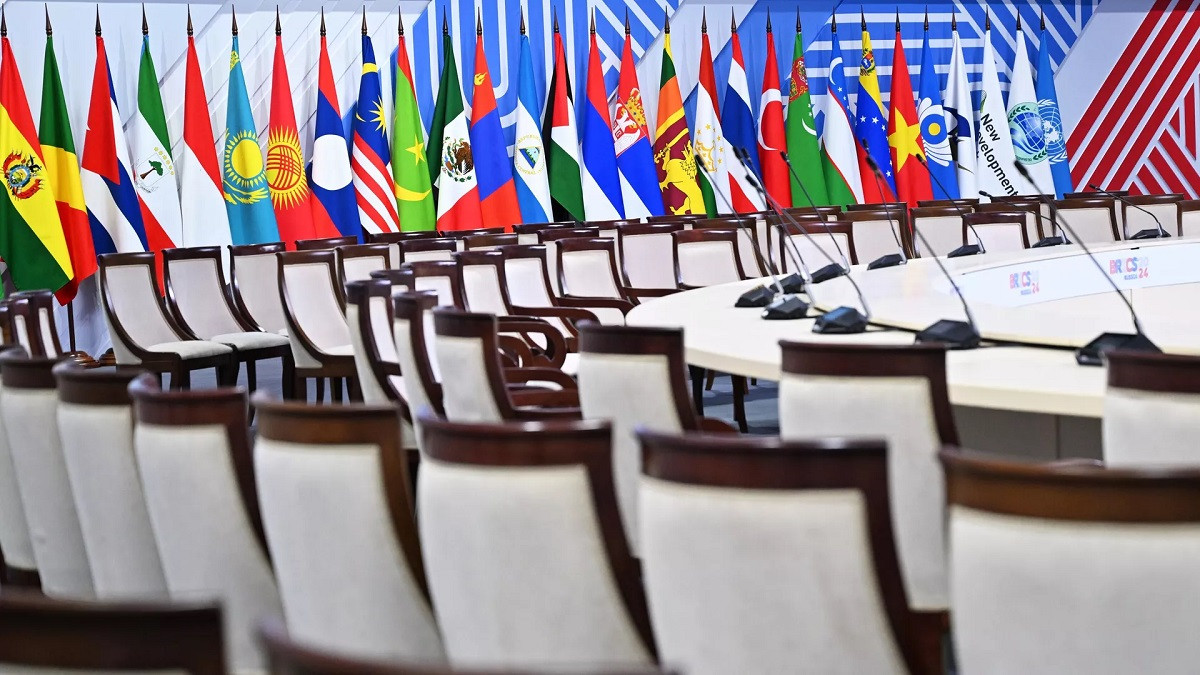
Last year saw the accession of new members to BRICS, the bloc comprising Russia, Brazil, India, China and South Africa. The new year keeps up the growth momentum, says a report by Sputnik.
BRICS now boasts 10 full members after Indonesia officially joined the group on 6 January.
BRICS currently includes Brazil, Russia, India, China, South Africa, Egypt, the United Arab Emirates, Ethiopia, Iran, and Indonesia.
What does Indonesia bring to the table?
Indonesia is the fourth-most populous nation (281,562,465) in the world.
It is the world's 16th-largest economy by nominal GDP and the 8th-largest by PPP (purchasing power parity).
The country is a major exporter of crude petroleum and natural gas, supplier of rubber, coffee, cocoa, palm oil, sugar, tea, tobacco, copra, and spices.
Its average GDP is projected to grow 5.1% per year from 2024 to 2026, according to the World Bank.
Newest BRICS partner states
Belarus: Russia’s closest security ally, positioned in the heart of Europe;
Bolivia: Boasts the world's largest lithium reserves at around 23 million tonnes;
Kazakhstan: 9th-largest country in the world, with Caspian Sea ports of Aktau and Kuryk; trade turnover with Russia already at $30 billion;
Cuba: Rich in minerals like nickel and cobalt; strategic Caribbean location;
Malaysia: Offers a “neutral and non-aligned” venue for strategic semiconductor hub via its National Semiconductor Strategy (NSS);
Thailand: Offers the role of “bridge builder” with regional groupings, such as ASEAN, APEC, ACD, and Bay of Bengal Initiative for Multi-Sectoral Technical and Economic Cooperation (BIMSTEC);
Uganda: Strategic location for regional trade and investment in East Africa;
Uzbekistan: Active in projects such as the North-South Transport Corridor, connecting Russian ports with Iran;
Nigeria: Africa's largest economy, with GDP growth projected to reach 3.6% per year in 2025-2026, according to the World Bank