


 For all latest news, follow the Daily Sun's Google News channel.


It might be said that the Pakistani invaders lost in 1971, but since then, we ourselves have been continuously losing. This conclusion arises from experience, coming from deep sorrow. But whom have we lost to? Who has lost?
Not to the Pakistanis—they do not deserve such credit. The loss has been to the forces that even the Pakistanis themselves were under and still are: capitalism. It is capitalism that we have been defeated by.
There was hope that the fall of the Pakistani oppressors would also mean the fall of their master. When the horse falls, the rider too falls—or so it was thought. But is that ever the case? This rider is far mightier, wielding global power. It does not fall easily. A new horse always replaces the fallen one. Bangladesh has become capitalism's new horse, galloped by its relentless rider. But where was our hope rooted?
Our hope lay in the sacrifices of the people. They fought valiantly, paid an immense price, and stood united, which gave rise to the belief that capitalism would fall and the people of Bangladesh would attain not just independence but true freedom. But such an overwhelming power—capitalism—cannot be toppled by sacrifice alone.
When capitalism retreats temporarily, it quickly returns. This is precisely what happened in our case. Capitalism has returned, more brutal than before, as if enraged by being disturbed, ready to punish.
Bangladesh is a new state, but how new? New in name, new in territory, but in nature and character? Not at all. It remains bureaucratic and capitalist like the old state. Yes, the rulers have changed—new leaders replaced the old ones. But why should we expect them to transform the state, make it democratic, dismantle its bureaucratic structure, decentralize power, and establish equality of rights and opportunities? Our hope rested on the sacrifices made.
Yet, does this oppressive ruling class and its interests recognize the value of the people's sacrifices?
The answer lies within this reality. The people have lost. They lost because they lack political organization, leadership, and power. Since 1971, the leadership we received didn’t lose—they surrendered. To lose, one must fight. The leadership in power did not fight against capitalism; they sought to surrender, and they did. After surrendering, they are now busy appeasing their masters, competing among themselves. The people's victory is being trampled under the dominance of capitalism and capitalists. This victory is both local and international; capitalism is a global system.
In 1971, the suffering of the people was immense, but their glory was unparalleled. December 16 remains a brilliant moment in the history of the Bengali nation. But what followed?
The history after that has not been one of ascent but of decline. We are descending, continuously descending, and this decline is happening in various spheres, most damagingly in our values. Among these, patriotism—the critical value—has suffered the most. In 1971, patriotism reached its peak; now, its absence is evident everywhere.
A similar expression of patriotism occurred in 1905 during the anti-partition movement of Bengal. However, that movement was limited to the middle class, primarily composed of Hindus at the time. The nationalist surge in that movement failed to include Muslims, leading to communal divisions, riots, and eventually, the partition of 1947—all due to the failure of leadership.
In 1971, there were no riots, only war. The Bengalis were united, correcting the mistakes of 1947. This time the question was not about dividing the country but dismantling the state. The state was broken, and independence came. But after that?
Patriotism declined. Responsibility for this also lies with the leadership. The leaders did not wish to fight. They did not want true independence; they wanted self-rule, which for them meant unrestricted freedom to loot. Their true allegiance was to capitalism, which they revealed post-victory.
For the people, the goal was different—not autonomy, not power transfer, but economic and social liberation. They dreamt of a society and state where wealth, religion, caste, or language would not create inequalities; where no one would be an enemy, and all would be allies. Needless to say, this dream remains unfulfilled.
Capitalists, however, found their freedom. They became richer at an incredible pace. While their numbers grew, they remain few compared to the population, though their dominance is overwhelming. Bangladesh now trembles under their control.
The people see that the new state is more terrifying than the old one. This state is not only under the ruling class but also openly oppressive. Like in 1947, many became refugees; this time, they became homeless within their own country. Their homeland is no longer theirs—it is in the hands of others with no room in their hearts or minds for the country.
In Bangladesh today, patriotism belongs to the working people. They sustain the country and have no place elsewhere. Regardless of homelessness, they are the true patriots. Conversely, the wealthier class, despite their riches, are the true refugees, their ideals rooted in global capitalism.
The ruling class, servile to capitalism, is to blame for the decline of patriotism. They exemplify self-interest and materialism, encouraging people to think only of themselves and forget everything else. They have turned the people into commodities, keeping them perpetually busy with survival, so they cannot question the oppression of the rulers.
The ruling class has excelled at two things: creating unemployment and spreading madrasa education. Both are massive obstacles to the growth of patriotism.
Unemployed individuals cannot possess patriotism. Their constant worry is their survival, making them inward-focused. When unemployment engulfs the country, expecting a flood of patriotism is unreasonable.
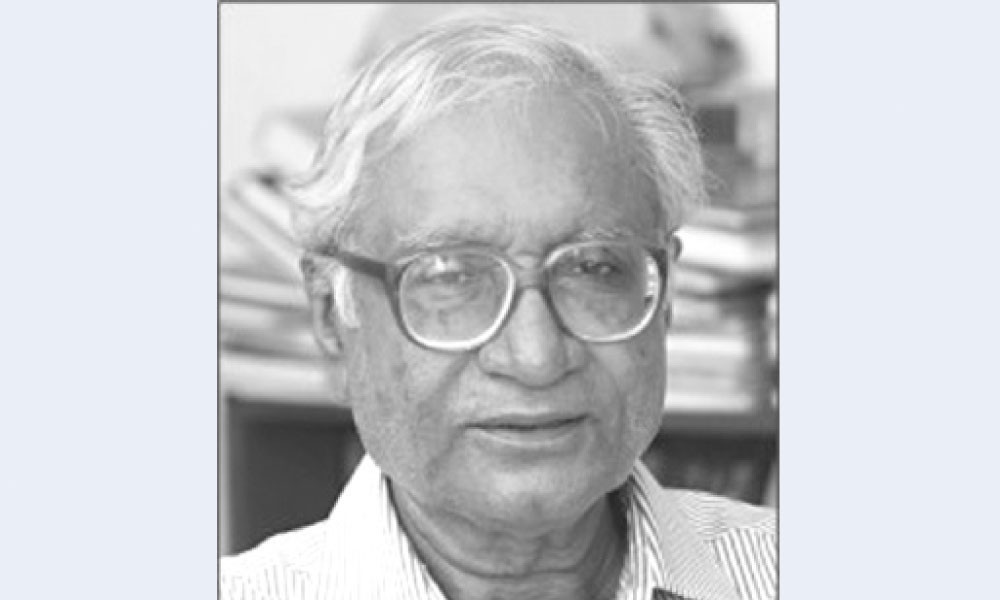
The writer is Emeritus Professor, University of Dhaka