


 For all latest news, follow the Daily Sun's Google News channel.


15th Founding Anniv of Kaler Kantho
National unity and unified government after July uprising
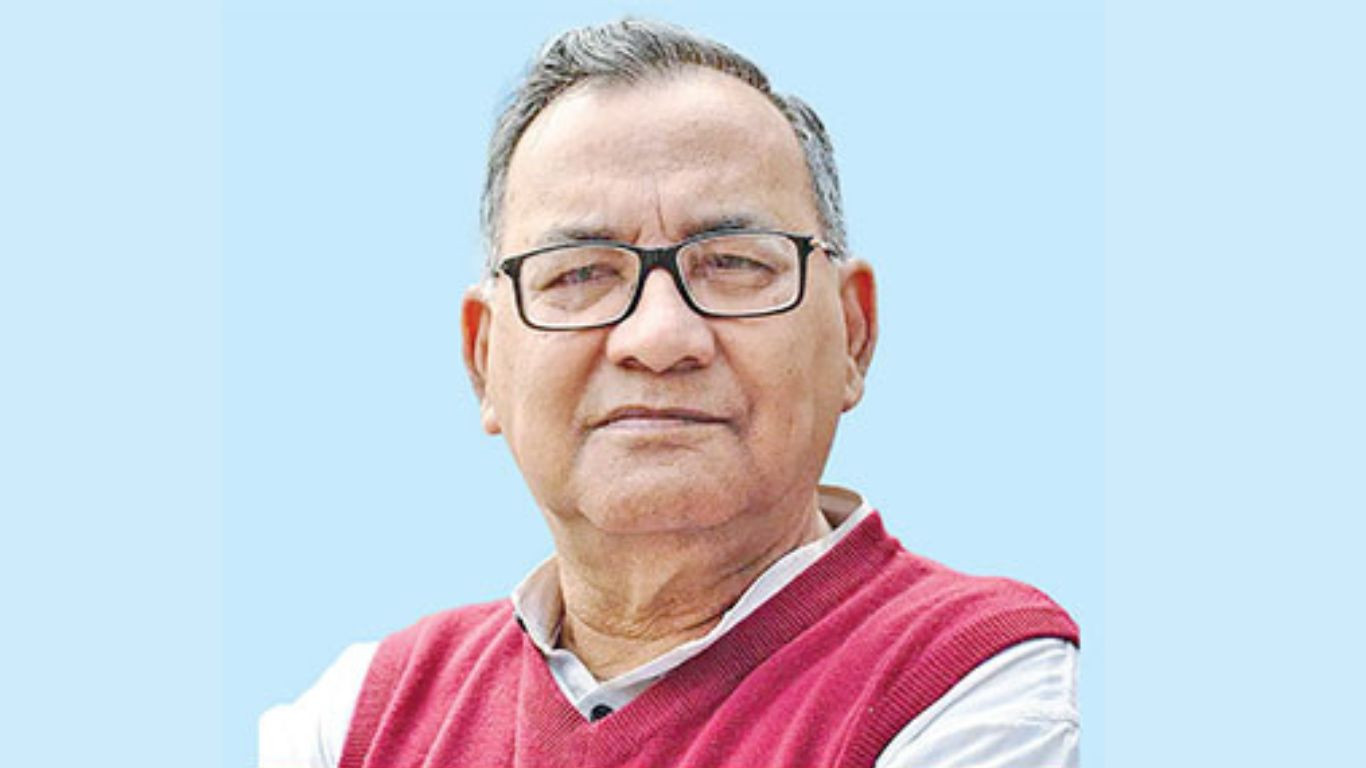
Mujahidul Islam Selim
Published: 10 Jan 2025, 08:41 PM
The history of the Bengali nation is a bunch of victories with unique heroism. This is our pride. But what is deeply painful and regrettable is that the history is also a history of not being able to maintain the victories achieved.
Even after snatching an unprecedented victory in the mass uprising of July-August, people are skeptical about the future of the country now. There is no end to speculation and discussions about various political issues and the future of this country among people. One of those issues is national unity.
Common people, in their simple understanding, consider national unity as an easy way to permanently maintain a peaceful political environment without conflict in the country. But they have not yet fully understood that since 'politics is the concentrated expression of the economy', if the system of economic exploitation-discrimination-deprivation remains in place, class conflict will remain in society.
It is not possible to permanently establish a peaceful environment without conflict in society until a classless social system is established. Therefore, flawless national unity cannot be expected in a class-divided society.
In our country, the relatively most advanced level and quality of national unity in history was established during the great liberation war of 1971. That was the most effective national unity in the history of the nation.
Consequently, no national unity can be achieved by avoiding, neglecting, or standing in opposition to the great liberation war of 1971. We must remember that the liberation war of 1971 was truly a people's war. It was not merely the product of the mastermind's plan. It was not just a 9-month military operation.
It was the successful outcome of countless mass struggles of the masses waged over years and decades. The nine-month of infinitely courageous armed war is a crowning chapter.
This struggle was not a 'separatist' activity, it was a unique struggle waged in the vein of the 'national liberation movement' that was going on worldwide.
Just as nationalist forces were partners in that struggle during the Pakistan era, so were left-wing progressives. The nationalist forces have sometimes compromised with the rulers, deviated from the principles and ideals, and reversed their own position.
Awami League leader Suhrawardy was elected as prime minister of Pakistan. After winning the premiership, Suhrawardy claimed that around 98% autonomy of East Pakistan had been achieved. “We do not need to be in the non-aligned movement,” he said.
Meanwhile Maulana Bhashani formed National Awami Party (NAP) where many leaders from Awami League joined the new party. “The struggle for the rights of the Bengalis will continue,” said Suhrawardy at that time.
Suhrawardy may deviate and compromise, Sheikh Mujibur Rahman may distance himself from it, but we who believe in this principle will continue to struggle relentlessly until our rights are realised.
Since then, the struggle against the Pakistani rulers has moved forward with equal strength, revolving around two streams and centers. One is the left-progressive stream and the other is the bourgeois-nationalist stream.
I have observed two sides of politics in parallel. The radical leftist student union was on one side along with NAP and the banned communist party. On the other side, the nationalist Chhatra League, along with them, the Awami League.
While moving through various events, the forces of all the streams and sub-streams, including these two main streams, merged into one stream in 1971. In the 1970 elections, the Awami League won with a single majority in the whole of Pakistan.
Pakistani colonial rulers did not allow that verdict to be implemented. The Non-Cooperation Movement began. The Pakistanis started genocide. People were shot dead one after another. People took to the streets. Preparations for armed struggle began.
The final armed phase of the great liberation war was a chapter of a continuously developed struggle and organized leadership. The events of 1971 were a revolutionary narrative of the birth of a new state through a people's war. A historic mass uprising took place in 1969 or 1970. This time, another mass uprising took place in July-August 2024. The special feature of this time is that it was mainly a spontaneous awakening.
Even after 53 long years, the aspirations and dreams of the Liberation War have not been realized. The country has been led astray. The sorrows and pains of the people gradually turned into accumulated anger.
The question arises in their minds - where has the expected democracy, brotherhood, national self-esteem, thought and sense of equality gone? Why is there still no guarantee of rice-clothes, bread, and education-medical care-employment-housing.
For a long time, people had anger against the Hasina-led government like gunpowder, waiting for the fire of a match to explode. The quota reform movement was the matchstick. It was just an occasion for the explosion. If there were no quota, this explosion would have happened on some other occasion.
A special reason for clicking on the quota issue is the problem of unemployment in our country. Educated middle-class students saw that they were studying hard, but there was no guarantee of a job. Then, despite their talent, they were being deprived because of the quota. The movement to demand reform of this discriminatory quota system emerged on the path of a mass uprising within two to four days.
When such a spontaneous mass uprising takes place, even the most backward people in society in terms of consciousness come forward and stand at the forefront. Therefore, in the mass uprising of July-August, different political thoughts stood against the fascist dictatorship.
—-----------------------
The writer is former president of Communist Party of Bangladesh