


 For all latest news, follow the Daily Sun's Google News channel.


BDR CARNAGE
New commission pledges to uncover domestic, foreign conspiracies
Daily Sun Report, Dhaka
Published: 27 Dec 2024, 12:51 PM
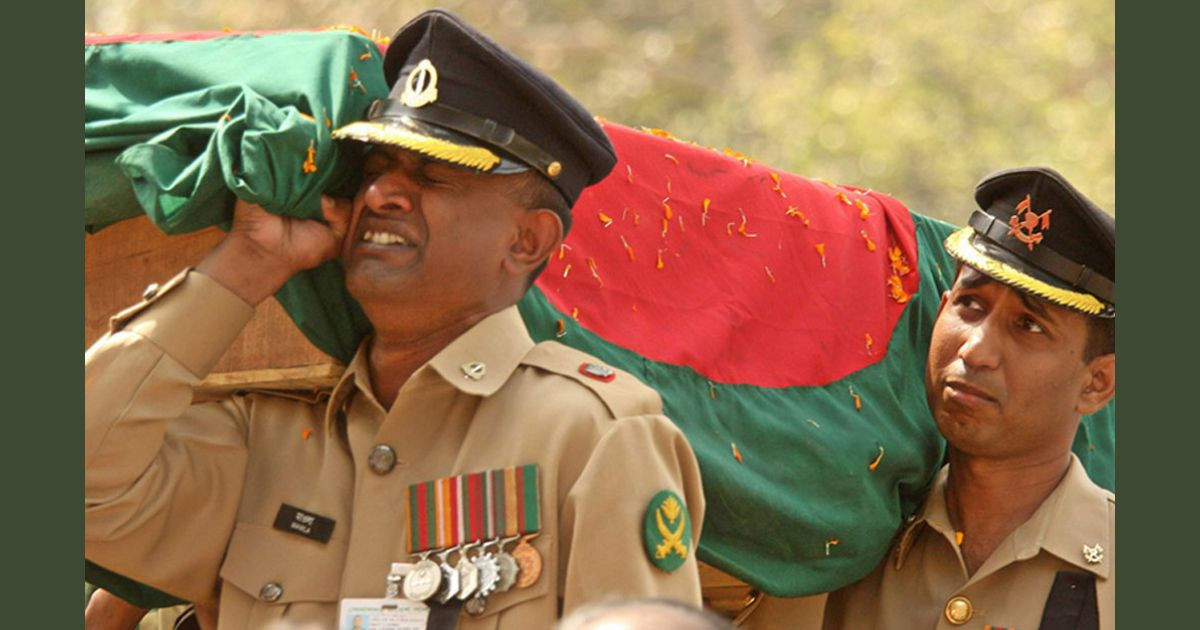
The commission formed to reinvestigate the 2009 BDR massacre has pledged to identify both local and foreign conspirators involved in the tragic carnage.
Major General (retd) ALM Fazlur Rahman, chairman of the newly-formed National Independent Commission, assured a thorough investigation into the BDR carnage, which occurred on 25-26 February 2009.
Speaking to journalists after the commission’s first meeting at the BGB Headquarters in Dhaka Thursday, he emphasised the commission’s commitment to uncovering the truth.
“This is a national issue, an event of unprecedented magnitude. The scale of the Pilkhana tragedy is unparalleled, and we are committed to ensuring a comprehensive investigation into the events,” said Fazlur Rahman, who had previously served the paramilitary force as its director general.
The commission’s primary objective is to uncover domestic and foreign conspiracies surrounding the massacre at the BDR headquarters in Pilkhana in 2009, which claimed 74 lives, including 57 army officials.
When asked if the investigation would identify any specific country, Rahman stated that the commission would not single out any nation but would conduct an impartial inquiry. “If anyone is found responsible, we will provide our opinion accordingly,” he added.
The commission’s mandate includes identifying individuals, groups, organisations, institutions, departments, or associations responsible for the killings, as well as those who aided, conspired, or tampered with evidence. The commission has been given three months to complete its investigation.
“We will remain impartial and uninfluenced by any external factors. We will use our intellect and dedication to complete the investigation within the given period,” Fazlur Rahman assured.
He also sought cooperation from the media, urging them to interpret the commission’s statements positively to avoid harming national interests.
Addressing the plight of those affected by the massacre, he said, “We aim to address the suffering of those who were killed, tortured, and deprived in the aftermath.”
The commission chief outlined the logistical and security requirements essential for its operations, including administrative facilities, office space, and transport arrangements.
Initially, the commission’s office will operate out of the BGB Dhaka Battalion office. Letters will be sent to relevant authorities, including the chief adviser, to secure necessary secretariat support.
Additional requests include security for commission members and their families, transport, and office resources. The commission will also propose granting the chairman a status equivalent to an adviser to the government and its other members the status of Supreme Court’s Appellate Division judges to effectively engage with domestic and international stakeholders.
The commission plans to hold its next meeting after securing these provisions and will begin recording statements.
“After every meeting, if necessary, we will update the media to ensure transparency and keep the nation informed,” Rahman said.
When asked about aligning the investigation with the International Crimes Tribunal (ICT), he stated that the commission would seek the inclusion of four legal experts specialising in civil, criminal, military, and international law. Measures to prevent involved individuals from leaving the country are also being considered, pending discussions among commission members.
Regarding expatriates linked to the incident, Fazlur Rahman mentioned that efforts would be made to contact them through the foreign ministry. If extradition proves impossible, a team may be sent to record their statements.
On 23 December, the government formed the seven-member commission to reinvestigate the BDR massacre and uncover the nature of the crimes committed during, before, and after the killings. The commission has been tasked with submitting a report within 90 days.