
 For all latest news, follow the Daily Sun's Google News channel.


Debate surrounds a new constitution or amendment
Experts say democratic reform is a must for the country's progress
Daily Sun Report
Published: 10 Sep 2024, 12:44 PM
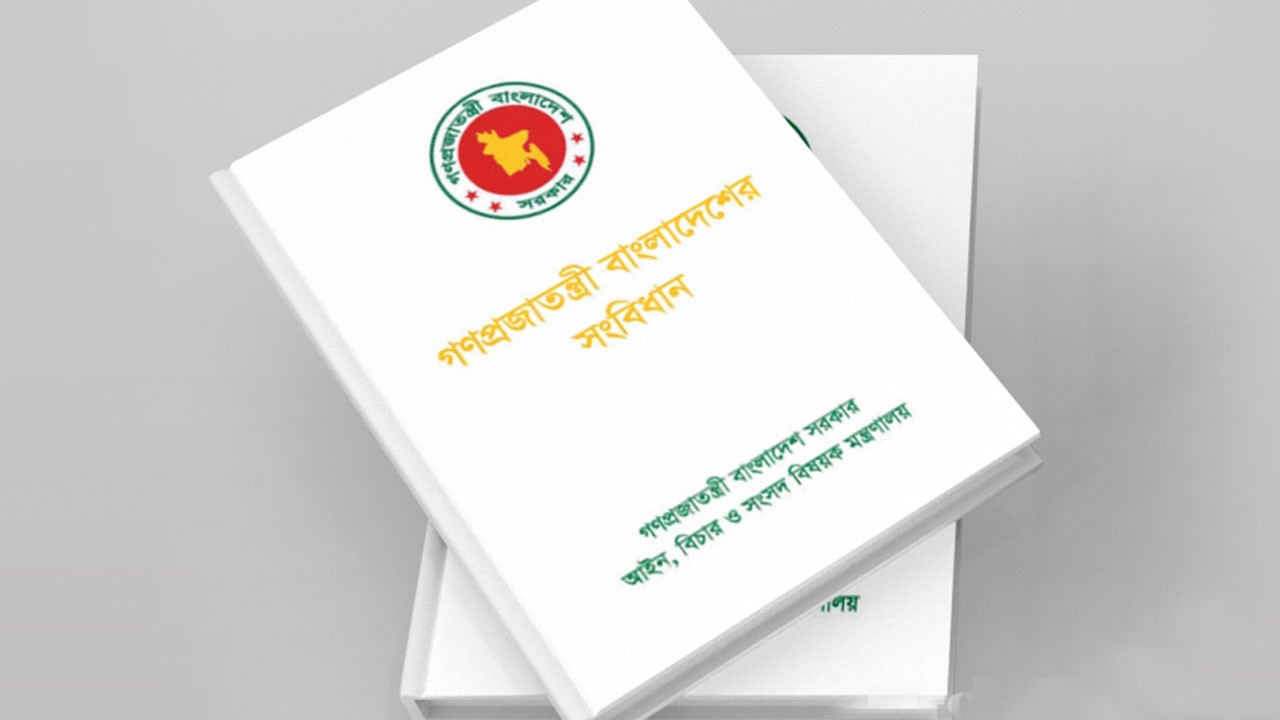
Photo: Collected
Following the fall of the Awami League government due to the student and public uprising, discussions about constructing a new Bangladesh have gained momentum. Experts and citizens are analysing the country’s future and exploring the necessary reforms to take Bangladesh on a democratic path.
There are high expectations from the interim government, particularly regarding the democratic reforms needed for the country's progress. Conversations about state restructuring and constitutional amendments have become a focal point. Some advocate for rewriting the constitution entirely, while others suggest necessary reforms. Analysts urge the interim government to make crucial decisions on these matters, but the government states that no decision has been made yet, and discussions are ongoing.
A F Hassan Ariff, an advisor to the Ministry of Local Government, Rural Development, and Cooperatives, confirmed that discussions are taking place regarding the amendment of the constitution. He also emphasized that public opinion, particularly from students and citizens, will be considered in the amendment process.
The advisor mentioned that discussions are also ongoing about the next elections and the possible reinstatement of the caretaker government system. However, any decision on the constitution, elections, or caretaker government will be based on the input of coordinators and public demand.
Supreme Court senior lawyer Z I Khan Panna noted that the current constitution was written in the context of 1971, and reforms are necessary for democratic restructuring. He emphasized that outdated laws, designed for exploitation by the ruling class, should no longer exist. Ensuring the rights of indigenous communities and eliminating corruption in administration are essential for democracy to thrive. However, Panna cautioned that repealing the constitution entirely could lead to repeated political crises over the next decade.
Dr Badiul Alam Majumdar, Secretary of the Citizens for Good Governance (SUJAN), highlighted the need for substantial changes to the constitution to restructure the state. He pointed out that reforms could be approached in two ways: either by rewriting the entire constitution or by introducing far-reaching amendments on key issues.
Majumdar also discussed the history of the caretaker government system, noting that it was a result of a political compromise between the Awami League and BNP in the 1990s. He emphasised the need for significant changes to the constitution, such as balancing the powers of the president and the prime minister, rethinking the election-time government structure, and addressing controversial provisions like Article 70.
Senior lawyer Barrister Sara Hossain added that despite progress, inequality still exists, and it would be difficult to completely rewrite the Constitution. She stressed the importance of eliminating the death penalty and focusing on fundamental rights, especially freedom of expression, in any new version of the constitution. She also called for participation from all religious and ideological groups to ensure a more inclusive democracy in the new Bangladesh.