
 For all latest news, follow the Daily Sun's Google News channel.


Straight Talk
The American Devil of Death is Dead
Abdul Mannan
Published: 02 Dec 2023, 10:31 AM
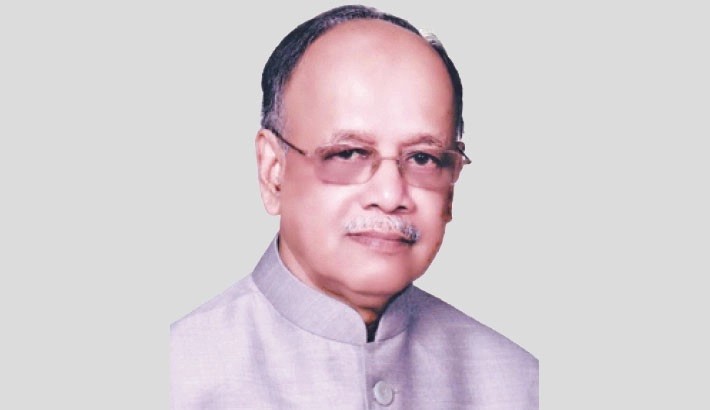
Henry Kissinger, the former US National Security Advisor and Secretary of State under US President Richard Nixon and Gerald Ford died on Wednesday at the age of 100. Virtually no news media across the world used any kind words announcing his death. When Kissinger celebrated his 100th birthday on last 27 May the global media instead of praising his good deeds (did not have much to talk about) reiterated his misdeeds in his career. Kissinger was one such person whom freedom and democracy loving people in Asia, Africa and Latin America loved to hate. Huffington Post described Kissinger as ‘The titan of American foreign policy was complicit in millions of deaths-and never showed remorse for his decisions’. Other commentators described him as a person of ‘tortured and deadly legacy’, and one most dreaded ‘war criminals in living history.’ Since he left office Henry Kissinger could not travel to many countries for his involvement in war crimes and masterminding military coups and toppling elected governments the The American Devil of Death is Deadmost notorious of these was the toppling and killing of Chile’s elected socialist President Salvador Allende in 1973. the US intelligence agency CIA was used by Kissinger to do all his dirty jobs. His and CIA’s hands in the assassination of our Father of Nation is too apparent to be overlooked.
Due to Kissinger’s position under the two US Presidents he had the privilege to direct the Vietnam War and extend the boundaries of Cold War with Soviet Union. As a part of his policy he secretly ordered carpet-bombing in Cambodia in 1969-70, that killed untold number of civilians, despite the fact that Cambodia was a neutral nation and in no way had to do anything with the Vietnam War. This was gross violation of all International Laws. His quoted statement “To be an enemy of the US is dangerous, but to be a friend is fatal’ still seems to be holding.
Kissinger’s notoriety rose to a new height when he directed illegal arms sales to Pakistan in 1971 when Pakistan army was committing one of the worst genocide in history in Bangladesh. American author Gary Bass in his book 'The Blood Telegram: Nixon, Kissinger and a Forgotten Genocide' indicts Kissinger severely for his role in the events of 1971 leading up to the creation of Bangladesh. When Indian Prime Minister Srimati Indira Gandhi went to meet Richard Nixon in the White House at the height of Bangladesh’s Liberation War in November; defying all diplomatic norms Kissinger decided not to remain present at the meeting.
Kissinger was instrumental in facilitating the Indonesian invasion of East Timor and backed Argentina’s repressive military dictatorship as it launched its “dirty war” against dissenters and leftist in 1976. When Nixon stepped down from US presidency following the ‘Watergate Scandal’ and Gerald Ford took over, Kissinger fuelled civil wars in Africa, mostly in Angola.
The history of Bangladesh would be incomplete without mentioning the role US played during 1971 under the directives of President Nixon and his Secretary of State Henry Kissinger. American author and journalist Christopher Hitches in his well-researched book ‘The Trial of Henry Kissinger’ and Pulitzer Prize winning author and journalist Lawrence Lifshultz in “Bangladesh: The Unfinished Revolution” vividly described the role of Kissinger, the US State Department and the CIA in the assassination of Bangabandhu Sheikh Mujibur Rahman. Hitchens writes, ‘1971 Kissinger sent a message to General Yahiya Khan, thanking him for his ‘delicacy and tact’ to suppress the Independence War of 1971. According to Hitchens, in ‘1971 Kissinger had attempted the impossible by trying to divert the electorally victorious Awami League, and dilute its demand for independence. “Kissinger initiated a covert operation for Khondaker Mustaque, who wanted to backstab the Liberation War. In September of 1971 Mustaque met US Consul General in Calcutta George Griffin and informed him that if US can convince Yahiya Khan to release Mujibur, he will initiate a move to stop the Liberation War. Mustaque’s activities were beyond the knowledge of Tajuddin or his colleagues. It is also learnt from other published documents that when Kissinger learnt about the trial of Bangabandhu in Mianwali Jail in September of 1971 he sent a message to Mujib that he will ask Yahiya to release him if he calls off the Liberation War. Bangabandhu Mujib simply said NO and declared nothing of the kind is possible before he meets his people.
Both Nixon and Kissinger considered the emergence of Bangladesh as their personal defeat and considered Mujib as their personal enemy. When Bangabandhu was struggling to rebuild Bangladesh on the ashes of our Liberation War, Kissinger and his State Department was working behind the scene to thwart his efforts. The devastating flood of 1974 brought about an acute food shortage in Bangladesh. The then Soviet Union, some East European countries, Australia came forward with some food aid. Japan granted some money to buy food from the international market. US finally agreed to send some food under its PL-480. As ship-load of food grain approached Chittagong Port they were ordered back to US by Kissinger’s State Department on the pretext that Bangladesh sold few thousand jute bags to US’s enemy country Cuba. As ordered the ships returned. Meanwhile the food crisis in Bangladesh aggravated. On giving aid to Bangladesh Kissinger frequently repeated statement ‘the basket case’ (bottomless basket) still resonates in the minds of the people of this country. Today the same Bangladesh’s basket is overflowing with food surplus.
Kissinger and his Department of State not only were involved in the upheaval of 1975 and the assassination of Bangabandhu, his functionaries or the personnel working under the US State Department and with CIA were involved in deplorable activities like ‘regime changes’ and ‘political assassinations’ in many countries as documented by many American authors and researchers. When Bangladesh’s Prime Minister Sheikh Hasina declares that a country which can ‘change regimes’ does not want her in power, it is understandable about which country she is speaking about. The Kissinger doctrine: ‘if sovereign countries refuse to be worked into broader US schemes, the American national security state will move swiftly to undercut their sovereignty’ still works. This is business as usual for the US, no matter which party sits in the White House.
Let Henry Kissinger be the last of the villains in the annals of history of diplomacy. The world can live in peace without the hegemony of any country or a new Henry Kissinger. The world has seen enough of wars and loss of life since the end of the Second World War, thanks to the contribution of big superpowers. Now peace should be given a chance. The Devil of Death is dead. Let us not resurrect him.
_______________________________________
The author is an analyst and a commentator