



 For all latest news, follow the Daily Sun's Google News channel.


Bangladesh is entering a critical phase in its political transition. Sheikh Hasina has already announced that she will return to the country in December, and the Awami League has reportedly begun operating in a disguised manner, allegedly creating destruction and an unusual situation across the country. This is a dangerous trajectory. If left unaddressed, it threatens to unravel whatever stability remains and push the nation deeper into uncertainty. What Bangladesh needs now, more than ever, is a diplomatic solution—one that addresses the political crisis at its root rather than allowing it to fester and explode.
The reality is that no political force in Bangladesh can be permanently suppressed or eliminated. History has shown this repeatedly, both in Bangladesh and around the world. When a movement of significant scale is pushed underground, it does not disappear; it mutates, radicalizes, and often becomes more destructive. The Awami League, whatever one thinks of its past record, commands a substantial support base and retains organizational reach. Attempting to erase it entirely through force or legal prohibition will not bring peace. It will only drive its activities into the shadows, where they become harder to monitor, harder to manage, and far more dangerous to public safety and economic life.
The deteriorating law and order situation is already taking a toll. Incidents of sabotage, unrest, and disruption are being reported with increasing frequency. These developments do not exist in a vacuum. They directly undermine the confidence of investors, both foreign and domestic, who watch the news before they commit their capital. No investor wants to build a factory or open a business in a country where the political ground shifts violently from week to week. Every act of destruction, every disruption to transport and commerce, every sign of institutional weakness sends a clear message to the world: Bangladesh is not yet safe for business. That message, once sent, is very difficult to retract.
This is precisely why a diplomatic solution is essential. Diplomatic engagement offers a pathway that military or legal measures alone cannot provide. It allows for quiet, structured communication between parties who may not trust each other but who share a common interest in avoiding national collapse. It creates space for mediation, for confidence-building measures, and for negotiated arrangements that protect both the country's stability and the legitimate rights of all political actors. Countries that have emerged from similar crises—whether in South Asia, Southeast Asia, or beyond—have almost always done so through dialogue, not through the wholesale elimination of their opponents.
India, as the host of Sheikh Hasina and as Bangladesh's largest and most influential neighbor, has a particularly important role to play. A constructive diplomatic approach would involve engaging India to facilitate a dignified and orderly resolution. This does not mean endorsing any particular political outcome. It means recognizing that regional stability serves everyone's interests. A Bangladesh consumed by internal conflict is bad for India, bad for South Asia, and bad for the global economy that depends on Bangladeshi garments, labor, and markets. Quiet diplomacy, back-channel communication, and third-party facilitation can help de-escalate tensions before they spiral out of control.
The incumbent government must also recognize that its own legitimacy and effectiveness depend on how it handles this challenge. Heavy-handed tactics may produce short-term calm, but they breed long-term resentment and resistance. A more strategic approach would combine firm maintenance of law and order with genuine openness to political dialogue. This means protecting citizens from violence and sabotage while simultaneously creating a credible political process that allows all peaceful parties to participate. It means distinguishing between criminal acts, which must be prosecuted, and political opposition, which must be accommodated. Blurring that line is a recipe for prolonged instability.
For the greater interest of the country, several concrete measures deserve serious consideration. The government should open discreet channels of communication with the Awami League and other opposition forces, ideally through neutral intermediaries, to reduce the risk of violent confrontation. It should engage regional and international partners – India, China, the United States, the European Union and multilateral bodies – to support a mediated political process. It should strengthen the independence of the judiciary and electoral institutions so that political disputes can be resolved through law rather than through street action. It should protect the economy from political shocks by reassuring investors, stabilizing the banking sector, and maintaining continuity in essential services. And it should pursue a credible political settlement that gives all peaceful actors a stake in the country's future.
None of this is easy, and none of it will happen overnight. But the alternative – continued unrest, deepening polarization, and a collapsing investment climate – is far worse. Bangladesh's economy is already in a shambles. Unemployment is at record highs. Corruption is rising. Foreign exchange reserves are strained. The country cannot afford another year of political chaos. Every day of instability pushes foreign investment further away and makes the task of economic recovery that much harder.
The international community, too, has a stake in this. Bangladesh is a major contributor to global supply chains, a significant recipient of development finance, and a strategically located nation at the crossroads of South and Southeast Asia. Its stability matters far beyond its borders. Diplomatic partners should therefore encourage restraint, support dialogue, and offer mediation where appropriate. Pressure should be applied not to punish one side or the other, but to bring all sides to the table.
In the end, the question is not whether Sheikh Hasina returns or whether the Awami League survives as a political force. The question is whether Bangladesh can manage its political transition without destroying its economy and its social fabric in the process. That requires statesmanship, not vengeance. It requires negotiation, not suppression. It requires a diplomatic solution that respects the dignity of all parties while safeguarding the future of the nation.
Bangladesh has overcome enormous challenges before. It has the talent, the resilience, and the resources to do so again. But it will not do so through force alone. The path to stability runs through dialogue, through inclusion, and through a political settlement that all major actors can accept. A diplomatic solution is not a sign of weakness. It is the only realistic path to a peaceful, prosperous, and investable Bangladesh.
______________________________________
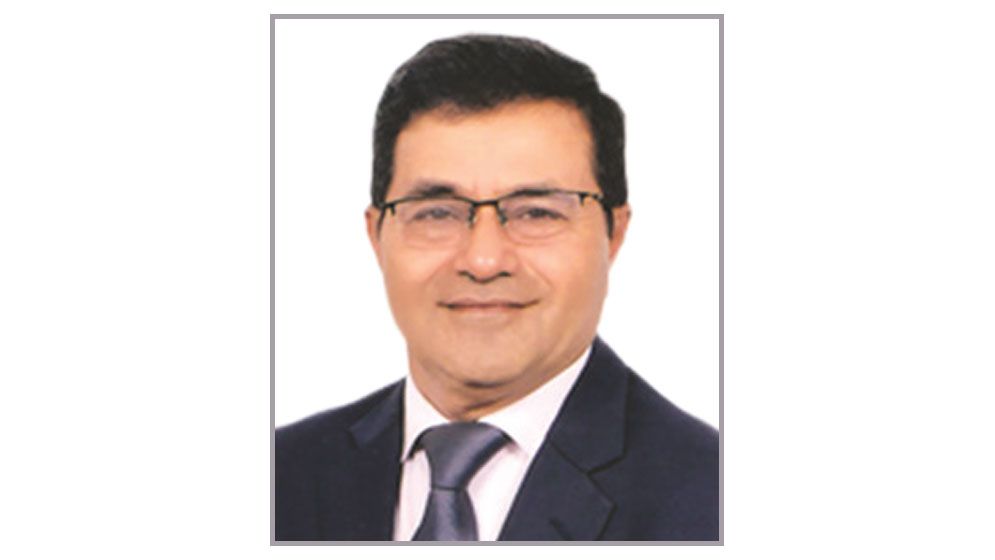
The writer is an Editor and Publisher of The Security World