


 For all latest news, follow the Daily Sun's Google News channel.


Bangladesh faces a striking agricultural paradox: nearly half of its workforce depends on agriculture, yet agricultural labour productivity remains among the lowest in South Asia. Despite decades of progress in food production, the country has struggled to turn its large farm workforce into proportionately higher economic value.
Resolving this paradox requires shifting from an emphasis on production alone to a broader strategy centred on productivity, profitability, technological transformation and employment diversification. According to World Bank data, roughly 45 per cent of Bangladesh's workforce is engaged in agriculture, about 30.8 million people directly or indirectly.
The Bangladesh Bureau of Statistics (BBS) put the share at 40.6 per cent in 2017. They suggest agriculture continues to absorb workers who cannot find enough opportunities in industry and services. The productivity gap is considerable. World Bank figures estimate annual agricultural value added per worker at US$1,236.22 in 2025, or about Tk 152,055 at an assumed exchange rate of Tk 123 per dollar. Agriculture contributed 11.4 per cent of gross domestic product, with annual output of US$52.13 billion.
Dividing that output by 30.8 million workers yields roughly US$1,693, a higher figure; the difference likely reflects the broad definition of indirect workers, underscoring why consistent measurement matters. Regional comparisons reveal the scale of the challenge. Estimated annual agricultural productivity per worker is US$3,186 in Pakistan, US$2,159 in India, US$5,039 in Nepal, US$3,334 in Sri Lanka and US$1,990 in Bhutan. Only Afghanistan's 2024 estimate, US$1,153, is lower. The Maldives, at US$8,672, has an economy dominated by tourism, with a tiny farm sector.
But Bangladesh's low productivity remains a serious concern. Several structural constraints explain this. Fragmented landholdings make machinery expensive and farm management difficult. Limited access to improved seeds, modern equipment, irrigation and digital services restricts efficiency. Many farmers lack technical skills, access to affordable credit and reliable extension support. Inadequate collection points, cold storage, transport and market infrastructure raise costs and post-harvest losses. Tenancy arrangements discourage investment; climate shocks threaten yields and continued dependence on rice limits diversification into higher-value enterprises.
Mechanisation must therefore become a cornerstone of transformation. Government support should prioritise affordable machinery for land preparation, planting, weeding, harvesting, threshing and drying. Because most farmers operate small plots, individual ownership is rarely viable. Custom-hiring centres, cooperatives and private rental services can make equipment accessible at reasonable cost. Bangladesh's own experience with power tillers and combine harvesters shows that rental markets work. Subsidies and credit should be transparent and linked to demonstrated productivity gains, while local manufacturers receive incentives to build affordable, reliable machines.
Technology alone cannot transform agriculture without skilled users. The Department of Agricultural Extension, universities, research institutes and private firms should collaborate on practical training in crop management, balanced fertilisation, water efficiency, integrated pest management and machine operation. Digital advisory services can deliver weather forecasts, market prices and technical recommendations.
Training should be judged by technology adoption, production costs, farm income and productivity gains rather than participation numbers alone. Women, who perform much farm work, must be included. Research and quality seed systems also need greater investment. Institutions such as Bangladesh Agricultural Research Institute (BARI) and Bangladesh Rice Research Institute (BRRI), working with private partners, should develop climate-resilient, high-yielding varieties suited to local conditions and market demand.
Greater attention to pulses, oilseeds, vegetables and fruits could improve land-use efficiency, nutrition and profitability. Research priorities should reflect farmers' practical constraints: labour shortages, rising input costs, water scarcity and climate risks. Extension officers should carry these varieties quickly to farmers through demonstration plots and local seed dealers.
Productivity gains must extend beyond the farm gate. Weak market linkages often deny farmers fair prices. Investment in collection centres, grading, packaging, cold chains, warehouses and rural transport would reduce losses and expand market access. Farmer organisations can aggregate produce, strengthen bargaining power and enable collective marketing.
Agro-processing can create jobs in storage, packaging, logistics and food manufacturing while increasing agricultural returns. Mobile payments can also speed settlement and reduce intermediaries' margins for small and marginal farmers. Employment diversification is equally important. Mechanisation may reduce demand for some farm labour, but this need not cause hardship if alternative jobs emerge simultaneously. Bangladesh should expand employment in agro-processing, machinery services, rural enterprises, logistics, light manufacturing and digital services, as Vietnam and Thailand have done.
Skills development must match actual labour-market demand. Social protection and targeted retraining can help workers move into more productive occupations, and remittances can be channelled towards rural investment. The Government should establish a coordinated agricultural productivity strategy with measurable targets, such as doubling value added per worker by 2035.
Key indicators should include value added per worker, machinery adoption, production costs, farm profitability, post-harvest losses and rural non-farm employment. Reliable, regularly updated statistics are essential for identifying regional disparities and directing public investment. The agriculture, finance, education, industry and labour ministries should coordinate, with farmers and private stakeholders participating in implementation and evaluation. Progress should be reviewed publicly every year, with regional targets for districts lagging behind.
Ultimately, Bangladesh does not simply need fewer people in agriculture. It needs to increase the economic value each worker brings. Mechanisation, skilled people, research, quality inputs, efficient markets and diversified rural industries must advance together. Turning this paradox into an opportunity for inclusive growth will be essential for raising farmers' incomes, strengthening food security and building a more competitive, resilient economy.
_____________________________________
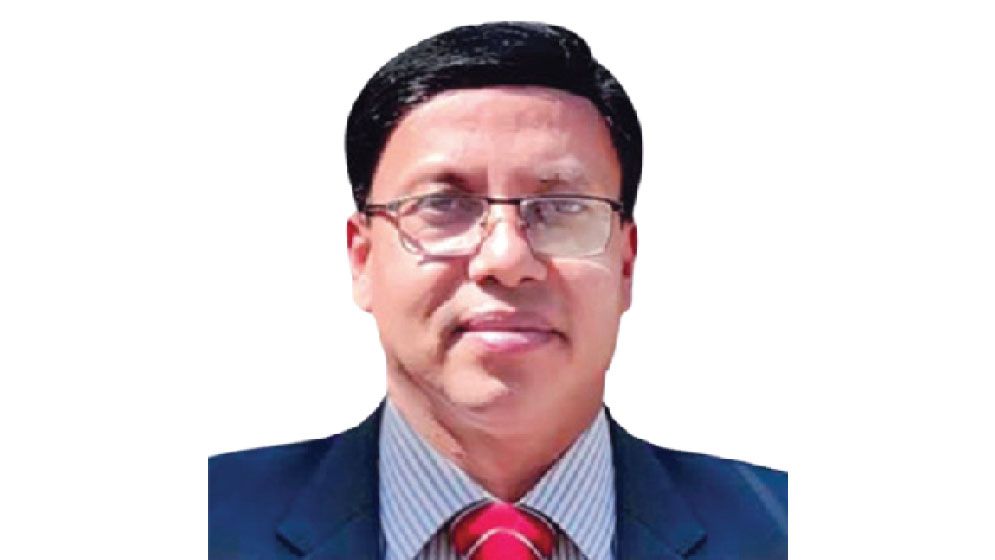
The writer is Principal Scientific Officer, BARI. He can be reached at [email protected]