


 For all latest news, follow the Daily Sun's Google News channel.


Despite the existence of some lukewarm criticism about cadet colleges, their glory has been widespread since its inception in Bangladesh in 1958 (when it was East Pakistan). Responding to the demands of time, more such institutions were established in Jhenaidah, Rajshahi, and Mirzapur at that time, and after the liberation of Bangladesh in 1971, residential models were converted to cadet colleges along with the establishment of two more girls’ cadet colleges at Feni and Joypurhat. It has been said that most previous glory and the Pakistani time traditions have perished in many other fields, but this combined civil-military institution has retained its glory and tradition without compromising quality even though the quality of education seriously waned at the national level due to the cheap popularity theory of the politicians and particularly during the past autocratic regime. Because of directly serving in a cadet college and being a man of the education stream, any deviation from cadet college education makes me concerned. I learnt a lot from this glorious institution even though I witnessed many people castigate the service of this institution in spite of their enjoying the full facility offered by it.

I talk to the cadets who currently study there and talk to the faculty members and guardians whenever any opportunity surfaces. Talking to them, I have unearthed the fact that the standard of this prestigious institution has waned a little in terms of its offering quality education, holding extra and co-curricular activities and the relationship between faculties and cadets. And the most important phenomenon came to me as a matter of surprise: during the fallen regime, the strict quality maintenance measure was erased from the cadet college. Through tough and genuine competition, cadets were enrolled from across the country, irrespective of their hailing from civil or military-background families that were broken during the autocratic regime. Understanding the negativity of this step, the authorities have again come back from that decision and have restarted to enrol the deserving candidates on the basis of pure merit, almost like before; that really deserves a salute. I got astonished to observe that their approach, conduct, behaviour and outlook, which were quite different from the cadets nurtured and produced during our time.
We want cadet college admission to be absolutely based on merit without maintaining any quota. We know the cadets are offered some facilities which are unavailable in other institutions. Its aim is to develop them as deserving citizens of the state. So, only the brilliant and deserving candidates should have the right to enjoy these opportunities.
During our time, most faculty members of any discipline could speak good English, but I was astonished to learn from some cadets that today even many faculty members of the English department do not want to speak English. Teachers of other subjects, particularly science and mathematics, cannot cater to the demands of cadets with some exceptions. We, as new faculty, had to receive three weeks’ training held in Faujderhat Cadet College that does not take place now. That training practically made the new faculty members familiar with the everyday activities of the cadets, made them closer to the faculty members of other colleges, shared their own experiences, and received and learnt from the experiences of senior and experienced faculty members. We had to give presentations before the faculty members of different colleges. I want to mention an excellent opportunity for the new faculties to remove their shyness and increase their confidence, which is absolutely important to working in this exceptional educational institution. Coming back to college, all the new faculties had to show demonstration sessions again before all the faculties and military officials. That was another big opportunity to prove a new faculty’s worth. Some new faculties whom I talked to told me no such programmes are entertained now.
Meanwhile, in recent times, some English questions set in the exams seem to be very common, where students are asked what kind of parts of speech these are, what kind of verbs these are, etc., which never tests the linguistic and communicative ability of the young learners. Admission seekers should be assessed to learn their ability to appropriately use the verbs and other grammatical items without asking them to learn what this is and why this is. These types of questions go with the M.Phil. and Ph.D. level researchers who conduct research on the functions of grammar. These types of questions are set in general educational institutions where ELT teachers are not available. Even in our public examinations, these types of questions are regularly set without trying to assess students’ communicative ability. We left the grammar-translation method many years back, but in the cadet college admission test, we see ‘translation’.
We always expect standard but not tough and unnecessary grammar-focused questions to be set in the cadet college admission tests. The question of this test will teach the entire nation how English questions need to be set. When the entire country sets sail to the favourable side of the wind, this prestigious institution must retain its glory at any cost without setting the questions, like usual institutions do.
_______________________________________________
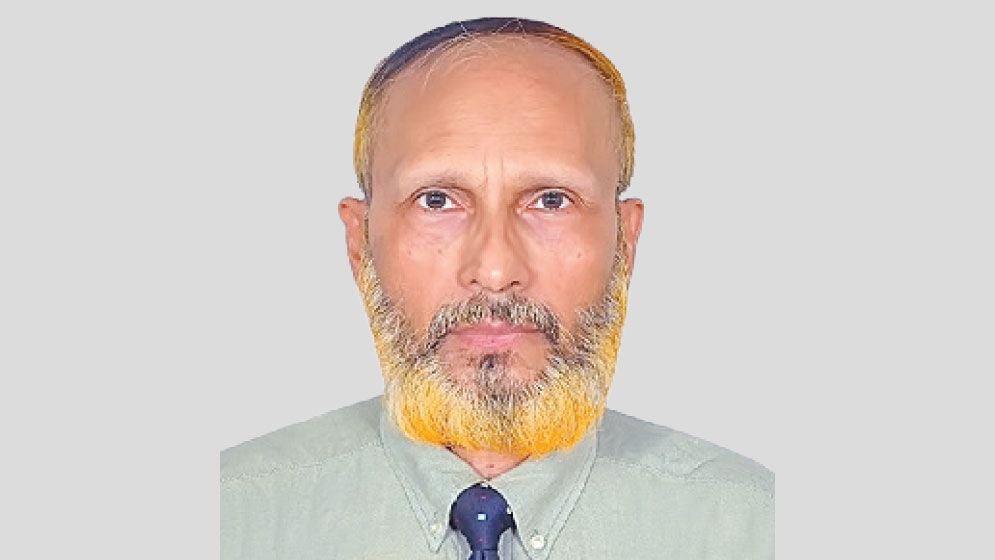
The writer is President of English Teachers’ Association of Bangladesh (ETAB). He can be reached at [email protected]