
 For all latest news, follow the Daily Sun's Google News channel.


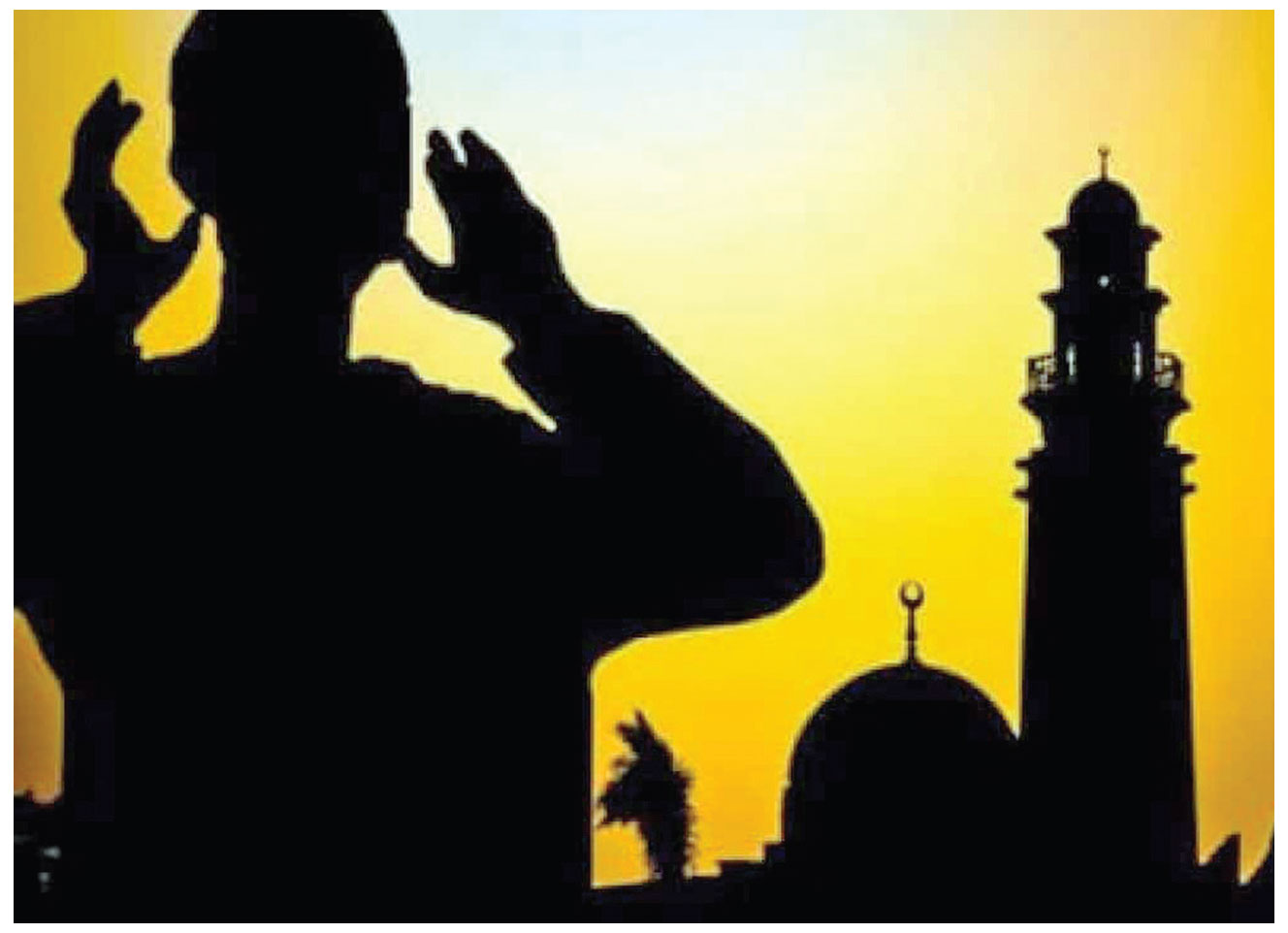
The word Muazzin comes from the Arabic root word ‘Azzana’, which means to proclaim’ or ‘to call’. In Islamic parlance, calling Muslims to the daily Salat (prayer) is known as Azan, while the person announcing the call to prayer is known as Muazzin, who holds a very high status in Islam. Some of the virtues of proclaiming the Azan are mentioned below.
Muazzin’s voice during the Azan is so effective against Shaytan. Abu Hurairah (RA) narrated that the Messenger of Allah (PBUH) said, “When Azan for Salat is pronounced, the devil takes to his heels and breaks wind with noise so as not to hear the call. When the Azan is finished, he returns…” (Sahih Bukhari 608). Besides, Jabir (RA) narrated that the Messenger of Allah (PBUH) said, “When the devil hears the summons to prayer, he goes off till he is as far away as Ar-Rauha.” (Mishkat Al-Masabih 674). The transmitter said that ar-Rauha’ is thirty-six miles from Medina. It is stated that he who hears the holy voice of Azan will testify on the Day of Judgment in favour of the Muazzin. Abdullah Ibn Abdur Rahman narrated that Abu Sayeed Al-Khudri (RA) said to him, “I see that you like sheep and the desert, so when you are looking after your sheep or when you are in the desert and want to pronounce the Azan, raise your voice, for no Jinn, human being or any other things hear the Muazzin’s voice but will be a witness for him on the Day of Resurrection.” Abu Sayeed Al-Khudri (RA) added, “I heard this from The Messenger of Allah (PBUH).” (Sahih Bukhari 7548).
According to authentic Hadith, a Muazzin will receive a reward comparable to that of everyone who prays five times with the congregation and performs acts of worship like taking Sahri and eating Iftar after hearing his Azan, and every wet or dry thing (animate or inanimate) that hears his voice will bear witness for him on the Day of Judgement. Bara Ibn Azib (RA) narrated that the Messenger of Allah (PBUH) said, “Allah and His angels say Salah upon the front rows, and the Muazzin will be forgiven as far as his voice reaches, and whatever hears him, wet or dry, will confirm what he says, and he will have a reward like that of those who pray with him.” (Nasayee 646).
Moreover, Muazzins will receive a special reward from Allah (SWT) for their service in calling people to prayer. Allah (SWT) will give Muazzins a special status, such that their necks will be the longest on the Day of Judgment. Mu‘awiya (RA) narrated that the Prophet (PBUH) said, “Muazzins will have the longest necks on the day of resurrection.” (Ibn Majah 725). This saying of our beloved Prophet (PBUH) refers to Muazzin being honoured, prominent and distinguished due to their service in proclaiming Allah’s greatness in Azan. The long neck is a physical manifestation of the honour and reward given to those who call the Azan. It is also a sign of their distinction and a way to be visibly recognised for their religious duty on the Day of Judgement. Abu Hurayra (RA) narrated that the Messenger of Allah (PBUH) said, “If people knew the reward of giving the Azan and being in the first row, they would draw lots to secure those positions.” (Sahih Bukhari 615).
Proclaiming the Azan is a great deed that can lead a Muslim towards paradise. Islam has given Muazzins such a high status that Islam promised Paradise to a Muazzin who calls Azan for 12 years. It is also proven that 60 Hasanat (good deeds) will be recorded for the person who calls the Azan (call to prayer) for each day, and 30 Hasanat or good deeds will be recorded for every day he calls Iqamah (the second call to Salat in Islam, which is recited loudly just before a congregational prayer begins). Abdullah Ibn Umar (RA) narrated that the Messenger of Allah (PBUH) said, “Whoever calls the Azan for twelve years, he will be guaranteed Paradise, and for each day sixty Hasanat (good deeds) will be recorded for him by virtue of his Azan, and thirty Hasanat by virtue of his Iqamah.” (Sunan Ibn Majah 728).
________________________________________________________
The writer is Khatib of Baitush Shafiq Mosque and principal of Baitul Hikmah Academy, Gazipur