


 For all latest news, follow the Daily Sun's Google News channel.


Bangladesh–India relations cannot remain held hostage to a single issue
Audite Karim
Published: 27 Nov 2026, 12:00 AM
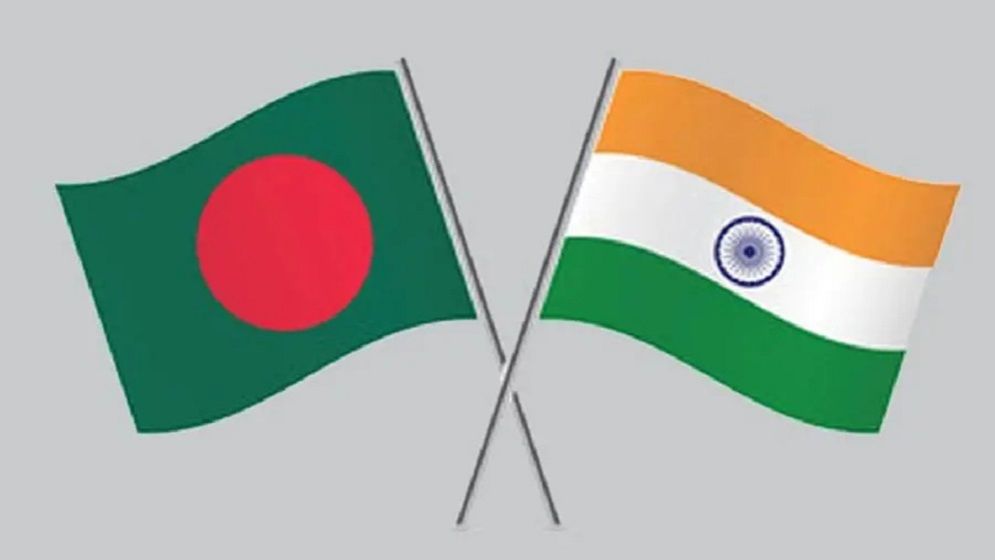
Good relations with neighbours are essential for the development, peace and stability of any country. Dignified and friendly ties with neighbouring countries are a prerequisite for national progress. Yet Bangladesh–India relations are not normal at present. Distrust and differences over a single issue have become obstacles to normal relations between the two countries. Meanwhile, Bangladesh has numerous bilateral issues to address with its closest neighbour.
Differences of opinion on various issues can naturally arise between neighbouring countries. That is normal. However, disagreement over one issue cannot bring everything to a halt. Discussions on other matters can continue while unresolved issues are set aside. That is a diplomatic convention. Yet relations between the two countries are currently going through such an abnormal phase that one issue has brought everything to a standstill.
At present, the most important bilateral issue for Bangladesh in its relations with India is the renewal of the Ganges Water Treaty. At the 91st meeting of the Joint Committee of the Bangladesh–India Joint Rivers Commission (JRC), held in Dhaka, the annual implementation report for 2026 was finalised. However, no schedule has yet been set for political-level talks on the future of the 30-year treaty, which is due to expire on 12 December.
The 91st regular meeting of the Joint Committee of the Bangladesh–India Joint Rivers Commission was held in Dhaka on 22 and 23 November. Md Anwarul Kader led the Bangladeshi delegation, while Sharad Chandra headed the Indian side. At the meeting, the annual report on the implementation of the Ganges water-sharing treaty during the 2026 dry season was finalised.
However, officials concerned have clarified that the joint committee is responsible only for technical monitoring, measuring water flows at the Farakka and Hardinge Bridge points, and verifying data. It has no mandate to renew the treaty or make policy decisions on a new agreement.
Diplomatic sources say it is not realistic to finalise the draft of an entirely new and revised long-term treaty within just a few weeks.
According to analysts, in this context, an interim extension of three to five years, based on mutual diplomatic consent, could be the most effective solution to avoid a treaty-free vacuum during the dry season beginning in January 2027. However, neither government has made any formal announcement about such an interim arrangement so far.
It is not just Ganges water sharing; many other urgent bilateral issues remain unresolved. Addressing them is important for both countries. Resolving these issues through dialogue while safeguarding mutual interests is essential. Several matters now require particular attention to improve relations between the two countries.
The Teesta water-sharing treaty has also remained stalled for a long time. It could not be implemented mainly because of opposition from Mamata Banerjee. Now that a BJP government is in power in West Bengal, efforts should be made to move the treaty forward quickly. This is an important electoral pledge of the BNP.
Bangladesh and India share 54 common rivers. Apart from the Padma and Kushiyara, there are no water-sharing treaties covering the other common rivers. Securing a fair share of the waters of all common rivers is one of the electoral pledges of the current government. Yet the government has not even been able to initiate discussions on these issues.
Therefore, everything cannot remain paralysed over the extradition issue. A way must be found to resolve all outstanding problems, including water sharing, through dialogue and on the basis of mutual respect. India, in particular, must demonstrate sincerity in this regard.
India must also make a prompt and clear decision regarding those who fled Bangladesh and are now staying in India.
Tensions along the Bangladesh–India border must be reduced. The two countries must sit at the negotiating table to address border killings and push-ins. Unilateral actions by either side will only create further obstacles to the normalisation of relations.
Since August 2024, activities directed against the other country have increased in both nations. This poses a threat to the security, independence and sovereignty of both countries. Just as many people based in India are engaging in various forms of propaganda and conspiracies against Bangladesh and acting against its elected government, anti-India sentiment is also being fuelled within Bangladesh. Irresponsible remarks, including threats to sever India's Seven Sisters from the mainland or occupy Indian territory, have become obstacles to improving relations between the two countries.
No country's territory should be allowed to threaten a neighbour's peace, security or territorial integrity. Both countries must pledge that their soil will not become a sanctuary for separatist groups.
Commercial and economic ties between the two countries must also be strengthened. Just as neighbouring countries elsewhere in the world pursue economic cooperation for mutual benefit, Bangladesh and India should expand cooperation in various areas, including trade facilitation. After the Yunus government came to power, India imposed restrictions on several matters, including port access for Bangladesh. A democratically elected government is now in power in Bangladesh. India should lift the restrictions it imposed unilaterally.
Unilateral actions on any issue will only obstruct efforts to normalise relations. Most importantly, the scope for resolving problems through dialogue between the two neighbours must remain open. Continuous diplomatic engagement is necessary to ensure that the two countries can discuss any issue. In this regard, Nepal can serve as an important example.
Nepal's Prime Minister Balendra Shah has repeatedly called for powerful neighbours to treat his country with equal dignity. For the first time since taking office as prime minister, he visited India's capital, Delhi. Through this visit, his policy was put to the test. Both sides appeared keen to make a fresh start after years of strain in their relationship.
Both leaders seemed determined to highlight the warmth of their ties. They exchanged gifts and jointly inspected a guard of honour. They also inaugurated a new train service between the two countries.
For Nepal, however, the significance of the visit went far beyond repairing diplomatic relations. The two countries announced several agreements covering trade, hydropower, transport and educational opportunities for Nepali youth. More importantly, India announced an assistance package worth $1.6 billion for Nepal.
Nepal's current government contested the election on an anti-India platform. Just as it did so in the interests of the Nepali people, the prime minister's visit to India was also in Nepal's national interest.
Diplomatic relations between Bangladesh and India have deteriorated over the issue of returning a convicted individual under the extradition treaty. However, diplomatic analysts say the deterioration in ties is not solely attributable to the extradition issue. They believe a powerful political force, for strategic reasons, does not want friendly relations between the two countries.
Yet we must remember that everything can change, but neighbours cannot. In the current global context, no country can achieve its development goals without maintaining good relations with its neighbours.
We know that emotions are attached to the extradition issue. Let the demand remain strong and persistent, while initiatives are taken simultaneously to resolve other outstanding problems. In diplomacy, there is no such thing as the final word. No issue is beyond resolution through dialogue. Therefore, the door to dialogue must remain open. We must pursue our demands while maintaining friendly relations.
The writer is a playwright and can be reached at the email address: [email protected]