


 For all latest news, follow the Daily Sun's Google News channel.


The recent initiative of the activity-banned Awami League to throw an existential challenge to the current BNP government through various ploys, including the so-called return of its leader Sheikh Hasina from India on 16 December, has an uncanny resemblance to the threat it issued in March 2004 to the effect that the then Prime Minister Begum Khaleda Zia’s coalition government would be toppled on 30 April of that year. That episode is widely known in the annals of politics in Bangladesh as the ‘Trump Card Fiasco’. Both the recent and previous attempts have a common thread of ‘psychological warfare’ based on the application of a concept known as 'self-fulfilling prophecy'. Let us first revisit this concept before going back to the first episode in March-April 2004.
‘Self-fulfilling Prophecy’ is a prediction or expectation that materialises simply because a person or group believes it will – mainly by acting in ways that make it happen. The American sociologist Robert K Merton first coined and popularised the term in 1948 by describing how even an initially ‘false’ belief can evoke new behaviours that turn that belief into reality. He precisely claimed, “A belief or expectation, correct or incorrect, could bring about a desired or expected outcome.” Much earlier, the concept appeared in the British historian Edward Gibbon’s (1737-94) treatise ‘Decline and Fall of the Roman Empire’: “During many ages, the prediction, as it is usual, contributed to its own accomplishment."

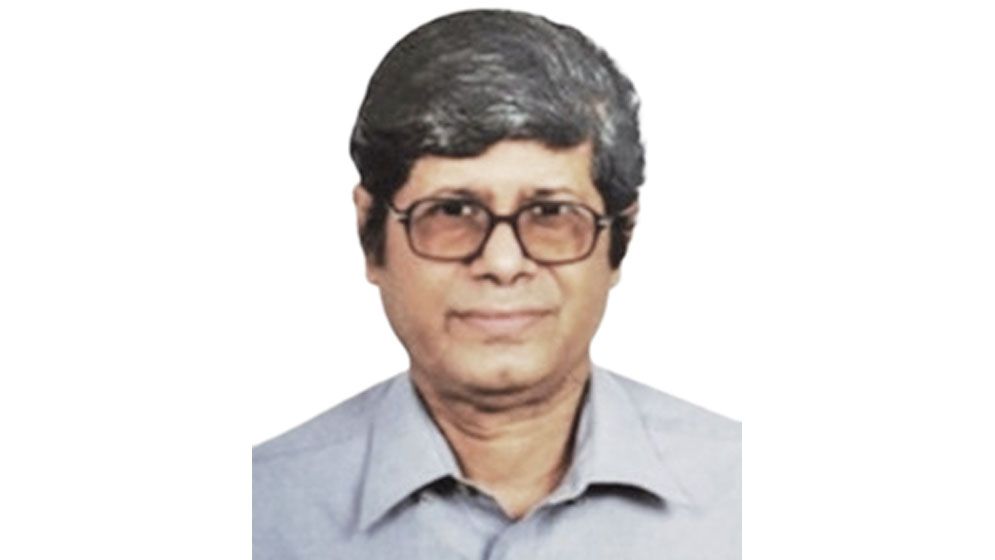
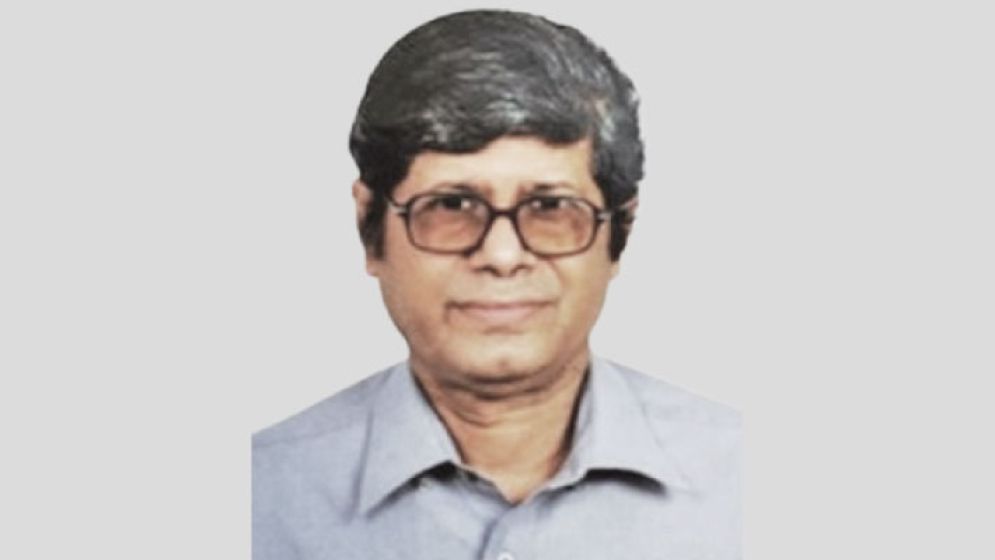
Mohammad Abdul Jalil (21 January 1939 – 6 March 2013), who served as the General Secretary of the Bangladesh Awami League from 2002 to 2009.
The first step in the wheel or cycle of 'self-fulfilling prophecy' is the ‘belief or expectation’, based on which someone puts forward a prediction about himself, another person or a situation. The second spoke in the wheel is the ‘behavioural shift’, when the belief shapes appropriate actions, tones, efforts or decisions. The third stage is the ‘social or situational reaction’, when others respond to those behaviours, or the situation changes in the expected direction as a consequence. And the fourth or last stage is the ‘confirmation’, whereby the resulting outcome matches the original expectation – thereby reinforcing the belief. The concept has applications in many areas, including education, psychology, sports, work-performance and relationships.
For breaking the cycle of 'self-fulfilling prophecy', academics have suggested three courses of action: notice whether the assumption is based on facts, change the behaviour constructively in the right direction, and seek outside feedback to check whether one's own perception conforms to objective evidence or trusted peers.
Let us now go back to the ‘Trump Card Conspiracy’ hatched by the Awami League (AL) back in March-April 2004. The ploy started when, at a discussion meeting held at the Dhaka Reporters’ Unity auditorium, then Awami League General Secretary Abdul Jalil rejected the government’s offer for dialogue and declared that the last day of the BNP government would be 30 April . He further claimed that he had a secret ‘trump card’, which he promised to reveal in the third week of April. It generated intense political speculation regarding potential mass defections from the ruling BNP as well as likely threats from inside the security establishment.
As a follow-up to the threat, the Awami League attempted to bring the left-leaning political parties to its fold, enforced countrywide hartals, and tried to blockade the BNP leader Tarique Rahman’s political office, Hawa Bhaban at Banani, Dhaka. Responding to the threat, Speaker of the Jatiya Sangsad Jamir Uddin Sircar ruled that the threat was unconstitutional, as the parliament’s term was slated to run up to October 2006. The ruling BNP lawmakers demanded Jalil’s arrest for interrogating him, while the police conducted mass arrests of opposition activists as the deadline approached.
However, the 30 April deadline passed without the government falling, and the promised 'trump card' of Jalil never materialised. Subsequently, Jalil faced criticism from both the ruling BNP and his own party, and the then BNP Secretary General Abdul Manna Bhuiyan demanded his apology for misleading the public.
It was also revealed then that the countrywide network of the microcredit NGO ‘Proshika’ was the real ‘trump card’ of Jalil, and it was this particular pro-AL NGO that was active in mobilising Awami League supporters to lay a siege of Dhaka by using one million of its own microcredit recipients. But the conspiracy could not materialise due to timely action by the police and other security agencies. The chief of Proshika Quazi Faruque Ahmed was arrested and charged with actively conspiring with the AL and funding its anti-government agitation. The government accused Proshika of mobilising grassroots workers, distributing anti-government literature, and diverting development funds to support the street agitations of AL as well as the civil society platform ‘Oikyabaddha Nagorik Andolan’ (United Citizen’s Movement), where Quazi Faruque served as the member-secretary.
What the AL actually tried to do in 2004 was to sow the seeds of fear, doubt, suspicion and apprehension among various actors in the state apparatus, which, it hoped, would make them behave in ways that would ultimately contribute to the realisation of its own agenda. The AL was hoping that the threat would encourage its lackeys lurking in various branches of government to undertake acts of sabotage in their own ways, and the BNP in turn would take drastic and disproportional measures to contain the situation that would further exacerbate the situation. However, the government was successful in unravelling the conspiracy, and therefore the Awami ploy ultimately turned out to be a farce or fiasco.
The game is similar this time around as well. A doomsday date has been set (16 December) once again, and the AL is expecting that its own activists as well as lackeys in various state apparatuses would act in ways that would contribute to the fulfilment of its design. Time will now tell whether it would turn out to be a farce or fiasco this time as well.
_____________________________________
The writer is a retired Additional Secretary and former Editor of Bangladesh Quarterly. He can be reached at [email protected]