


 For all latest news, follow the Daily Sun's Google News channel.


The children behind closed doors
The law is significant because it explicitly prohibits the employment of children under 16 in households
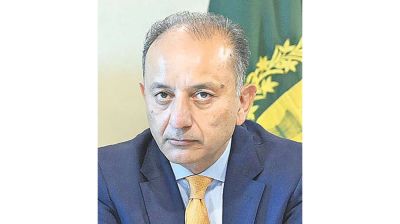
Mehnaz Akber Aziz, The News Pakistan
Published: 24 Nov 2026, 10:45 PM

Photo: Collected
The tragic murder of 13-year-old Fatima Asghar in Islamabad must become a turning point in Pakistan’s treatment of domestic workers.
She is not the first one; Kaneez Fatima, Iqra,
Fatima Furiro, Zohra Bibi, Rizwana and hundreds more unreported. These deaths
raise fundamental questions about child labour, bonded employment, the
invisibility of poor families and the failure to enforce laws that are meant to
protect the most vulnerable.
Fatima Asghar’s death is a reflection of a deeply
entrenched social and economic system in which children from the poorest
households are treated as commodities, their labour exploited and their lives
considered expendable.
The post-mortem report has revealed an appalling
picture of alleged prolonged physical torture. Around 20 injuries were
documented across her body, including old wounds, untreated injuries,
infections and burn marks reportedly consistent with the use of a heated iron.
The medical findings indicate repeated physical assaults and severe trauma. Two
suspects have been arrested, and the investigation must establish individual
responsibility through a fair and transparent judicial process.
But we must ask a much bigger question: how many
other children like Fatima are living behind the closed doors of affluent
households across Islamabad and Pakistan, facing violence, exploitation and
abuse without anyone knowing?
The National Commission on the Rights of the Child’s
State of Children in Pakistan 2025 provides some alarming figures. In Islamabad
Capital Territory, domestic work accounts for 13.2% of working children aged
5–17. Among working girls in this age group, the proportion is 33.5%. These
figures show the particularly serious vulnerability of girls. The NCRC also
acknowledges that domestic work remains underreported.
The International Labour Organization’s 2022 scoping
study also found that one in every four households in Pakistan employed a child
in domestic work, predominantly girls aged 10–14. This is a disturbing
indication of how normalised child domestic labour has become.
Fatima’s case also exposes the social invisibility
of a particular class of Pakistanis: children born into extreme poverty, often
without birth registration, proper identity documents or access to education
and state protection.
Another disturbing dimension is the economics of
bonded domestic labour. Poor parents are often offered an advance payment for a
child’s services, sometimes covering months or even a year. Where coercion,
debt and restrictions on freedom exist, it can amount to bonded labour and
trafficking.
The silence of political leadership is equally
troubling. Apart from Interior Minister Mohsin Naqvi, who publicly addressed
the case and spoke about the police investigation, nothing has been said by the
political leadership from Islamabad’s elected representatives. First Lady Bibi
Asifa Bhutto Zardari also expressed concern and called for enforcement of child
protection laws. National Commission of Rights of Children and the Punjab
Commission on Status of Women have issued statements citing articles and
conventions on Child Protection.
Yet a child allegedly tortured to death in the
federal capital, at a residence connected to a senior government officer,
should have prompted a much wider public response. Islamabad’s political
representatives, legislators, civil society organisations and human rights
institutions must ensure justice.
Islamabad already has legislation specifically
intended to prevent such exploitation. The Islamabad Capital Territory Domestic
Workers Act, 2022 (Act XXV of 2022) was passed by Parliament and published in
October 2022. The legislation originated in a private member’s bill introduced
in the National Assembly in 2021 by me during my parliamentary tenure.
The law is significant because it explicitly
prohibits the employment of children under 16 in households, even with parental
consent. It also prohibits bonded and forced labour and provides for employment
letters, wages, overtime, medical care, occupational safety and dignified
working conditions.
This raises an uncomfortable question: how could a
child of her age remain employed in a household for years without the law being
enforced?
The answer lies in the gap between legislation and
implementation. Fatima’s death must lead to an urgent review of domestic worker
protection legislation and its implementation. I would propose the following
measures: one, establish a mandatory domestic workers registry. Every household
employing a domestic worker should register the employment with the relevant
ICT authority.
Two, create a national database of child domestic
labour. The federal government, provincial governments, NCRC and labour
departments should collect sex-disaggregated data on domestic workers,
including age, working conditions, school attendance, migration and reported
abuse. This must be linked to birth registration and school enrolment systems.
Three, make employers legally accountable.
Employment contracts must specify wages, working hours, weekly rest, leave,
medical treatment and living conditions. Salary advances must not become
instruments of debt bondage. All payments should be documented, and withholding
wages, identity documents or freedom of movement must attract penalties.
Four, establish a dedicated inspection and
monitoring mechanism. Labour inspectors and child protection officers should be
empowered to investigate credible reports of abuse and undertake risk-based
monitoring, with appropriate judicial safeguards for household privacy. A
confidential helpline should enable neighbours, domestic workers and concerned
citizens to report suspected child exploitation.
Five, strengthen penalties and prosecution.
Employers who knowingly employ children below the legal age, subject workers to
violence or engage in bonded labour must face effective criminal consequences.
Child domestic labour and serious abuse should be treated as serious offences,
with prosecution not dependent solely on the victim’s family pursuing the
complaint. The possibility of compromise must never erase criminal
accountability.
Six, provide social protection to vulnerable
families. Child labour cannot be eliminated through punishment alone. Poor
families need income support, education stipends, school meals, accessible
childcare and livelihood opportunities. Children rescued from domestic
employment must receive rehabilitation, education, psychological support and
protection from being trafficked back into another household.
Seven, establish a dedicated child domestic worker
protection unit. Islamabad Police, the ICT administration, labour department
and child protection authorities should work through a coordinated mechanism,
with trained investigators and female officers available to handle complaints
involving girls.
Eight, make public officials accountable. When an
allegation involves a government employee or a household within an official
residential facility, the investigation must be independent, transparent and
free from institutional influence. Seniority, influence or official position
must not offer protection from the law.
There is also a responsibility that rests with
members of the National Assembly and Senate, particularly those representing
the federal capital, to demand answers. The relevant parliamentary committees
should summon the Ministry of Interior, ICT Administration, Islamabad Police
and labour authorities to explain why existing legislation failed to protect a
13-year-old child.
The government should commission an independent
review of the implementation of the Islamabad Capital Territory Domestic
Workers Act, 2022, and publish its findings within 90 days. The review should
identify how many children are employed in domestic work, how many complaints
have been received, how many inspections have taken place and how many
employers have been prosecuted.
We must also ensure that Fatima’s parents receive
legal assistance and protection from intimidation or financial pressure. It is
imperative that, in such cases, the state should be the petitioner and the
bargaining chip taken from the perpetrators.
I look forward to hearing an announcement from
Mohsin Naqvi Sb: “Anyone employing children as domestic workers will be fined
Rs200000 and arrested. Strictures if government servants are the perpetrators”.
The real test of a civilised society is not how it
treats its powerful citizens, but how it protects its most vulnerable. Fatima’s
death must become the moment when Pakistan finally recognises domestic workers
as workers, children as children, and protection as a responsibility of the
state – not a privilege granted by employers.
The writer is a former member of the National Assembly and a children, women and minorities advocate