


 For all latest news, follow the Daily Sun's Google News channel.


Two Shocks and a Resilient Economy: How India Sustained Growth
India sustained strong economic growth despite war and a weak monsoon
R Balasubramaniam, Money Control
Published: 24 Nov 2026, 10:39 PM
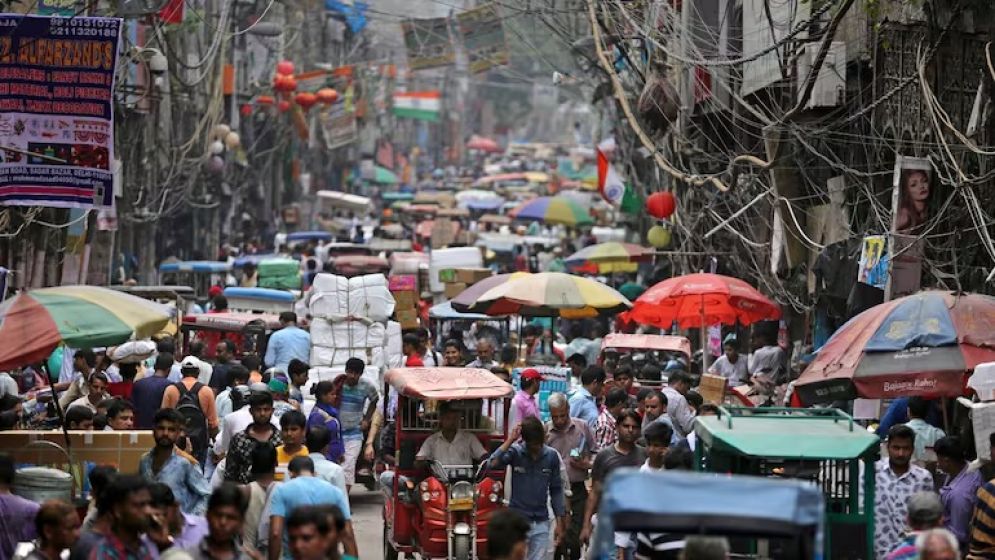
Photo: Collected
In the last week of March 2026, the price board at the neighbourhood petrol pump did not change. It was a small thing, and most people drove past without noticing. Yet war was raging in West Asia and the Strait of Hormuz was closed. India consumes about 55 lakh barrels of crude oil daily, imports 60% of its cooking gas, and previously received 90% of those imports through the strait. By every textbook prediction, the taxi driver and homemaker should have been among the first casualties. They were not. That unchanged price board captures a year in which India faced two major shocks, war and weather, yet continued to grow.
Growth Defies Global Economic Headwinds
Real GDP grew by 7.8% in the first quarter of
2026-27, against 6.9% a year earlier. Private consumption rose by 7.1%, investment
by 11.9% and exports by 12%. Manufacturing grew by 9.2%, construction by 7.7%
and services by 10%. The primary sector, however, grew by just 2.9%. The
Finance Ministry's second-quarter nowcast puts growth at 7.35%, despite a 41.5%
surge in the Indian crude basket between July and September.
The RBI has raised its FY27 growth forecast to 7.1%.
The World Bank and IMF have also upgraded their projections to 7.1 and 7%
respectively. India's performance stands out against an uncertain global
economy.
Energy Security Cushions External Shocks
Resilience is built long before a crisis arrives.
India now sources crude from around 40 countries. When Hormuz closed, the share
arriving through alternative routes rose from 55 to 70% within a fortnight.
Refineries increased cooking gas production by 40%, prioritising household
supplies. This mattered because cooking gas connections have grown from 14.5
crore in 2014 to 33.4 crore today, including 10.6 crore under the Ujjwala
scheme.
Fiscal intervention provided the second cushion. On
27 March, the government cut excise duty on petrol and diesel by ₹10 a litre,
imposed export duties on diesel and aviation fuel, and approved ₹30,000 crore
to compensate oil companies for cooking gas losses. It also absorbed ₹43 of a
potential ₹50 per litre diesel price increase. An emergency credit guarantee
facility targeted ₹2.55 lakh crore in additional lending to businesses.
Strong Public Finances Enable Intervention
Such support was possible because India's fiscal
position had improved. The Union government's fiscal deficit declined from 9.2%
of GDP in 2020-21 to a budgeted 4.3% in 2026-27. S&P upgraded India's
rating to BBB, while Japan Credit Rating Agency raised it to A-. Gross GST
collections grew by around 15% in the second quarter.
States were equally important. The 2026-27 Budget
provides ₹15.26 lakh crore in tax devolution and ₹2 lakh crore in capital
investment loans. Timely releases helped States sustain development spending
and manage essential supplies.
Financial Strength Supports Domestic Demand
Banks entered the crisis with stronger balance
sheets. Gross non-performing assets stood at 1.67% in June 2026, while capital
adequacy was 17.87%. Bank credit grew by 18.1% in September. Foreign exchange
reserves reached $734.6 billion in early October, covering approximately 11
months of imports. The current account deficit was just 0.5% of GDP in the
first quarter.
The deeper cushion, however, lies in household
resilience. The World Bank estimates that poverty at the $4.20-a-day threshold
declined from 57.7% in 2011 to 16.1 percent in 2023, lifting 49.6 crore people
out of poverty. Household savings rose to 21.7% of GDP in 2024-25. India's
59.09 crore Jan Dhan accounts hold ₹3.17 lakh crore, providing a substantial
domestic financial base.
Women's economic participation has strengthened this
foundation. More than 10 crore rural women belong to self-help groups, which
have received ₹14.25 lakh crore in formal credit since 2014. Female labour
force participation rose from 23.3% in 2017-18 to 41.7% in 2023-24. These
networks provide households with access to affordable credit when incomes come
under pressure.
Climate Risks Test Rural Resilience
The second shock came from a weak monsoon,
influenced by El Niño. Seasonal rainfall was 87% of the long-period average,
with the South Peninsula receiving just 76%. Paddy acreage declined by about 16
lakh hectares. Agriculture nevertheless entered this period stronger than in
previous decades, averaging 4.43% annual growth between 2015 and 2024.
The consequences are now visible in food prices.
Retail inflation reached 6.09% in October, with food inflation at 8.94%. Yet
core inflation, excluding precious metals, was just 2.9% in August. This
suggests a supply-driven price shock rather than an overheating economy. More
than 80 crore people receiving free foodgrains under the Pradhan Mantri Garib
Kalyan Anna Yojana remain protected, while One Nation One Ration Card
facilitates portability for migrant households.
The government has identified 315 vulnerable
districts, prepared contingency plans and set aside additional seeds. Wheat
stocks stand at 48 million tonnes against a buffer requirement of 27.6 million
tonnes. Farmers are also being encouraged to diversify towards pulses and
millets.
Sustaining Growth Requires Strategic Priorities
Four priorities will determine whether this
resilience endures. First, fiscal support must remain temporary, protecting
households without compromising public investment. Second, energy security must
extend beyond diversified imports to domestic renewables, storage and strategic
reserves. Third, water must be treated as economic infrastructure, with
irrigation investment concentrated in vulnerable districts. Fourth, rural incomes
must become less dependent on rainfall through stronger self-help groups,
women's entrepreneurship and access to credit.
The larger lesson is that resilience cannot be
created overnight. It has been built through diversified energy supplies,
stronger banks, sound public finances, wider financial inclusion and women's
collectives. Nearly 50 crore Indians moving out of poverty has fundamentally
changed the country's capacity to absorb shocks.
When the tests arrived, the Union and State
governments acted, and households held firm. The petrol pump's unchanged price
board in March reflected years of preparation. The next challenge is to ensure
that the price of rice and dal tells the same story next year.