


 For all latest news, follow the Daily Sun's Google News channel.


On 21 November every year, Bangladesh remembers the moment when its scattered and improvised fighting forces took shape as a unified military command. The date marks the Army, Navy and Air Force emerging as organised arms of the Bangladesh Forces during the Liberation War of 1971. It is observed as Armed Forces Day with parades, wreath-laying at the National Memorial at Savar, and tributes to the martyrs. It is also a reminder that the country’s armed forces were born in the struggle for freedom, not inherited from a colonial apparatus.
The roots of the day lie in twenty-four years of political and military discrimination. Bengalis made up more than half of Pakistan’s population but were barely represented in the military. The high command was dominated by West Pakistanis, and installations and strategic planning were concentrated in the west. During the 1965 war with India, East Pakistan was left lightly defended, which convinced many Bengalis that their security was an afterthought. The 1970 election turned grievance into a political crisis. Awami League won 160 of the 162 seats allotted to East Pakistan and an absolute majority in the national assembly, yet power was withheld from it.
On 7 March 1971, Sheikh Mujibur Rahman told a vast crowd at the Racecourse Ground that the struggle was one for freedom and urged people to prepare for resistance. Negotiations collapsed, and on the night of 25 March the Pakistan Army launched Operation Searchlight, striking Dhaka University, the Rajarbagh Police Lines and the Peelkhana headquarters of the East Pakistan Rifles.
The first resistance was spontaneous. Bengali soldiers of the East Bengal Regiment, members of the East Pakistan Rifles, and policemen mutinied and fought at Chattogram, Joydebpur, Cumilla, Jashore and elsewhere, joined by students, farmers and ordinary citizens. Courage alone, however, could not sustain a long war. The struggle needed a chain of command, supply, training and political authority.
That authority arrived on 17 April 1971, when the Mujibnagar government was sworn in at Baidyanathtala in Meherpur, with Syed Nazrul Islam as Acting President and Tajuddin Ahmad as Prime Minister. Colonel M A G Osmani became Commander-in-Chief of the Bangladesh Forces. Between 11 and 17 July, a sector commanders’ conference in Kolkata divided the country into eleven military sectors and established a structure of regular forces, guerrilla forces and a naval and air element. Three regular brigades were raised: Z Force under Ziaur Rahman, S Force under K M Shafiullah and K Force under Khaled Mosharraf. Alongside them operated the Mukti Bahini guerrillas, perhaps a hundred thousand strong.
The Navy took shape in an unconventional way. Bengali naval personnel who had deserted Pakistani ships, together with volunteers from river communities, were trained as naval commandos in India. On 15 August 1971, in Operation Jackpot, around 500 of them simultaneously mined and attacked ports and shipping at Chittagong, Mongla, Chandpur and Narayanganj, sinking or disabling dozens of vessels. The gunboats Padma and Palash became the first Bangladeshi vessels.
The Air Force began with even less. On 28 September 1971, at Dimapur in Nagaland, a small unit called Kilo Flight was formed, with a handful of Bengali pilots, a few dozen technicians, and an Otter aircraft, an Alouette helicopter and a Caribou transport lent by India. Using makeshift rocket pods, night raids began in early December against oil installations at Narayanganj and Chittagong. The material damage was modest, but the symbolism was large.
In this setting, 21 November 1971 became the point at which these threads were drawn together. At Garibpur, near Jessore, the Mukti Bahini fought alongside Indian forces on 20 and 21 November, and the Boyra salient saw heavy fighting on 21 and 22 November. By the end of the month, the three services were acting under a unified Bangladesh command. After 3 December, when Pakistan struck Indian airfields, the war entered its conventional phase, and the Allied Command was formed under Lt Gen Jagjit Singh Aurora, with Group Captain A K Khondker as Deputy Chief of Staff for the Bangladesh side.
On 16 December 1971, Lt Gen A A K Niazi signed the Instrument of Surrender at Dhaka’s Racecourse Ground. Around 93,000 Pakistani personnel became prisoners of war, the largest surrender since the Second World War. According to the official figure, about three million people lost their lives, and roughly ten million took refuge in India.
The significance of 21 November lies in what it symbolises. The founding generation of the armed forces consisted of soldiers who defied orders to attack their own people, sailors who left warships to become commandos, and airmen who flew borrowed aircraft with improvised weapons. The tradition of valour is formalised in the Bir Sreshtho, conferred on seven heroes from the Army, Air Force and Navy, including Flight Lieutenant Matiur Rahman, who struggled to divert a hijacked trainer jet from Bangladeshi airspace, and Engine Room Artificer Mohammad Ruhul Amin, who died when his gunboat was attacked on the Shibsa River.
The inspiration of the day extends beyond the battlefield. It shows the power of unity, the value of improvisation and moral conviction against overwhelming odds, and the principle that a military derives its legitimacy from the people it serves. Bangladesh has carried that lesson forward in disaster response, nation-building and United Nations peacekeeping, which it joined in 1988 and where it has become one of the largest troop contributors in the world.
For younger generations, 21 November is a reminder that freedom was not a gift but the result of preparation, sacrifice and collective will.
Remembering it honours not only the uniformed fighters but also the villagers who sheltered them, the refugees who sustained the cause across the border, and the countless civilians who paid the highest price. The day calls on the armed forces and the nation alike to uphold the ideals for which the freedom fighters gave their lives, so that the sacrifices of 1971 can be the guiding light of the country’s future.
________________________________________________________
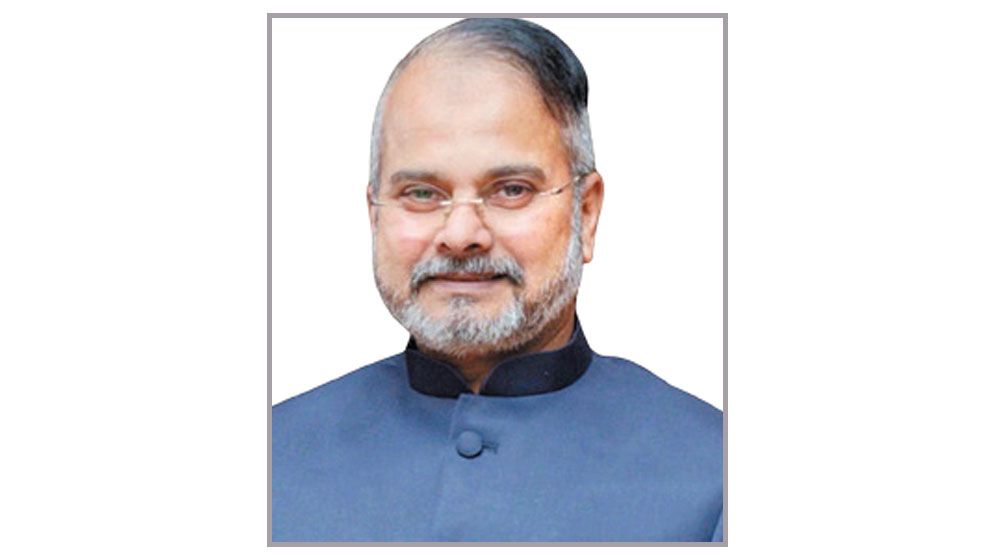
The writer is a retired Major General, military diplomat, security and political analyst, researcher and author. He can be reached at [email protected]