



 For all latest news, follow the Daily Sun's Google News channel.


A Fair Wage That Keeps Bangladesh Competitive: Why Bangladesh Needs a 3-Zone Minimum Wage
If Dhaka salary is higher, there will be less protest in Dhaka and Chattogram
Dr MA Mannan
Published: 20 Nov 2026, 08:55 PM
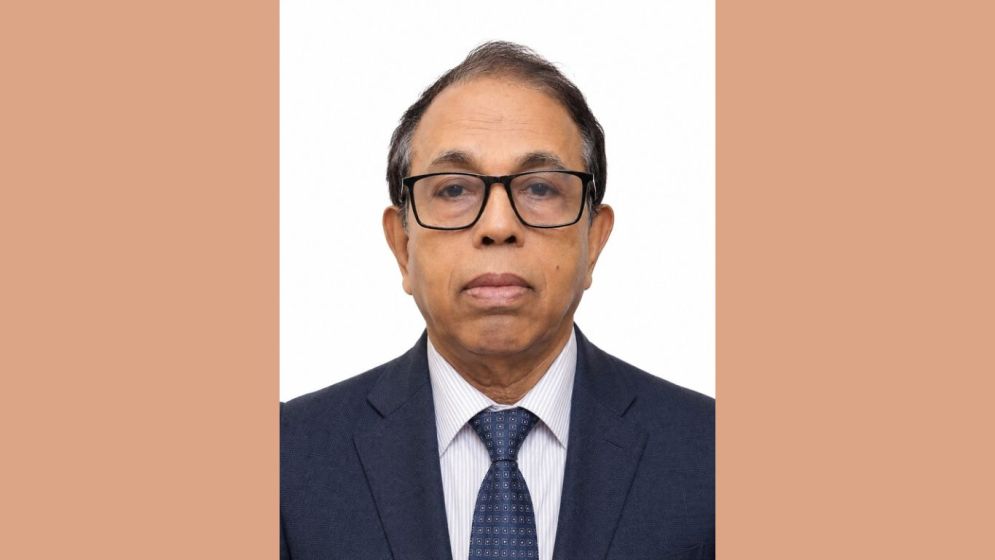
Photo: Courtesy
Bangladesh's Ready-Made Garment (RMG) industry stands at a critical crossroads. The government has constituted the 8th Minimum Wage Board, and discussions on revising workers' wages are now underway. At its second meeting on 9 November 2026, workers' representatives proposed a minimum monthly wage of Tk 32,000. The next meeting is scheduled for 23 November, while employers are preparing their counterproposal.
The challenge is clear: we need a solution that is
fair to workers, financially sustainable for factory owners, and conducive to
Bangladesh’s balanced economic development. A single national minimum wage
cannot achieve all three goals.
The answer is not one single national wage. It is a
3-Zone Minimum Wage System.
One Country, Three Economic Realities
Bangladesh is one country, but the cost of living is
not the same everywhere.
A garment worker living in Dhaka or Chattogram faces
significantly different housing and transportation expenses from a worker
living in a rural or lower-cost industrial area. In major cities, workers
frequently have to pay substantial rent, purchase all their daily food and
depend on public or private transportation. In smaller towns and rural
communities, some workers can live with their families, reduce housing expenses
and commute at relatively lower costs.
These differences should be recognized when determining
minimum wages. International experience also demonstrates that geographically
differentiated minimum wages are possible. China, Vietnam and Indonesia have
adopted regional or geographically differentiated wage-setting arrangements,
although their respective systems differ in structure and implementation.
A three-zone system could help direct new industrial
investment towards economically less-developed regions, create employment
opportunities outside traditional industrial centres and reduce excessive concentration
of factories around Dhaka and Chattogram.
A Three-Zone Minimum Wage System — House Rent as the
Main Differentiating Factor
To make the system simple, transparent and
administratively manageable, I propose that the basic salary, food allowance,
medical allowance and travel allowance remain uniform across all three zones.
Only the house rent allowance would vary according to the local cost of
accommodation.
If Dhaka salary is higher, there will be less
protest in Dhaka and Chattogram. And new factories will be encouraged to go to
rural areas, creating jobs where they are needed most. This is transparent.
Workers can understand it. Owners can plan for it. The government can implement
it.
Yearly Increment: 5% on Basic Only, Spread Over Same
Formula
The current system of 10% yearly increment on Basic
for EPZ workers and 9% for BIDA workers is too high. It is a big burden for
factory owners, it discourages new investors, and it creates conflict between
owners and workers.
A sustainable wage policy must consider both
workers' purchasing power and the industry's ability to absorb increasing
costs, particularly among small and medium-sized factories.
I propose considering a 5% annual increment on basic
salary, rather than applying a percentage increase directly to gross salary.
Crucial Issues for Considerations
Bangladesh is caught in a low-value trap. If factory
owners raise wages to Tk 32,000 without a corresponding jump in worker
productivity, automation, and buyer prices, smaller factories risk bankruptcy—which
would worsen the country's already severe unemployment crisis.
Bangladesh’s economic debate centers on two
connected pressures: severe educated unemployment driven by a lack of
industrial diversification and intense disputes over Ready-Made Garment (RMG)
wages, where workers have demanded a Tk 32,000 minimum monthly wage. Factory
owners argue this figure is unsustainable due to lower hourly productivity and
thin profit margins compared to regional peers.
The Educated Unemployment Crisis in Bangladesh
While Bangladesh’s overall national unemployment
rate appears modest at around 3.66% to 4.48%, this figure masks a deep
structural crisis among young, university-educated job seekers.
Surging Graduate Joblessness
According to the Bangladesh Bureau of Statistics
(BBS), the number of unemployed graduates more than doubled from 405,000 in
2017 to 885,000 in 2024. A September 2026 report by the International Monetary
Fund (IMF) revealed that roughly 36% of Bangladeshi youth aged 15–24 with
post-secondary education are unemployed, compared to an overall youth
unemployment rate of roughly 10%.
Intense Job Market Competition
Roughly 2.2 to 2.3 million young people enter the
labor force annually, including about 750,000 university graduates. Data from
BDJobs for the first half of 2026 showed an average of 513 candidates applying
for every advertised position, reflecting extreme competition for limited
white-collar roles.
The Thin Line of Cost Competitiveness
If the minimum wage is pushed toward $242 (the worker-proposed
Tk 30,000), Bangladesh’s wage floor would leapfrog above India’s benchmark.
This would erase its primary cost advantage, making it dramatically less
attractive to cost-sensitive international brands. As the Underlines news
agency notes, "each wage shock pushes brands to diversify to Vietnam or
Ethiopia". Retailers are already exploring alternative sourcing
destinations to mitigate risk.
Lessons from Abroad: The Philippines and Vietnam
The experience of other garment-exporting nations
offers a stark warning about the unintended consequences of rapid wage hikes.
The Philippines: A Cautionary Tale of Lost
Investment. The Philippines’ once-strong footwear and garment sector has been
decimated by relentless wage increases that made it uncompetitive against
lower-cost neighbors like Bangladesh, Cambodia, and Vietnam. The Joint Foreign
Chambers of the Philippines explicitly stated that "FDI is going AWAY from
the Philippines, where minimum wages are high". Between 1970 and 2010, the
Philippines attracted only $34 billion in FDI, compared to Vietnam’s $57
billion and Thailand’s $109 billion—a disparity directly linked to its higher
labor costs. More recently, the garments sector has lost 50,000 jobs in just
three years, with specific factories closing after even modest wage increases.
One industry group warned that a proposed P100 wage hike could lead to a 21%
increase in labor costs, prompting investors to relocate to Indonesia and
Cambodia.
Vietnam: The Cost of Rising Wages. Even Vietnam,
often cited as a beneficiary of shifts from China, is now facing its own
challenges. Its minimum wage rose 4.5-fold from 2010 to 2024, and while many
Korean firms have stayed, they report worsening business conditions,
particularly in the textile and footwear sectors. Some cost-sensitive Chinese
and American firms have already begun withdrawing, with orders flowing back to
China due to Vietnam’s rising wage and labor cost pressures.
The Ethiopian Challenge: The Race to the Bottom
The threat is not hypothetical. Ethiopia is actively
positioning itself as the "new Bangladesh," promising the lowest
wages in the world to attract FDI. Reports indicate that Ethiopian garment
workers earn as little as $26 per month—almost a quarter of Bangladesh’s
current $95 minimum wage. Brands like H&M have cited Ethiopia’s
"comparative advantage regarding labour costs" as a direct reason for
shifting sourcing there. If Bangladesh prices itself out of the low-cost
segment, Ethiopia and other low-wage frontiers are ready to absorb that investment.
The Stake for Bangladesh’s Development
The RMG sector is not just another industry; it is
the backbone of the national economy. It employs approximately four million
people, accounts for more than 80% of the country’s export earnings, and
contributes roughly a tenth of its GDP. This concentration means that an
investment shock in RMG would ripple through the entire economy.
FDI is not merely about factory jobs; it brings
technology transfer, skills development, and integration into global value chains—all
critical for Bangladesh’s stated goal of moving beyond low-cost manufacturing
and graduating from Least Developed Country (LDC) status. When investors
postpone or relocate, it is not just current jobs that are lost, but the future
capacity for industrial upgrading.
The Path Forward: A Balanced, Sustainable Approach
This is not an argument against fair wages. Workers
are justified in demanding a living income, and their productivity is the
foundation of the industry’s success. The challenge is to raise wages in a way
that does not trigger a sudden collapse in investment.
This is precisely why a 3-Zone Minimum Wage
System—differentiating wages based on the actual cost of living and operating
expenses in different regions—is a far more sustainable solution than a flat,
nationwide hike. It protects the purchasing power of workers in high-cost
cities like Dhaka while preserving the viability of factories in rural areas
and maintaining Bangladesh’s overall investment appeal.
A wage policy that ignores the realities of global
competition risks achieving the opposite of its intended goal: instead of
lifting workers out of poverty, it could plunge them into unemployment as
factories close and investors flee. The Minimum Wage Board, BGMEA, BKMEA, and
the Government must weigh the demand for higher wages against the imperative of
keeping Bangladesh open for business—and open for the development that FDI
makes possible.
The writer is a former senior research fellow at
Bangladesh Institute of Development Studies (BIDS)