


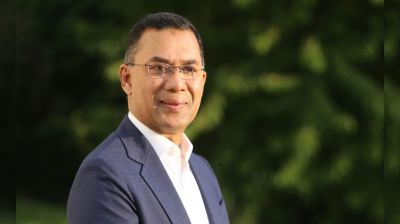
 For all latest news, follow the Daily Sun's Google News channel.


PM’s Birthday Today: From Political Struggle to Statesmanship
Tarique Rahman’s political journey and Bangladesh’s future
Prof Dr Morshed Hasan Khan
Published: 20 Nov 2026, 09:48 AM
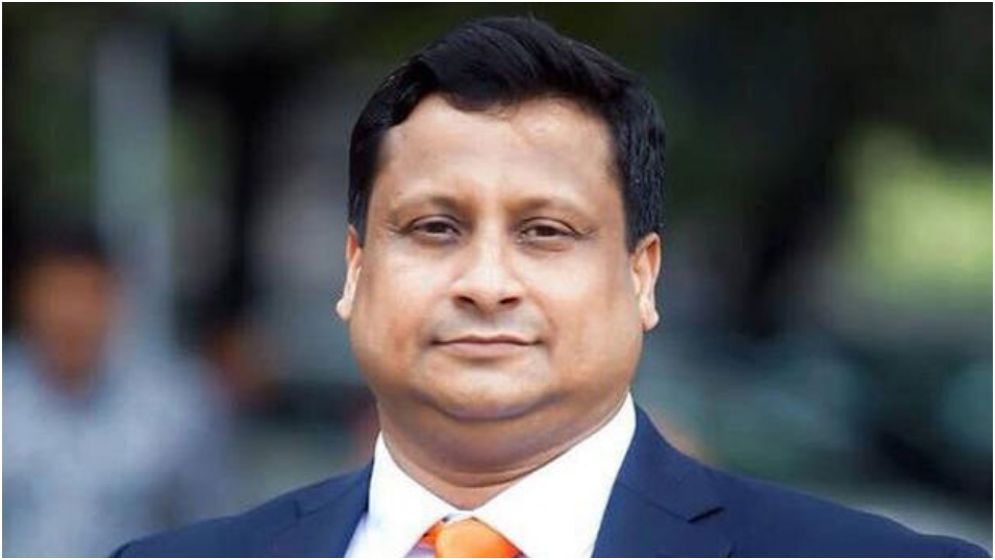
Leadership in politics is measured not merely by position, power or electoral success, but also by a leader’s struggles, resilience in the face of adversity, organisational skills, political foresight and vision for the state and society. An assessment of Prime Minister Tarique Rahman’s long political journey in Bangladesh must take all these factors into account.
Today, 20 November, marks his birthday. The occasion offers an opportunity to reflect on a long journey of political struggle, the evolution of leadership and the continuity of his vision for the state in Bangladesh.
As the son of Shaheed President Ziaur Rahman and former Prime Minister Begum Khaleda Zia, Tarique Rahman began his political journey in a historically significant political and family environment. However, his family identity was not the sole foundation of his political career.
One of the defining aspects of Tarique Rahman’s political development was his interest in grassroots organisation. His initiative to introduce secret-ballot elections to select leaders within the BNP's organisational structure in Bogura was a notable example of practising internal democracy in party politics. Before the 2001 national election, he also undertook research into local problems, good governance and public-interest issues, while initiating exchanges of views with people from different walks of life. After being appointed the BNP's Senior Joint Secretary General in 2002, he played an active role in reorganising the party and strengthening communication between the central leadership and grassroots activists. His organisational activities expanded further in 2005 through nationwide grassroots conferences, which enabled him to engage directly with leaders and activists at upazila level and members of the public.
However, Tarique Rahman's political journey was never a smooth one.
Following the political changeover of 11 January 2007, he was arrested on 7 March during the tenure of the military-backed caretaker government in what he described as a false case. Subsequently, while in detention, he was subjected to severe physical torture by the authoritarian caretaker administration. On 9 January 2008, appearing before a Dhaka court, he personally alleged that he had been physically tortured during remand and sought protection for his safety. His lawyers also brought before the court allegations that torture in custody had caused serious injuries to his spine. Eventually, on 11 September 2008, he had to travel to London for advanced medical treatment. What was initially a temporary departure from the country for medical reasons, however, turned into 17 years of exile.
During this prolonged period, the death of his younger brother Arafat Rahman Koko, the imprisonment of his mother Begum Khaleda Zia and a succession of political and personal crises involving his family created chapters of immense pain in his life. Despite remaining away from his beloved motherland, he had to shoulder the responsibilities of political leadership and keep his party organised amid adversity. His refusal to retreat from those responsibilities, despite enduring profound personal grief and prolonged political isolation, remains one of the most significant aspects of his political struggle.
Geographical distance never severed his political involvement. After Begum Khaleda Zia was imprisoned in 2018, he assumed the responsibility of acting chairman of the BNP and continued to lead the party from London. Keeping a major political party united amid prolonged political adversity, legal cases, arrests and organisational pressures was a formidable challenge. He discharged that responsibility through virtual communication, regular organisational directives, the formulation of political programmes and continuous engagement with party leaders and activists.
Another significant expression of Tarique Rahman's political thinking emerged through the one-point movement announced on 12 July 2023. He played an important role in bringing the BNP and other opposition parties involved in the simultaneous movement together under a common political programme centred on the demand for free and fair elections under a non-party, neutral government.
As a continuation of this initiative, he presented a 31-point outline for reforming the state structure on 23 July 2023. The outline was not merely a demand for a change of government; rather, it was a political proposal for structural reforms to state institutions, the Constitution, the electoral system, the judiciary, administration, economy and local government. It included proposals such as limiting the tenure of the prime minister, introducing a bicameral parliament, ensuring a balance of power, safeguarding the independence of constitutional institutions, preventing corruption, protecting human rights and reforming the economy. Presenting an alternative framework for governing the state alongside the political movement marked an important shift in Bangladesh's political landscape.
The July 2024 mass uprising marked another significant chapter in Tarique Rahman's political life. As the students' movement demanding quota reforms expanded in the face of state repression, BNP Acting Chairman Tarique Rahman was closely monitoring the country's political situation. Despite being abroad, he consistently condemned attacks and abuses against protesting students and called on BNP leaders and activists at all levels, along with pro-democracy citizens, to stand beside them. Through a joint statement by opposition parties involved in the simultaneous movement on 16 July, his successive messages on 17 and 19 July, and his call for national unity on 21 July, he continued to express his public political support for the movement.
At the same time, his organisational directives played an immense role in ensuring the active participation of BNP leaders and activists and the implementation of programmes at different stages of the movement. In a statement in June 2025, Ruhul Kabir Rizvi, then the BNP's Senior Joint Secretary General, said that whenever students announced programmes, Tarique Rahman instructed party leaders and activists to implement them and provided guidance from London at various stages of the movement. Thus, his role in the July mass uprising was not confined to expressing political support; he played a leading role in mobilising and engaging the BNP's organisational strength in support of the movement.
After 17 years in exile, Tarique Rahman's return to Bangladesh on 25 December 2025 marked the beginning of a new chapter in the country's political journey. The BNP's landslide victory in the 2026 national election under his leadership and his assumption of office as prime minister on 17 February marked a historic turning point in his political career. A political journey that began with years of movements, organisational leadership and proposals for state reform has now reached the stage of taking responsibility for governing the country. Naturally, this has broadened the scope of assessing his leadership. Alongside leading his party, he is now responsible for state institutions, the economy, administration and meeting citizens' expectations.
An important feature of Prime Minister Tarique Rahman's vision for the state is his approach to development, which goes beyond infrastructure construction and economic growth figures to encompass people's living standards, social security, employment and the capacity of state institutions. His announced 'Three-R' strategy — Recovery, Restoration and Reconstruction — places emphasis on economic recovery, restoring the effectiveness of state institutions and laying the foundations for long-term development. However, his government's plans are not confined to the Three-R strategy. Through the implementation of electoral pledges, it is seeking to bring social protection, agriculture, education, healthcare, industrialisation and energy security under an integrated development vision.
Through programmes such as the Family Card and Farmer Card, he has taken initiatives to strengthen the economic capacity of disadvantaged families and farmers. Measures adopted by his government, including the waiver of agricultural loans, nationwide excavation and re-excavation of canals, and a programme to plant 250 million trees, are linked to agricultural production, water-resource management and environmental conservation. Meanwhile, initiatives to expand women's education, provide uniforms and midday meals for primary school pupils, set a target of allocating 5% of GDP to education and introduce e-health cards reflect an emphasis on human resource development and public services. A distinctive feature of these initiatives undertaken by Prime Minister Tarique Rahman is their focus on ensuring that the benefits of development reach marginalised and disadvantaged sections of society.
To facilitate economic transformation, his government has undertaken initiatives such as providing start-up support for young entrepreneurs, financing women entrepreneurs, establishing industrial corridors and modernising Mongla Port. It also plans to strengthen energy security by increasing domestic gas exploration and production and expanding the use of solar power. In his first address to the 81st session of the United Nations General Assembly, he highlighted employment, climate justice, the Rohingya crisis and international cooperation alongside the Three-R strategy. This also created an opportunity to present Bangladesh's diplomatic position in a new light. Together, these initiatives reflect a broader vision of the state in which social protection, a productive economy, human resource development and international standing complement one another.
In conclusion, the significance of Tarique Rahman's political journey is not confined to his prolonged struggle and eventual assumption of responsibility for governing the country. It also encompasses his clear political vision for the future state structure of Bangladesh. His birthday, therefore, is not merely a personal occasion for a political leader; it is also an opportunity to assess a significant chapter of leadership in Bangladesh's political journey. Strengthening democratic institutions, establishing the rule of law, safeguarding citizens' rights and dignity, and ensuring that the benefits of economic prosperity reach every section of society lie at the heart of his vision for the state. This vision is reflected in the 31-point state reform proposal, the Three-R action plan and various initiatives for inclusive development. Under his leadership, this new journey towards building a democratic, humane, self-respecting and prosperous Bangladesh is expected to play an important role in shaping the country's future.
Happy birthday, Prime Minister Tarique Rahman. The people of Bangladesh hope that under your leadership, the country will move forward on a new journey towards democracy, justice, prosperity and human dignity.
The author is a professor at the University of Dhaka and Secretary for Mass Education Affairs on the National Executive Committee of BNP (Bangladesh Nationalist Party)