


 For all latest news, follow the Daily Sun's Google News channel.


At a time when Bangladesh’s economy is facing multiple crises, it is important to investigate whether the unrest in the garment sector is being fuelled by a premeditated conspiracy. At the same time, the crisis must not be allowed to escalate further, and the ongoing tensions surrounding the industry must be addressed through a timely increase in workers’ wages.
Various quarters believe that these incidents are being orchestrated to undermine Bangladesh’s position in the global market. This is not necessarily the work of any single political party; various vested interest groups may also be actively involved.
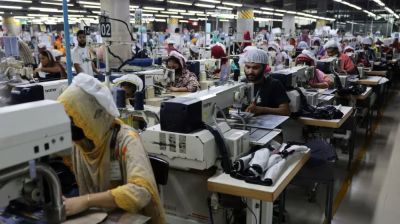
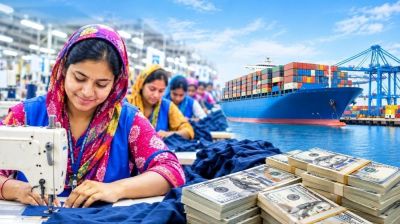
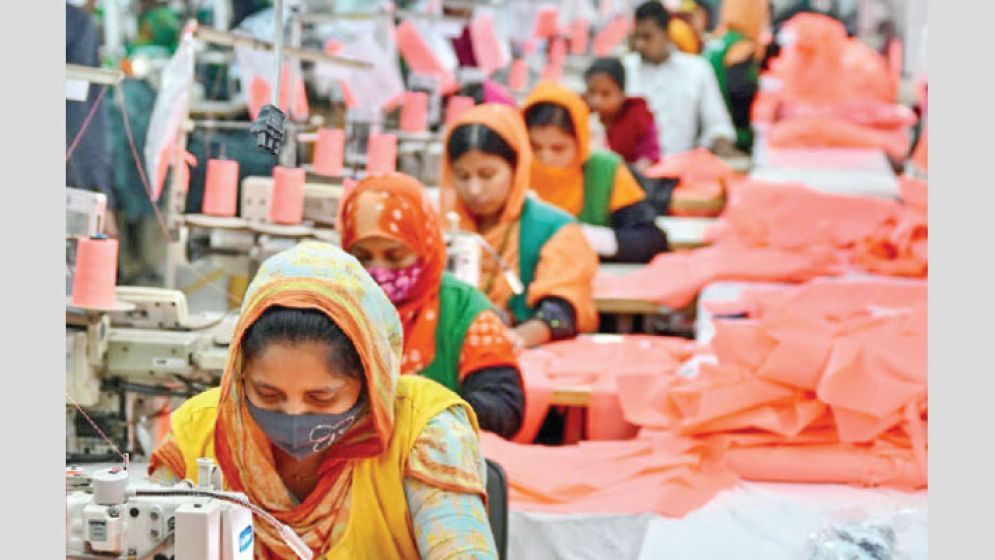
The ready-made garment (RMG) sector is Bangladesh’s largest export-earning industry, accounting for 81 per cent of the country’s export earnings. Numerous industries, including textiles, are closely linked to it. The sector is also one of the country’s largest sources of employment and foreign currency earnings. Bangladesh currently has more than 20,000 small and large garment factories, employing around five million workers. Including their families, at least 15-20 million people depend on this sector, with women accounting for about 80 per cent of its workforce.
While the RMG sector’s contribution to the economy is undeniable, improving garment workers’ living standards remains a major challenge. Their standard of living is directly linked to productivity and the industry’s sustainable growth. Workers’ wages are at the heart of the recent unrest in the sector. Discontent over the minimum wage has triggered prolonged tensions in Bangladesh’s principal export industry, bringing activities in this vital sector to a virtual standstill. Workers have continued to stage protests in various areas, including Savar, Gazipur and Narayanganj.
For more than a month, garment workers have been taking to the streets to demand higher wages, staging daily demonstrations that have forced factories to shut down. Clashes between workers and police have also taken place, leaving two workers dead in Gazipur and Savar. Factory owners have warned that they will shut down their units without paying workers if the latter refuse to work.
A recent BBC Bangla report from a workers’ settlement in Gazipur found that many families were running out of money before the first half of the month had passed. They were struggling to survive on littlemore than rice, lentils and mashed potatoes. One female worker said: “I haven’t eaten fish in two months; I’ve forgotten what it even smells like.”
Although the current wage structure for garment workers came into effect in January 2023, workers have continued to demand a revision over the past three years, arguing that it does not reflect the rising cost of living. At the time, they had demanded a minimum monthly wage of Tk23,000, but the minimum wage was fixed at Tk12,500. This time, they are demanding that it be raised to Tk32,000.
The introduction of a new pay scale for government employees has acted as a catalyst for the latest wave of protests in the garment sector. Beyond the RMG industry, there is now a growing demand across private-sector industries for reasonable increases in salaries, allowances and wages. The labour-intensive nature of the garment industry, coupled with workers living in densely populated settlements, makes collective mobilisation relatively easier.
Given the high rate of inflation, there is little reason to oppose an increase in government employees’ salaries and allowances. However, the current economic situation and the ongoing labour unrest provide clear evidence that the decision lacked adequate foresight. Looking after the welfare of 1.5 million government employees is not the government’s only responsibility. Who will take responsibility for the remaining 175 million people?
Following the government pay rise, various quarters called for initiatives to ensure reasonable increases in salaries, allowances and wages across all sectors, including the introduction of a national minimum wage for garment workers. However, the government failed to take timely action. Had it done so, the situation might not have spiralled so far out of control. Questions have also been raised about whether vested interests within the government are providing misleading advice. Workers’ protests had subsided after the government formed the Wage Board. Yet, last Monday’s Wage Board meeting was abruptly cancelled. It is essential to establish who was responsible for the cancellation and why.
Although the RMG industry is formally recognised as an organised sector, workers in practice enjoy very limited rights, including the right to form and operate trade unions. Consequently, they often lack effective representatives to negotiate with factory owners or the government. Whether the issue is workplace abuse, unpaid wages or demands for higher pay, workers are frequently left with little choice but to take to the streets to make their voices heard.
This lack of effective legal and institutional representation has created a perception among workers that they must remain on the streets until the end of any wage movement to secure an increase and avoid being cheated. Meanwhile, domestic and foreign vested interest groups may be exploiting the mistrust between workers and factory owners.
Businesses are already operating under considerable pressure from dependence on imported raw materials, uncertainty over electricity and gas supplies, infrastructure constraints, port-related complications, banking and financing difficulties, and intense competition in international markets. Against this backdrop, prolonged labour unrest, vandalism and production disruptions are creating further uncertainty for the industry. However, if the sector is damaged, it will not be factory owners alone who suffer. Ordinary workers and their families will face even greater insecurity. Workers and owners may have differences over wages, demands and conflicting interests, but destroying factories cannot resolve these disputes. The country’s garment industry must therefore be protected.
Workers’ jobs must be safeguarded, while an investment-friendly environment must be ensured for entrepreneurs. The first step towards protecting workers’ interests is to establish a fair wage structure that reflects the current cost of living and ensure regular payment of wages. The gap between the soaring prices of daily essentials and workers’ earnings is often so wide that many struggle to afford even two proper meals a day, let alone make ends meet throughout the month. Fundamental workplace rights must also be strictly enforced, including fire safety, adequate lighting and ventilation, a healthy working environment and maternity leave. The survival of the garment industry means the survival of millions of jobs, which, in turn, is vital to the economy.
The greatest strength of Bangladesh’s RMG industry is the confidence of international buyers, built through the efforts of entrepreneurs and workers over more than four decades. Timely deliveries, competitive prices and good product quality have helped establish the country as a major player in the global apparel market. Recent labour unrest, however, threatens to undermine this hard-earned reputation.
International buyers are now exploring alternatives to Bangladesh. Garment industry entrepreneurs have reported that several buyers have already shifted orders to other countries, including India and Vietnam. This poses a serious threat to the country’s export earnings.
The government must identify and address the root causes of the crisis. Blaming others will solve nothing. Indiscriminate accusations without establishing the facts have only muddied the waters. Rather than trading blame, the authorities must make timely and informed decisions. Resolving the current crisis requires addressing workers’ wage demands through dialogue and negotiation. The longer the government takes to respond, the greater the opportunity for vested interest groups to exploit the situation. All concerned parties must therefore come together without further delay to reach a fair and acceptable settlement on the wage issue. This is an urgent national priority.
Audite Karim is a writer and playwright. Email: [email protected]