


 For all latest news, follow the Daily Sun's Google News channel.


In Peter Weir’s 1989 film “Dead Poets Society”, an unorthodox English teacher John Keating – played unforgettably by Robin Williams – commits the ultimate pedagogical heresy by teaching his students how to think, not what to think. As a teacher in the fictional Welton Academy, John Keating stands on top of his desk to remind his students of why perspectives matter: “We don’t read and write poetry because it’s cute. We read and write poetry because we are members of the human race. And the human race is filled with passion.” Nearly four decades later, Keating’s words expose the tragic missing link in Bangladesh’s education system – a system that prizes mechanical conformity, blind obedience, and rote memorisation over human curiosity, critical thinking/inquiry, civic responsibility/consciousness, and emotional growth/intelligence.
The recently published Higher Secondary Certificate (HSC) results, which recorded a dismal pass rate of just 52 per cent alongside mass failures in English, and Information and Communication Technology (ICT) across all education boards, are not an isolated statistical shock. Rather, they represent the inevitable harvest of decades of pedagogical neglect and an inadequate education budget. When classrooms operate as memorisation factories instead of spaces for intellectual awakening and critical inquiry, academic collapse becomes structural. To rescue our youth from this downward spiral, the present government must urgently address this missing link by reshaping the entire education sector, placing special focus on primary and secondary education as the indispensable foundation of tertiary excellence.
In the heart of Keating’s philosophy lies the Latin aphorism 'Carpe Diem' – seize the day. Seizing the day in the modern education system requires dismantling fear-driven classrooms and cultivating a congenial learning environment rooted in genuine teacher-student mutual understanding. Progressive teaching methods must make lessons intellectually stimulating, supported by fair assessments and clear guidance on students’ future goals or career paths.
Yet, our ground reality remains deeply troubling, particularly in English and ICT. Across the country – and particularly outside Dhaka City – an acute shortage of well-trained English language and ICT teachers, compounded by poorly equipped or non-functional ICT labs, has left millions of rural and semi-urban students severely disadvantaged. Equally alarming is the systematic neglect of civic education in our national curriculum. Today’s schoolchildren will become tomorrow’s leaders, educators, administrators, engineers, doctors, bankers, and entrepreneurs across every sector of society. Without a solid understanding of citizenry, polity, and state machinery, we risk raising a generation (Alfa) alienated from social empathy, democratic responsibility, institutional accountability, and ethical governance.
To truly modernise our classrooms for the twenty-first century, we must also abolish the flawed system of dividing students into rigid groups – Science, Business Studies, and Humanities – from high school. In an era of Artificial Intelligence (AI), compartmentalising young minds prematurely is counter-productive. Tomorrow’s innovators require a strong humanities core alongside rigorous science education. All students should enjoy open access to diverse subjects and the freedom to choose according to their genuine interests and aptitudes – for instance, selecting accounting from business studies, chemistry and higher mathematics from science, alongside economics – by eliminating restrictive group labels altogether.
Besides, vocational or technical subjects must be introduced from primary education to foster practical (skill-based) competence and dignity of labour. As AI transforms the global economy, emotional intelligence becomes vital for navigating complex future challenges. Students must learn how to control AI, use AI responsibly, and make sound decisions through critical thinking and moral reasoning. Achieving this requires breaking free from the shackles of rote learning and thoroughly rethinking both formative and summative assessments at primary and secondary levels. English must be taught not merely as an exam subject to be memorised, but as a vital oral and written skill that sharpens critical thought and effective communication. Also, ICT education must be upgraded to provide students with hands-on (practical) experience rather than outdated textbook theory.
Ultimately, the enduring moral of “Dead Poets Society” is that when institutions demand blind obedience and suppress individual voice, they extinguish the very spark that drives human progress. Bangladesh can no longer afford cosmetic tweaks to a fundamentally broken model of education. We need an immediate, comprehensive overhaul for the education sector. Moving forward requires concrete structural reforms: fostering pedagogical innovation and mastery, nurturing learners’ intrinsic motivation, upgrading the curriculum, and building better physical facilities with congenial learning environment.
To sustain these changes, the government must allocate a minimum education budget of 5 per cent of GDP, invest heavily in continuous teacher training, offer competitive salaries to attract bright minds to teaching, ensure fair and merit-based teacher recruitment, and make School Management Committees (SMC) genuinely accountable to parents and local communities. Above all, the government should establish an independent Education Commission headed by a distinguished academic with a bright track record, unimpeachable integrity, and zero partisan allegiance. If we can bridge this missing link and empower our students to think critically or positively, question boldly, and seize their own potential from the primary level, our classrooms will look vibrant and engaging. Of course, Bangladesh’s future depends on the youth’s future!
_____________________________________
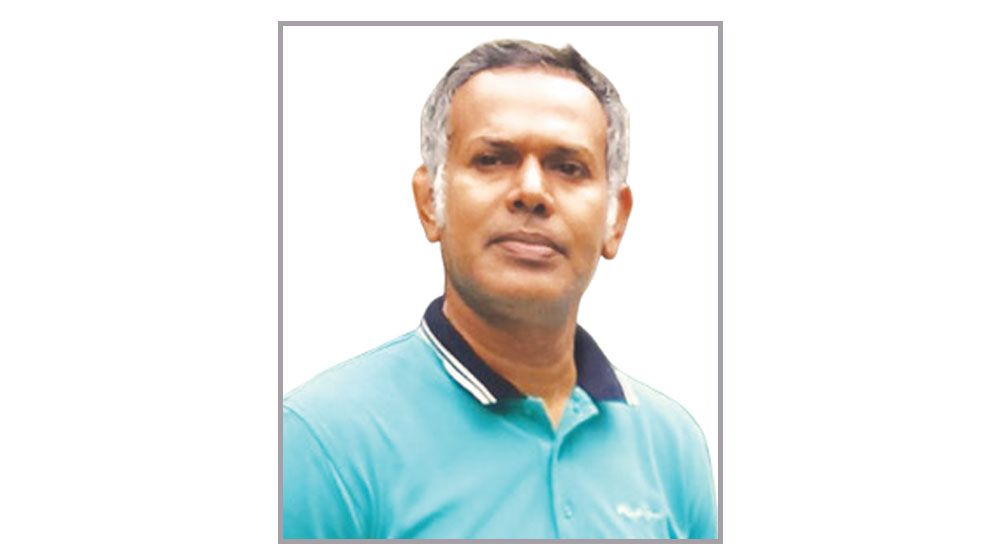
The writer is an Associate Professor of English at Stamford University Bangladesh. He could be contacted at [email protected]