



 For all latest news, follow the Daily Sun's Google News channel.


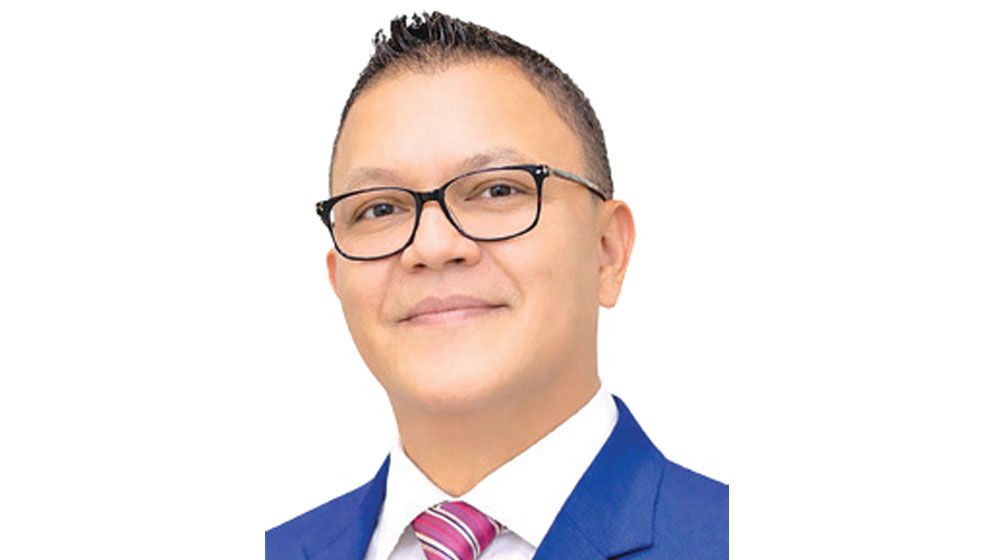
The election of Abdul El-Sayed as the first Muslim member of the United States Senate is a historic moment not only for American Muslims but also for American democracy itself. At one level, his victory is the story of an accomplished son of immigrants who rose through education, public service and political engagement to reach one of the highest offices in the country. At another, it is a reflection of the evolving place of Muslims in American society, a community that has spent decades striving for acceptance, representation and influence in the national conversation.
For many Muslims in the United States, El-Sayed’s achievement carries a significance that goes beyond party politics. It is about visibility. It is about belonging. And perhaps most importantly, it is about the growing belief that Muslim Americans can help shape the country’s future rather than merely defend their place within it.
The symbolism is difficult to ignore. For much of the post-9/11 era, Muslim Americans lived under a cloud of suspicion. Public discussions about Islam were often tied to security concerns, extremism or questions of loyalty. Muslim communities found themselves repeatedly explaining who they were and what they stood for. In politics, many became engaged primarily to protect civil rights and challenge discrimination. That experience shaped an entire generation.
Yet the success of figures like El-Sayed suggests a gradual but important shift. The conversation is no longer centred solely on whether Muslims belong in America. Increasingly, it is about how Muslims can contribute to the country’s leadership and governance. El-Sayed embodies that transition. Unlike many traditional politicians, he came to politics through public health and community service. His academic credentials, professional accomplishments and record in local government helped build an image based on competence rather than identity. Voters were asked to judge him not as a Muslim candidate but as a candidate who happened to be Muslim.
That distinction matters. A healthy democracy should evaluate leaders according to their ideas, integrity and ability to serve the public. The more ordinary it becomes for a Muslim, a Christian, a Jew, a Hindu or a person of any background to compete on equal footing, the stronger democratic institutions become. At the same time, it would be naïve to pretend that religion played no role in El-Sayed’s campaign. His faith became a subject of public debate, and his critics often sought to turn his Muslim identity into a political liability. The fact that he prevailed despite such challenges makes the victory even more noteworthy.
For young Muslim Americans, the impact could be profound. Political representation has a psychological value that is often underestimated. When children and students see someone who shares aspects of their identity occupying a position of national leadership, their sense of possibility expands. Careers in government, public service and politics suddenly appear more attainable. For years, many Muslim parents encouraged their children to become doctors, engineers, scientists or entrepreneurs. There was often little expectation that they could one day become governors, senators or national leaders. El-Sayed’s journey challenges those assumptions.
But this moment should not be viewed solely through a religious lens. America has repeatedly renewed itself through the participation of immigrant communities. Irish, Italian, Jewish, Asian, African and Latino Americans – all faced periods of exclusion before becoming integral parts of the political mainstream. The growing political influence of Muslim Americans follows a similar pattern. It represents the continuing expansion of the American story rather than a departure from it.
Still, symbolic milestones have limits. Being the first Muslim senator is historically significant, but history alone does not solve problems. Ultimately, El-Sayed will be judged by the same standards as any other elected official: his effectiveness, leadership and ability to improve the lives of those he represents. That may be the most encouraging aspect of this development. The true success of Muslim political representation will arrive when Muslim politicians are no longer treated as novelties or symbols, but simply as public servants accountable to their constituents. Nevertheless, this victory deserves recognition for what it represents today.
Abdul El-Sayed’s rise from the son of Egyptian immigrants to the United States Senate demonstrates the resilience of democratic ideals at a time when many fear those ideals are under strain. His election challenges stereotypes, broadens political representation and offers a powerful reminder that diversity and national unity are not opposing forces. For American Muslims, it marks a milestone in a long journey toward acceptance and influence. For America, it is evidence that the promise of opportunity, though imperfect and unfinished, remains alive. And that may be the most important lesson of all. A democracy grows stronger when every community can see itself reflected in the nation’s leadership. Abdul El-Sayed’s success is therefore more than a personal achievement. It is a sign of a changing America, and a hopeful one at that.
_____________________________________
The writer is a political analyst, private banking financial crime compliance specialist, columnist and poet based in Geneva, Switzerland. He can be reached at [email protected]