



 For all latest news, follow the Daily Sun's Google News channel.


A World in Crisis and the Future of Humanity
Conflict, supply chains, artificial intelligence and the search for a humane society

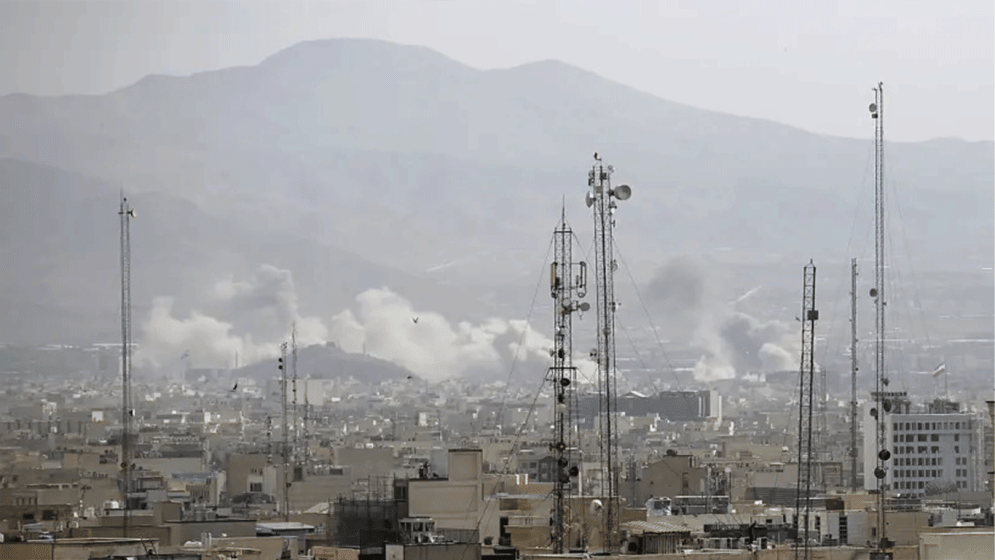
File Photo
Are we already living through a third world war? The question may suggest that the purpose is simply to give the many conflicts around us one sweeping name. Yet understanding what is happening matters more than choosing a label. War today is not confined to armies facing each other across borders. Its effects reach energy, trade, information, technology, food prices and the daily lives of ordinary people. In that sense, the phrase “third world war” may serve as a warning about the scale of global instability. But it should not be presented as an established historical fact without considering how world wars are defined and how today’s conflicts compare.
People living through earlier wars did not always recognise at once that
they were entering a new era. Historians often explain the full meaning of
events only later. That experience, however, does not make every regional
conflict today a world war. The spread of the fighting, the direct involvement
of states, the role of alliances and the wider consequences all matter. The
phrase can be used as a warning, but it should not become a confident
prediction.
Still, the underlying concern is real. In 2026, conflict in the Middle
East has created uncertainty around shipping through the Strait of Hormuz and
the energy trade. The United Nations Conference on Trade and Development has
reported that the conflict has affected energy markets, financial conditions
and major shipping routes, adding pressure to global trade and supply. It has
warned that a prolonged crisis could place developing economies under greater
pressure through higher import costs and inflation.
The movement of goods around the world depends on production in many
countries, shipping, ports, energy and financial transactions. If an important
route is blocked or a supplying region is disrupted, the effects can spread
elsewhere. That does not mean every country will face empty shelves or famine.
The risk depends on which goods are affected, whether alternative sources are
available, a country’s ability to pay for imports and how well its government
has prepared. A 2026 UK government foresight report describes supply chains as
complex, interconnected networks and explains how geopolitical and climate
risks can intensify one another.
Preparation is therefore essential. No country can produce every item it
needs. But governments can diversify sources of essential goods, expand energy
alternatives, improve storage and transport, plan for inflationary pressure and
strengthen regional cooperation. Panic does not solve a crisis. Sound judgement
means identifying vulnerabilities and preparing practical responses.
Technology and surveillance form another part of this instability.
Information about people’s identities, movements, purchases, communications and
online behaviour is constantly being generated. Artificial intelligence can
analyse such information and identify patterns. But however advanced these
systems become, they are not all knowing or conscious beings. They are human
made tools. Their effects depend on the quality of the data, the purpose for
which it is used, the institutions making decisions and the laws that govern
them.
The important questions are not simply whether artificial intelligence
exists or how powerful it is. We should ask who collects the data, why it is
collected, who is accountable when a decision is wrong and what remedies are
available to the people affected. In 2026, United Nations human rights experts
warned that digital surveillance, without adequate safeguards and
accountability, can harm freedom of expression, privacy and civic space. They
called for independent oversight, protection of personal data and effective
remedies for harm.
Digital identity and digital currency do not automatically create
oppressive systems. They can make public and commercial services easier to
access. But without proper safeguards, they may also enable excessive control
over personal information and greater surveillance. Any assessment of these
technologies must consider their benefits alongside the balance of power,
privacy, consent and the right to challenge decisions. UNESCO’s Recommendation
on the Ethics of Artificial Intelligence also emphasises transparency, personal
data protection, human oversight and human accountability.
These technological changes are connected to wider changes in society.
Nationalism, religion and technology can all shape people’s identities and
political choices. Yet they cannot explain every society or every political
decision in the same way. Economics, history, local institutions, social class
and individual experience also matter. In uncertain times, people may seek
security in national identity, meaning and comfort in religious belief, or the
promise of progress in technology. These forces can coexist, but they can also
come into conflict.
Ideas about future societies include city states, corporate run
communities and network based societies. Some may offer new ways to organise
services and local administration. But an administrative model does not become
fair simply because it is efficient or innovative. Who makes decisions? What
rights do residents have? Who sets the rules for taxes and public services?
Where can people seek redress if power is abused? Without credible answers, the
appeal of a new structure remains incomplete.
Debates about technology and governance also bring us back to families,
education and children’s development. It may be tempting to imagine that a
personal artificial intelligence could become a child’s trusted guide or moral
compass. But a machine cannot replace conscience, human relationships or a
sense of purpose. Children’s creativity grows through secure relationships, the
freedom to ask questions, experience and the opportunity to learn from
mistakes. Education is more than a system for measuring examination results or
technical skills. It should help people understand others, assess evidence and
take responsibility for their choices.
We cannot say with certainty whether the present world order will
collapse, what will happen in the next five or ten years, or which political
systems will endure. Predictions can attract attention, but they do not turn
uncertainty into fact. The course of a crisis depends on human decisions, the
strength of institutions, international cooperation and the participation of
ordinary people.
There are two levels of action. States and institutions must invest in
resilient supply chains, public health, food security, energy, data protection
and disaster preparedness. At the same time, communities must build an
environment where people do not spread panic without checking the facts, treat
disagreement as hostility or abandon those who are vulnerable. Families,
neighbourhoods, schools, local organisations and professional communities can
all become sources of trust and cooperation during a crisis.
The world has become more uncertain, but uncertainty does not make
collapse inevitable. The risk of war makes peaceful diplomacy more necessary.
The growth of surveillance makes civil rights and accountability more
important. Fragile supply chains call for diversification and cooperation. And
when technology threatens to displace human judgement, education and human
relationships matter even more. The future is not written only by powerful
states and institutions. It is also shaped by the way people choose to live
with one another.