



 For all latest news, follow the Daily Sun's Google News channel.


Certain days in a nation’s history transcend political events and become defining moments in its struggle for identity, sovereignty and freedom. 7 November 1975 occupies a distinctive place in Bangladesh’s political history. It remains a defining moment in the country’s struggle to preserve its independence, sovereignty, territorial integrity and national dignity.
On this historic day in 1975, Major General Ziaur Rahman was freed from confinement through an extraordinary uprising involving ordinary citizens, patriotic soldiers and members of the wider public. He was not merely a military commander; to his supporters, he represented the spirit of Bangladesh’s independence and sovereignty. His patriotism, courage, political judgement and determination became central to the narrative of national unity that emerged from the upheaval.
The roots of this public confidence can be traced to the bloodstained night of 1971. As the country faced a profound political and military crisis, Ziaur Rahman made the historic declaration of independence from Kalurghat Radio Station. He subsequently served as a sector commander and led Z Force, demonstrating his commitment on the battlefield.
Following independence, Bangladesh entered a deeply turbulent period. Political instability, economic hardship and the concentration of power under the one-party BAKSAL system raised serious concerns about civil liberties, freedom of expression and institutional accountability. Against this backdrop, the events of November 1975 became another turning point. On 3 November, Ziaur Rahman was placed under house arrest by a group of military officers. In the early hours of 7 November, soldiers and civilians took to the streets, culminating in his release.
The uprising, widely remembered by its supporters as the Sepoy-Janata Biplob, or Soldiers and People's Revolution, became a powerful symbol of resistance to political conspiracy and a renewed assertion of national sovereignty. Although the events of November 1975 remain politically contested and historically complex, their significance in the political consciousness of a substantial section of the population cannot be overlooked.
Under Ziaur Rahman's subsequent leadership, Bangladesh embarked on a process of political and economic restructuring. One of his most influential political contributions was the promotion of Bangladeshi nationalism. This concept sought to establish a common national identity that transcended divisions of ethnicity, religion, language, region and political affiliation. Its central proposition was that every citizen, whether from the hills or the plains, regardless of background or belief, should enjoy equal dignity as a Bangladeshi.
Ziaur Rahman's political legacy is also closely associated with the restoration of multi-party politics and the reopening of political space. His economic and administrative policies also sought to move Bangladesh towards greater self-reliance. Reforms in public administration, initiatives to strengthen local government and efforts to improve rural infrastructure formed important elements of his development agenda. Through programmes such as Gram Sarkar and the Village Defence Party, his government sought to expand grassroots participation and strengthen local institutions.

The ready-made garment industry and overseas employment got special attention during his time. Policies supporting private-sector participation, bonded warehouse facilities and back-to-back letters of credit helped create favourable conditions for the expansion of export-oriented manufacturing. Similarly, greater attention to overseas labour markets, particularly in the Middle East, helped Bangladeshi workers abroad and to earn remittances for the country.
Ziaur Rahman's canal excavation programme sought to improve irrigation, water management and agricultural productivity as agricultural agenda encouraged higher production and greater food security. His nationwide tree-planting contributed to ecological balance. Education, scientific research and social development were further areas of attention. Cultural recognition was promoted through the introduction of national honours, including the Ekushey Padak and the National Film Awards.
The establishment of separate ministries for women and youth was another significant institutional development. Initiatives such as the Shishu Academy, children's parks and the Notun Kuri talent competition opened door to explore potential of younger generations.
His constitutional amendments also reflected the religious and cultural values of a predominantly Muslim society. And his constitutional framework continued to recognise the importance of religious freedom and coexistence among citizens of different faiths.
In foreign affairs, Ziaur Rahman pursued a policy intended to strengthen Bangladesh's independent standing in the international community. He expanded engagement with the Muslim world and the Organisation of Islamic Cooperation while maintaining relations with the Non-Aligned Movement and the United Nations. His diplomatic approach sought to balance international partnerships with national interests and strategic independence. Perhaps his most significant initiative was formation of South Asian Association for Regional Cooperation (SAARC).
The political legacy of Ziaur Rahman was subsequently carried forward by Begum Khaleda Zia. Following the restoration of democratic politics in 1991, she became Bangladesh's first woman Prime Minister through a popular electoral mandate. Her government played a historic role in restoring the parliamentary system of government.
Bangladesh's political history has repeatedly witnessed tensions between authoritarianism and democratic aspirations. The Bangladesh Nationalist Party (BNP), founded by Ziaur Rahman, has presented itself as a principal political force in the country's struggle for multi-party democracy.
The mass uprising of July 2024 marked another decisive chapter in Bangladesh's political journey. Following the end of the prolonged Awami League government, the country entered a new phase of political transition. The subsequent return of the BNP to electoral politics and the assumption of government under its current chairman, Tarique Rahman, have renewed expectations of democratic restoration and institutional reform.
With a substantial electoral mandate, Prime Minister Tarique Rahman faces the challenge of rebuilding public confidence, strengthening democratic institutions and ensuring accountable governance. His administration's proposed initiatives, including Family Cards, Farmer Cards and expanded employment opportunities for young people, seek to address economic insecurity and improve social protection. These programmes can be viewed as contemporary expressions of the broader development priorities associated with Ziaur Rahman's 19-point programme.
More than five decades after 7 November 1975, the historical significance of the day continues to inspire debate about national identity, sovereignty and political unity. Ziaur Rahman is no longer physically present, but his political ideas, development initiatives and vision of national identity remain influential in Bangladesh's political discourse.
The central lesson of 7 November should be the importance of national solidarity in safeguarding independence and protecting the country's democratic future. The challenge before the country is to rise above partisan divisions and build a state founded on democratic values, social justice, human dignity and economic self-reliance. Under Prime Minister Tarique Rahman's leadership, the government has an opportunity to convert its electoral mandate into meaningful institutional and economic reforms.
Ultimately, the enduring message of 7 November is that Bangladesh’s sovereignty and future cannot be secured by political power alone. They depend on the collective commitment of its people to democracy, national unity and accountable government. By drawing on the spirit of national solidarity associated with that historic day, Bangladesh can aspire to become a prosperous, inclusive and self-reliant nation that commands respect on the world stage.
_______________________________________________
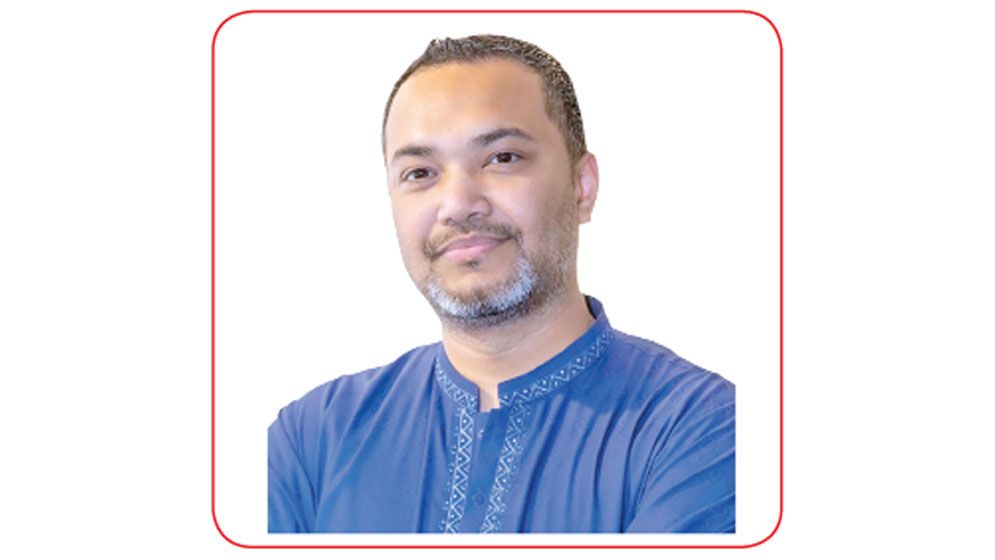
The writer is Adviser to Prime Minister of Bangladesh