


 For all latest news, follow the Daily Sun's Google News channel.


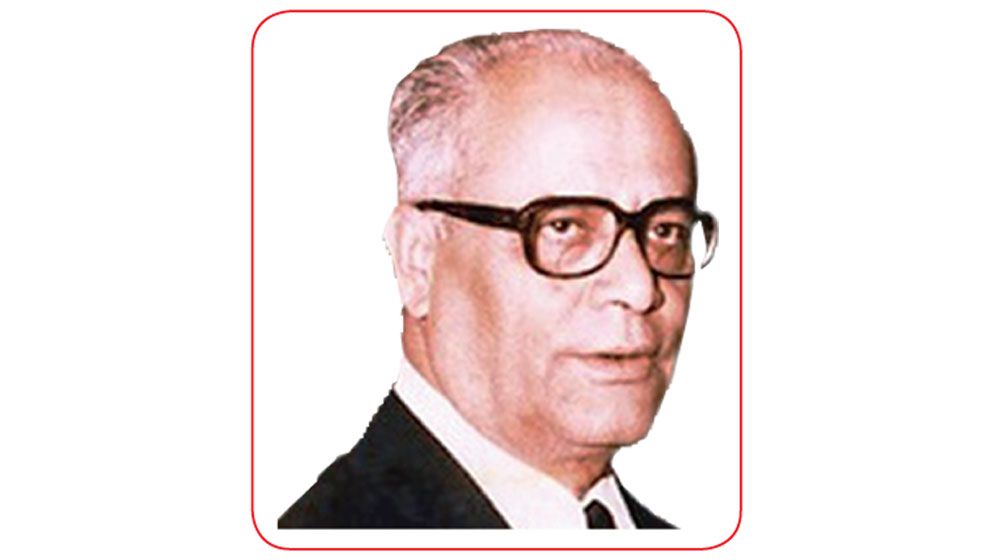
I first met General Ziaur Rahman in mid-November 1975, when he was the army-chief and deputy chief martial law administrator (DCMLA). At that time, alongside other important responsibilities, he was in-charge of the ministries of finance, industries, and commerce. Justice Sayem was then the president and CMLA. I was a professor of economics and dean of the social science faculty following my return to Dhaka University. One day, the chairman of the economics department told me that a meeting was arranged with the government, and he and I had to attend it. We subsequently went to the committee room of the commerce ministry for attending that meeting.
At the very outset of the meeting, Ziaur Rahman said that the country’s economy, including industries and commerce, was not in good shape – both in the public and private sectors. Terming the attendees ‘learned and experienced’, he sought advice from us all. It then emerged during discussions that knowledge, experience, sense of responsibility and strength of character were expected from public officials, but these were missing in reality. The assets of the nation and government were treated like personal properties by the officials. The private sector people were also not satisfied and were raising more and more demands. There was a need for overcoming the situation, but the question was-- how? Ziaur Rahman himself was very worried about the state of affairs, and the meeting was concluded with the hope of holding more meetings on the subject.
A few days later, I was invited by President Sayem. While taking lunch, he asked me about many issues, which included various problems faced by the government. I responded by saying whatever came to my mind. He informed me about the upcoming appointment of some ministers. I told him that appointment of ministers in the absence of parliament does not look good; instead, ‘advisers’ should preferably be appointed. After some days, I was again summoned by the president. When I reached his place, he immediately handed me a paper and asked me to write down my bio-data on it. When I looked at him inquisitively, he told me that he wanted to make me his adviser. When I requested him to allow me some time before taking the decision, he asked me whether others had given him (the president) time before making him president. It was true that after seizing power on 3 November, Khaled Mosharraf brought him from his Dhanmondi residence and immediately made him seat on the president’s chair. Therefore, why should he give me time? The justice’s logic was irrefutable.
Consequently, I conveyed my consent after visiting him the next day. He informed me about the appointment of three other ministers – the vice-chancellor of Chattogram University Professor Abul Fazal, former central minister of Pakistan Kazi Anwarul Haque, and former vice-chancellor of Engineering University Dr M A Rashid. Some people said that we should take oath. I responded by saying that oath-taking was the embellishment of ministers, not of advisers. We therefore became ministers without any oath-taking; however, we enjoyed the rank, status, and all privileges of ministers.
A major undertaking of President Zia during the period was amendment of the constitution. He added ‘Bismillahir Rahmanir Rahim’ at the very start of the constitution, and also introduced Islamic social justice in place of secular socialism. As a result, Bangladesh’s relationships with the Muslim world expanded manifold.
At that time, Bangladesh entered into dialogue with India at different levels on the issue of water sharing. General Zia himself talked with Indian Prime Minister Indira Gandhi accompanied by the DCMLA Rear Admiral M H Khan in 1976. I held discussions with the Indian finance minister during the conference of Commonwealth finance ministers held in Hong Kong. And BM Abbas AT went to Nepal twice for discussions on the issue. A move was also made to store water from rain and snow in Nepal and then release those during winter to make up for the shortfall owing to the Farakka Barrage of India. But unfortunately, that did not materialise in the long run. However, when the Indian prime minister Morarji Desai visited Bangladesh in 1977, he signed a five-year agreement with Bangladesh on the question of water-sharing of the river Ganges, where the right of Bangladesh to get at least 38,000 cusecs of water was established. Later, when the treaty was renewed in 1982, that guarantee clause was withdrawn.
President Zia also did some good work for the civil service. Benefits and opportunities in all government jobs were made uniform in accordance with the recommendations of the Administrative Reform Commission. This was never done before since the colonial era. As a result, the infighting among government job-holders was reduced and scope was created for a unified civil service.
President Zia declared population as number-one problem in the country and geared up the programme for adult literacy. Besides, he constituted a number of national committees by making the vice-president or the prime minister chairman; besides council committees were formed in ministries with the respective ministers in charge. President Zia always enquired about the workings of these committees.
The establishment of South Asian Association for Regional Cooperation was a dream of President Zia. He was the one to initiate, plan, and hold discussions for the purpose. He even framed its constitution and the formation process was nearing end while he was in office. But he was assassinated before he could materialise his cherished goal.
President Zia followed a unique procedure for holding discussions with foreign heads of state and government. At first, he used to hold exclusive meetings. Later, he asked the relevant cabinet members and officials to join. He followed this process during his overseas official visits as well.
In his personal life, President Zia used to lead a simple and ordinary life. He never displayed any flashiness or ostentation typically observed among military officers – neither through his dresses, nor in the food he consumed, nor through the friends that assembled around him. Despite repeated attempts, we failed to make him wear dinner-suite. While moving outdoors, he mostly wore a jeans-trouser and off-colour shirt; trouser with bush-shirt were his favourites during afternoons and evenings. I saw Begum Zia accompanying him during a few trips, but I never saw her go for shopping. Besides, I never saw their two sons or any other relative at Bangabhaban.
I fervently wish and sincerely hope that the life and work of President Zia would be evaluated objectively and factually. I observed only two failings in him. One was that, he could not maintain control over the army. And secondly, I was doubtful whether his political friends always gave him the right advice. In my eyes, President Zia was a genuinely virtuous man. He also viewed others as good people and reposed trust in them. But not all of us are good human beings, and President Zia had to pay the price for reposing that trust, even by giving up his own life.
_________________________________________
The writer served as finance and planning minister of Bangladesh during the late 1970s and as Vice-President in early-1980s. He was also Governor of the then East Pakistan in March 1969.
Abridged Translation: Dr Helal Uddin Ahmed (Retired Additional Secretary and former Editor of Bangladesh Quarterly)