


 For all latest news, follow the Daily Sun's Google News channel.


Let the spirit of National Revolution and Solidarity Day inspire unity, democracy and prosperity
Forhad Hossain Azad
Published: 06 Nov 2026, 08:40 PM
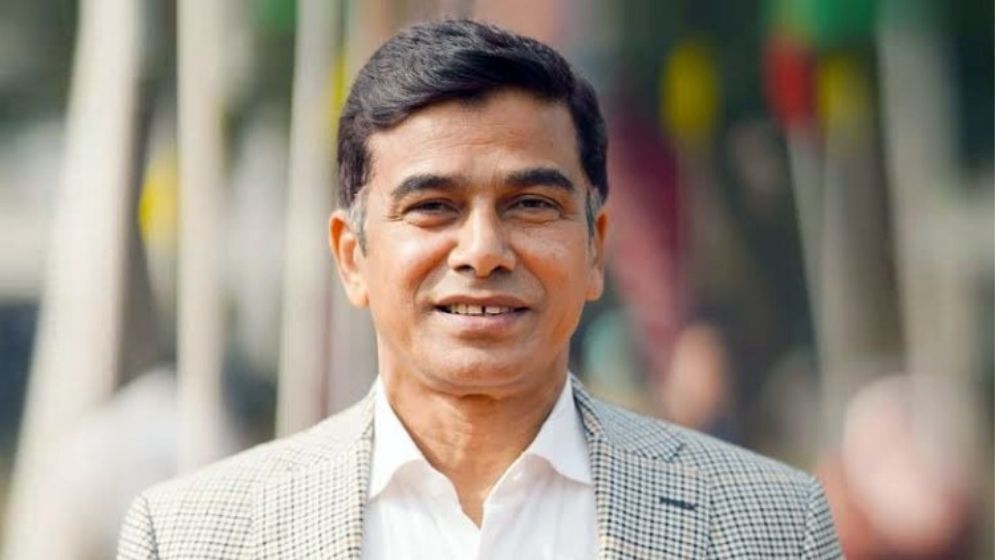
Forhad Hossain Azad. Photo: Collected
I grew up in a peaceful, close-knit village in the northernmost part of post-independence Bangladesh, in a prosperous Muslim family whose livelihood was largely rooted in agriculture.
Towards the end of my primary school years, I would walk along the village's narrow dirt roads to school with other boys and girls from the neighbourhood.
I was too young to understand the political developments unfolding around me. Yet I could sense an undercurrent of unease, uncertainty and apprehension that seemed to pervade the surroundings.
After dusk, five to seven elderly and respected men from the neighbourhood would often gather at the baithakkhana, a separate sitting room away from the main living quarters of our house. I could hardly understand what they discussed, but the anxiety and apprehension reflected on their faces left a lasting impression on my young mind.
Whenever my father went to town for work, he would return home carrying a newspaper along with other essentials. Out of curiosity, I would leaf through its pages, trying to make sense of the news and events beyond our village.
Then, towards the end of 1975, I noticed a sudden change. The discussions among those elderly men became noticeably more animated, their conversations carrying a sense of excitement and anticipation. The following day, my father left home around noon and returned from town in the evening, as usual, with a newspaper in his hand.
On its front page was a photograph of a man in military uniform, surrounded by jubilant soldiers and civilians. The image captured the excitement of the people in the aftermath of the events of 7 November. The man in the photograph was Ziaur Rahman.
From that day onwards, I developed a deep fascination with him. That photograph became etched in my memory and remains vivid to this day.
As I grew older and my understanding of history and politics broadened, I came to appreciate the events of that day, their historical context and their far-reaching implications for Bangladesh.
7 November, 1975, remains one of the most consequential and eventful chapters in the history of independent Bangladesh. At a time when the country was passing through political turmoil, uncertainty and institutional instability, the uprising involving soldiers and civilians marked a significant turning point in the nation's political trajectory.
Amid the upheaval, Shaheed President Ziaur Rahman, the declarer of Bangladesh's independence and a pioneer of multiparty democracy, emerged once again as a central figure in the country's political landscape. The day subsequently came to be observed as National Revolution and Solidarity Day, commemorating an important episode in the nation's history.
In the dark and uncertain period following independence, Ziaur Rahman's leadership offered the country a renewed sense of direction and hope. His vision helped open new possibilities for national development and political reconstruction.
The enduring significance of 7 November lies in its message of national unity, the protection of independence and sovereignty, and collective responsibility towards the country and its people. The events of that day remind us that, in moments of national crisis, unity and the people's collective engagement are vital to safeguarding sovereignty, stability and national interests.
Shaheed President Ziaur Rahman was a frontline freedom fighter and sector commander during the Liberation War.
He subsequently assumed the responsibility of leading the country, introducing the concept of Bangladeshi nationalism, restoring the multiparty political system and placing strong emphasis on national production and economic development.
These initiatives have left a lasting imprint on the country's political and economic history.
However, we must recognise that political change alone cannot guarantee the progress of an independent nation.
It requires democratic values, the rule of law, mutual respect, tolerance and the protection of people's fundamental rights.
Differences in political beliefs, opinions and approaches must not stand in the way of our collective commitment to national interests.
We must draw lessons from history, rise above political divisions, intolerance and vengeance, and work together to build a peaceful, inclusive democratic and prosperous Bangladesh.
At this crucial juncture, accelerating economic growth, creating employment opportunities, strengthening agriculture and industry, and improving the living standards of ordinary people must be among our foremost priorities. Achieving these goals requires a shared commitment and concerted efforts from all sections of society.
The success of government policies and development initiatives depends not merely on sound policymaking but also on the active, responsible and collective participation of citizens from all walks of life.
Under the leadership of Prime Minister Tarique Rahman, son of Shaheed President Ziaur Rahman and former prime minister Begum Khaleda Zia, we must work collectively to fulfil the aspirations of the people and build a democratic, developed and prosperous Bangladesh.
This national endeavour calls for a sense of shared responsibility, with each of us playing a constructive role from our respective positions.
At the same time, rebuilding and strengthening democratic institutions weakened during nearly 15 years of authoritarian rule, restoring people's voting rights and fundamental freedoms, and ensuring transparency, accountability and the rule of law at every level of the state must remain among our foremost priorities.
The true strength of democracy lies in the rights of citizens, freedom of expression, good governance and meaningful public participation in the affairs of the state. These principles must guide our journey towards a more accountable and inclusive political system.
As State Minister for Water Resources, I firmly believe that the sustainable management of our rivers, canals, wetlands and other water resources is fundamental to national development.
Preventing river erosion, mitigating flood risks, ensuring the sustainable and equitable use of water, and safeguarding agriculture and livelihoods are among the key priorities that require consistent attention and long-term planning.
Safeguarding people's lives, livelihoods and economic well-being across the country requires sustained commitment, effective coordination and collective action.
At the same time, the development of Panchagarh and the wider northern region deserves particular attention, especially in advancing agriculture, improving connectivity, expanding economic opportunities and enhancing the living standards of marginalised communities.
My expectation is that the spirit of 7 November will inspire us to build an equitable, humane, democratic and prosperous Bangladesh founded on national unity and mutual harmony.
Inspired by Shaheed President Ziaur Rahman's patriotism, his role in the Liberation War and his call for national solidarity, we must dedicate ourselves to the welfare of the people and the progress of the nation.
On this National Revolution and Solidarity Day, the photograph I saw on the front page of a newspaper as a child returns repeatedly to my mind.
Over the years, the history and ideals associated with that image have profoundly influenced my political journey.
Even today, that childhood memory remains a powerful source of inspiration, strengthening my commitment to public welfare, the protection of people's rights and the development of the country.
On this significant occasion, I extend my warm greetings and congratulations to the people of Bangladesh, particularly the people of Panchagarh, as well as leaders and activists of the BNP and all its affiliated and associate organisations.
Let us learn from the experiences of our past, set aside our differences and renew our collective commitment to building a democratic, peaceful, developed and prosperous Bangladesh based on national unity and solidarity.
The writer is State Minister for Water Resources and Secretary for Rural Development Affairs, BNP Central Committee