



 For all latest news, follow the Daily Sun's Google News channel.


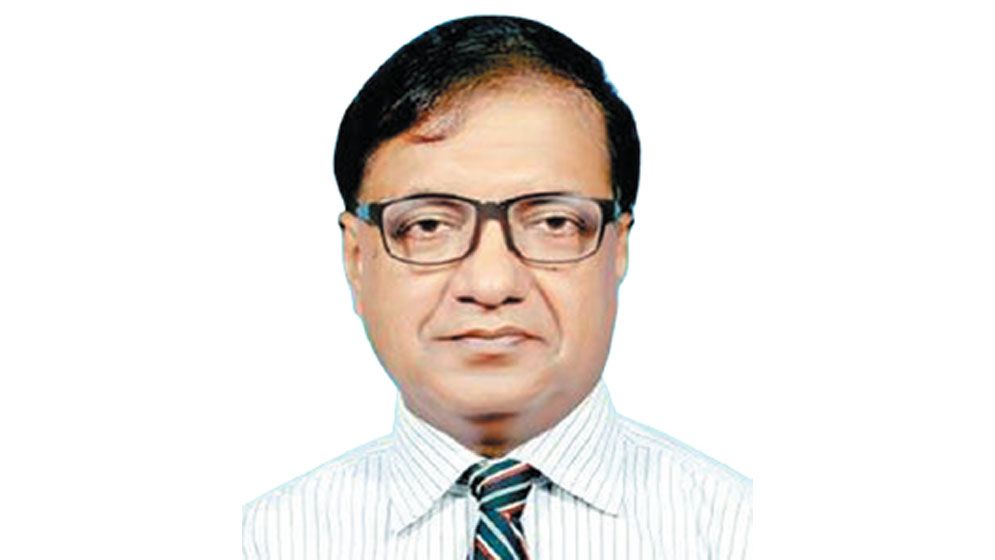
As a teacher of English at the architecture department of Ahsanullah University of Science and Technology (AUST), I have often found some fascinating opportunities to have dialogues with some veteran faculty members of the department. While having discussions with them, I came to know about many issues related to architecture and some great personalities of our country who have greatly contributed to this field. One such visionary person whose contribution and ideas have stood above that of many others and changed the look of the physical environment around us is Muzharul Islam. He was born on 25th December 1923 and died on 15th July 2012 and is recognised as the greatest architect of modern architecture in Bangladesh. As stories of remarkable figures can inspire students and change their lives, let us try to ponder upon his life and work.
Muzharul Islam had an interesting start. He studied civil engineering at Bengal Engineering College in Shibpur, India in 1946. The background he acquired in this subject gave him a very scientific approach to the understanding of structural mechanics, materials, and geometry. But after some years of practice as an engineer, his passion moved on to architectural designs because of their social impact. Then he went to America to study architecture in the 1950s at the University of Oregon. Later, he joined the Yale School of Architecture for postgraduate studies.
On his return to the now-defunct region of East Pakistan in the 1950s, the architectural scene was characterised by the typical colonial style and dull, purely functional buildings. Islam saw that modernism was an opportunity for a new way of doing things thanks to its simplicity in the use of materials. But he did not like the idea of just following Western fashion in architecture.
His early works set the foundation of regional modernism for South Asia. The Dhaka University Library and Fine Arts Institute, conceived in 1953 and completed in 1955, served as the starting point of modern architecture in South Asia. In this pioneering work, he adopted red bricks, exposed concrete, verandas, and heavy overhangs. It featured the seamless integration of the indoor room with the outdoor garden to provide a tranquil atmosphere conducive to artists and academics. Similarly, the National Archives and National Library in Dhaka employed geometric forms to achieve a balanced approach between the aesthetics of modern architecture and the practicality of document storage in a humid tropical climate. His master plans of Jahangirnagar University and Chittagong University gave emphasis on providing sufficient open space, light, and circulation of air within natural surroundings.
The design philosophy of Muzharul Islam focused on being responsive to the climatic conditions, the use of local materials, and social relevance. The climate of Bangladesh features lengthy monsoon rains, high humidity, and very hot summers. It means that Islam developed designs that would not oppose but rather harmonise with nature. To achieve such a result, he used high ceilings, long corridors, and continuous ventilation as well as generous overhangs to shield the interiors from the rain and keep them cool. As opposed to the excessive use of costly decorative materials and finishes imported from other countries, he preferred local red brick and reinforced concrete exposed. Being an advocate of the true character of materials, he left the brickwork unplastered and the concrete structure bare.
Apart from his own body of works, Muzharul Islam made sure that famous foreign architects also came to Bangladesh through his efforts. When the government decided to build the new capital complex in Sher-e-Bangla Nagar, Muzharul Islam was approached by the government to accept the commission. What is noteworthy about him here is that he recommended the inclusion of foreign architects on the projects or even gave them the projects to design. It was largely because of his efforts that the legendary architect Louis Kahn came to Bangladesh to design the National Parliament House in Dhaka, now one of the most famous examples of architecture all over the world. Another project that Muzharul Islam invited Paul Rudolph to design was that of the Bangladesh Agricultural University campus in Mymensingh.
Throughout his life, Muzharul Islam has been the recipient of many awards, one being the Independence Day Award, which is considered the highest civilian award in Bangladesh, as well as being nominated for the distinguished Aga Khan Award for Architecture. However, his most enduring contribution to history is the architects he inspired through his works. He played an integral role in the formal establishment of architecture education in Bangladesh and was key to laying the groundwork for the Department of Architecture in BUET. Today, his legacy is carried forward by professors and students in universities in the country. They are studying his works in their classrooms and studios. Muzharul Islam’s work of modern architecture did not exclude regional character, rather it retained it.
_____________________________________
The writer is Assistant Professor of English and the Advisor to AUST Cultural Club at Ahsanullah University of Science and Technology, Dhaka