



 For all latest news, follow the Daily Sun's Google News channel.


When Culture Becomes Tool Of Control
Daily Sun Report, Dhaka
Published: 29 Oct 2026, 10:07 AM
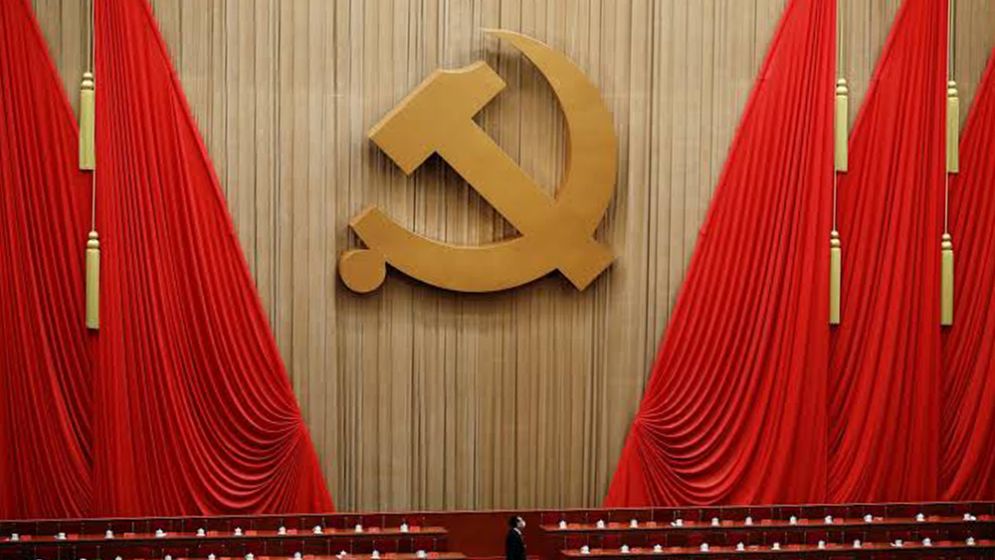
Photo : REUTERS
China’s Communist Party does not view culture as separate from politics. The new cultural doctrine under President Xi Jinping seeks to further institutionalise Party control over propaganda, the media, literature, the arts, religion and the internet. While the policy is framed in terms of national unity, it has also raised concerns about the shrinking space for independent thought and creativity.
The Communist Party has long regarded culture as an important instrument for achieving political objectives. A recent example appeared in a theoretical article published in the state-run People’s Daily on 12 October. The article presented Xi Jinping’s cultural thought as a comprehensive framework for strengthening Party control over propaganda, ideology and culture.
Written by Sun Laibin, a professor at the School of Marxism at Peking University, the article discussed the recently published first and second volumes of Xi Jinping: The Cultural Anthology. The collection was presented not merely as a theoretical work but also as a practical guide for strengthening the Communist Party’s control over propaganda, ideology and culture.
The central argument is that cultural activities must contribute to achieving the political objectives of the Communist Party. Ideological alignment is portrayed as essential to national stability and China’s rejuvenation.
According to Sun Laibin, propaganda and cultural activities are closely linked to the future of the Party, the country’s long-term stability and national cohesion. The 78 essays in the collection are presented as evidence of Xi Jinping’s theoretical authority and China’s “cultural confidence”.
Yet behind this lies a more consequential idea: the Party retains the authority to determine what ideas are produced, how they are disseminated and the limits of permissible debate.
The idea of ideological control is not new to the Communist Party of China. In keeping with its Leninist tradition, the Party has long considered ideological control essential to maintaining political power.
Under Xi Jinping, however, there has been an effort to turn this principle into a broader and more coherent doctrine.
The framework extends beyond the media to literature, the arts, religion and the internet. Sun Laibin describes Party leadership as “comprehensive and all-encompassing”, extending to every sphere and activity of culture.
The ideological foundation of this approach is Marxist theory. One of its central propositions is that dominant ideas in society largely reflect prevailing material relations. In the interpretation of the Chinese Communist Party, political leadership over the economy and the state must be accompanied by leadership over people’s thoughts and public opinion.
In other words, Xi Jinping’s cultural policy is not simply about promoting official narratives. It is also about ensuring that the Party retains ultimate authority over which ideas are considered acceptable and how national identity is defined.
The clearest expression of this policy can be seen in the media and digital spheres. Sun Laibin’s article describes “guiding public opinion correctly” as serving the interests of both the Party and the people, while portraying the wrong direction of public opinion as harmful to both.
The article also stresses the need to “properly manage and use” the internet. The assertion that “the ability to control is the real truth” further illustrates the government’s regulatory approach.
Here, information control is not presented as a temporary measure to deal with a particular crisis. Instead, it is being treated as a permanent instrument of political governance.
The article also speaks of maintaining a balance between Party discipline and public participation. It argues that the “Party character” and the “people’s character” are identical and not contradictory. This suggests an attempt to establish the idea that the political objectives of the Party and the interests of the people ultimately converge.
However, such an interpretation leaves little room for situations in which citizens’ legitimate demands or cultural preferences may diverge from government priorities.
There are also strategic considerations behind China’s effort to strengthen ideological control. As digital technology evolves rapidly, foreign criticism intensifies and geopolitical competition increases, Beijing increasingly views control over domestic public opinion and narratives as part of national resilience.
This approach links cultural confidence with political loyalty. At the same time, it creates scope for ideological dissent to be portrayed as a threat to social cohesion.
Yet the system contains a fundamental contradiction. On the one hand, it seeks to strengthen unity and confidence; on the other, it risks narrowing the space for independent thought and creative experimentation.
Innovation may be encouraged, but it operates within politically defined boundaries. While criticism may be permitted, the Party retains the authority to determine which debates are acceptable and which constitute ideological disorder.
Source: Daily Mirror, 23 October 2026