


 For all latest news, follow the Daily Sun's Google News channel.


Thanking the government for saying no to crossfire
Special Correspondent
Published: 28 Oct 2026, 01:11 PM
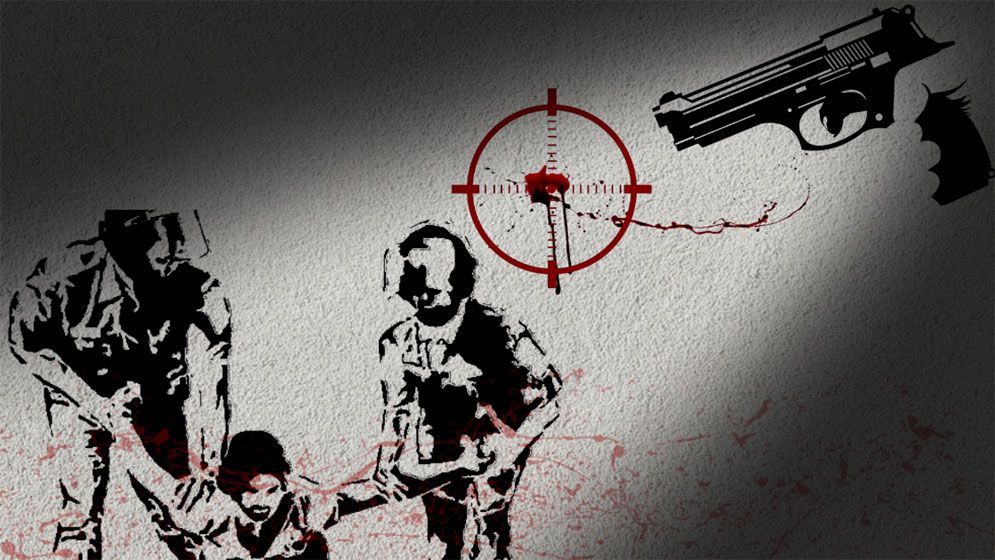
Photo: Collected
A sudden controversy recently arose in the country surrounding "crossfire." However, due to the timely intervention of the Home Minister and the Acting Secretary General of the BNP, the controversy was nipped in the bud.
Crossfire is extrajudicial killing, which is flagrantly contrary to the rule of law and justice. It goes against human rights and is a heinous crime. Yet, extrajudicial killings in the name of crossfire have persisted for a long time. At various times, past governments gave tacit support to such incidents, considering them an easy solution to curbing crime.
However, such events can never be acceptable in a civilized society. Our constitution guarantees every citizen the right to the protection of law. Before being found guilty by a competent court, a person is innocent in the eyes of the law. Extrajudicial killing violates a citizen's fundamental rights and punishes the accused before trial—and that too with the ultimate punishment! This is by no means acceptable. Simply being accused of a crime does not prove a person conclusively guilty. No matter how grave the allegation, the responsibility of proving its truth lies with the state.
In countries like Bangladesh, some attempt to legitimize anti-humanity crimes like crossfire due to the sluggishness of judicial proceedings. But doing so shows contempt for the rule of law. Proving an accused person guilty beyond a reasonable doubt is the duty of the investigating agency. Shirking that responsibility through extrajudicial murder also destroys the opportunity to uncover the true picture of a crime. If state forces begin to decide for themselves who lives and who dies, their use of force is no longer subject to the rule of law. The state then risks turning from a law enforcement institution into a power center that imposes decisions through the might of arms.
The social damage of extrajudicial killing is also far-reaching. When people begin to believe that the law protects the powerful and that force is the ultimate means of resolving disputes, respect for the law diminishes. Violence becomes acceptable to the youth. Personal revenge, informal trials, or hearings conducted by local influential figures can then gain new legitimacy.
Extrajudicial killings via crossfire lend a certain form of legitimacy to murder, while simultaneously being used as a tool to suppress dissenting voices. Not only those accused of specific crimes, but political opponents also become targets of crossfire. Consequently, violations of the rule of law and human rights escalate in the country.
Even before coming to power, the BNP had pledged that if they formed the government, they would put an end to extrajudicial killings and killings in the name of crossfire.
Upon assuming the responsibility of governing the country, the BNP took a strict stance against extrajudicial killings. Not a single crossfire incident has occurred in the past eight months. To keep the law and order situation under control, the government has followed a policy of tolerance and patience. The government has also ensured the proper application of the rule of law in incidents such as mob violence and extortion.
Yet, a sudden remark by the Inspector General of Police (IGP) created a nationwide uproar. Inspector General of Police (IGP) Md. Ali Hossain Fakir remarked that "crossfire" would be conducted if necessary, provided the government gave permission. The IGP made this remark while speaking as the chief guest at the inauguration ceremony of "Community Islamic," the Islamic banking service of Community Bank Bangladesh PLC, in Old Dhaka's Chawkbazar on Monday afternoon.
IGP Ali Hossain Fakir said that when the police use force, one faction calls the police fascist, and when they remain inactive, they call them weak. He stated that the police must be provided with a suitable environment to perform their duties in maintaining law and order. He said, "If crossfire is necessary, and if the government allows it, we will do just that."
Immediate and sharp reactions echoed nationwide following this statement. Human rights and civic organizations labeled his remark a dangerous message in favor of extrajudicial killings, demanding a withdrawal of the statement, an explanation from the government, and accountability from the IGP. Several political parties also expressed condemnation. Facing intense criticism, the Police Headquarters issued a statement claiming that the IGP did not use the word "crossfire" in the sense of extrajudicial killing or punishment outside the judicial process.
The explanation sent by the Police Headquarters stated, "The IGP has expressed the firm commitment of the police to take effective action against drug traffickers, terrorists, extortionists, and criminals posing a threat to public safety. In illustrating the strictness of law enforcement, he mentioned the word 'crossfire' in a literal sense. He did not use the word with the intention of extrajudicial killing or punishment outside the judicial process."
The police headquarters' explanation noted that among the fundamental duties of the Bangladesh Police are suppressing crime, arresting criminals, maintaining public order, and ensuring the safety of citizens' lives and property. While carrying out these duties, police officers frequently face direct resistance and attacks from criminals, organized assailants, and lawbreakers. The explanation mentioned that during the first ten months of 2026, police faced 176 attacks while maintaining law and order, arresting criminals, preventing illegal activities, and performing official duties. Four police officers were killed and 370 were severely injured in these attacks. It added that existing laws of the country—specifically the Penal Code, 1860; the Code of Criminal Procedure, 1898; and the Police Act, 1861—provide for the right of self-defense for police officers.
However, certain quarters raised questions about whether there was governmental instigation behind this. They wondered if the police chief's remarks had a connection to the government, questioning whether the government itself was seeking to bring back crossfire. Iftekharuzzaman, the Executive Director of TIF (Transparency International Bangladesh), remarked, "Is the police chief trying to use the abhorrent practice of crossfire as a shield for his own failure in maintaining law and order? Is seeking to legitimize extrajudicial killing by attaching the condition of government permission simultaneously a confession of failure in combating crime through legal means?"
Iftekharuzzaman also considered bringing forward crossfire as an alternative to professional investigation, criminal identification, and evidence-based prosecution to be an instance of professional bankruptcy. He stated, "No government's permission can legitimize extrajudicial murder. The right to the protection of law and the right to life and personal liberty protected under Articles 31 and 32 of the Constitution cannot be revoked by executive decision. No matter how grave the allegation, the police have no jurisdiction to kill someone bypassing the judicial process."
However, the government did not let the matter muddy the waters; both the government and the BNP quickly clarified their stances.
Terming the remark by Inspector General of Police (IGP) Md. Ali Hossain Fakir—that "crossfire will be conducted if necessary with government permission"—embarrassing for the government, BNP Acting Secretary General and Political Advisor to the Prime Minister Ruhul Kabir Rizvi said that it is deeply concerning for them that the head of the police force would speak of crossfire while a party that has long fought against enforced disappearances and extrajudicial killings is in power. Mentioning that for the past 17 years the BNP has fought against crossfire, enforced disappearances, extrajudicial killings, bloodshed, and fascist tyranny, Ruhul Kabir Rizvi stated that as a result of that struggle we achieved August 5 and July, and the BNP came to power through a free and fair election. After Tarique Rahman became Prime Minister, the expectation of people across the country is a humane Bangladesh. Amidst such expectations, hearing talk of crossfire from the head of the police force is deeply unsettling to them.
Noting that there are adequate laws in the country to curb crime, the BNP Acting Secretary General stated that enforcing these laws is the responsibility of law enforcement agencies. It is entirely possible to suppress terrorism and crime using existing laws.
The statement by the BNP Acting Secretary General was explicit, firm, and responsible. The way he articulated the stance of the party and the government regarding crossfire is commendable.
Bringing this controversy to a close, Home Minister Salahuddin Ahmed delivered a statement directly refuting IGP Md. Ali Hossain Fakir's remarks on "crossfire." He stated, "The government does not want crossfire; rather, the government has a zero-tolerance policy regarding crossfire." Mentioning that the IGP made such remarks inadvertently, the Home Minister said, "This was not right, it should not have happened."
The Home Minister firmly asserted that the government does not want crossfire; rather, it maintains a zero-tolerance policy toward it. The government will not allow extrajudicial killings and is extremely strict on this matter, refusing to tolerate extrajudicial killings or custodial deaths.
The Home Minister stated that the rule of law is the primary objective of the government, and the improvement of law and order is its top priority. To date, no deaths have occurred from crossfire or in police custody. However, the government will do whatever is necessary to curb crime and ensure proper legal measures.
There is no denying the fact that the country's law and order situation has not yet returned to complete normalcy. The prevalence of mob terrorism and extortion that surged during the Yunus era has still not been fully brought under control by the current government. But the means to control law and order can never be extrajudicial killing or crossfire. Thanks are due to the government because, for the improvement of law and order, it did not resort to cheap popularity nor seek easy and unacceptable solutions. Instead, by taking a firm stance against crossfire and extrajudicial killings, the BNP government led by Tarique Rahman has proven that this government does what it says. For this reason, the BNP government certainly deserves a note of thanks.