


 For all latest news, follow the Daily Sun's Google News channel.


Pakistan’s house is on fire, Munir wants to rearrange the furniture
Tara Kartha
Published: 26 Oct 2026, 07:22 PM
Pakistan’s present status is unprecedented. Never have so
many crises—mostly self-made—all erupted at the same time. Recently, the Global
Hunger Index put Pakistan as the worst hit in South Asia, warning that acute
food crisis is likely to continue.
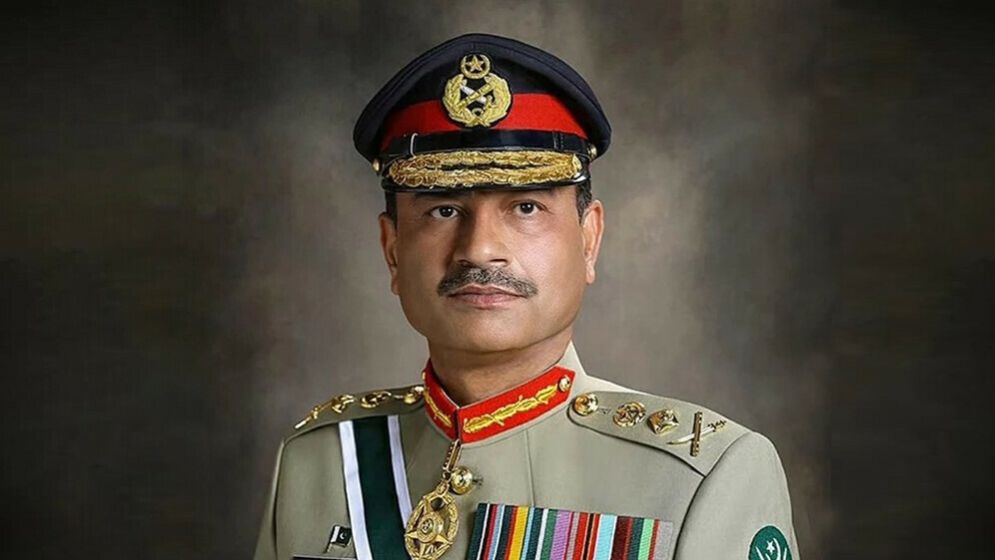
Externally, a once feted Field Marshal photographed with
world leaders and influencers, seems to have gone into hiding, emerging only to
threaten India with war, thus endangering the only border which is so far
reasonably stable, barring a slim 300-mile border with China.
Most puzzling of all, it is in this chaos, that Pakistani
authorities seem to be bent on dividing the country into smaller provinces,
apparently for better governance. No one is fooled; this is about power and
pelf for the army. Someone is not briefing General Munir about the dangers;
perhaps they would much rather not.
Protests on collapse of infra and sheer hunger
First off, the hunger index notes that economic instability
and sharp food price inflation and constrained access to food, has led to a
serious 33% children as stunted and 16% of the population undernourished.
That’s just one statistic. That has to be placed in the context of other
serious issues affecting the daily life of common people.
Petrol prices have surged to more than 300 Pakistan rupees,
creating an energy crisis. That is not just due to the Iran war; it is the
sheer inefficiency of the power sector, with circular debt exceeding 2.3
trillion Pakistan rupees, compounded by cumulative losses and high-capacity
payments to Independent Power Producers (IPPs).
It is a mess. Karachi’s major power producer, K-Electric,
recently announced another phase of power cuts, in a city already plagued by
power outages. Rawalpindi and Lahore that are usually better off, have also
been hit. Frustration is growing and protests are aplenty, with parties like
the Jamaat leading the charge.
…and the political protests
Another set of protests were fuelled by the continued
detention of former Prime Minister Imran Khan, ailing and with little access to
his family. Added to that was the imposition of President’s rule in the only
PTI-ruled state of Khyber Pakhtunkhwa on 11 October.
The rallies drew thousands of Khan's supporters marching in
Khyber Pakhtunkhwa province to demand his release and air anti-government criticism
fuelled by harsh economic conditions.
Meanwhile, Islamabad was sarcastically called
“Containeristan” as authorities brought in more than 1,000 shipping containers,
many fortified with spikes, blockaded roads, and sandbags placed on bridges,
while a key highway into the capital was closed.
Public gatherings were banned entirely, and 22,000 security
personnel were deployed in the capital. That seems to have been an effective
overkill. The protests were not as vibrant as expected but soon multiplied in strength
in Khyber Pakhtunkhwa as the emergency came into force.
All major actors—including Imran Khan’s sisters and possibly
Chief Minister Sohail Afridi—are now in jail. The justification was given in an
official report that claimed that 3,767 terrorism incidents occurred in Khyber
Pakhtunkhwa during Afridi’s tenure resulting in fatalities of more than 500
security forces and civilians.
The period is not mentioned, nor the fact that KP police
have been repeatedly begging Security Forces to leave and allow them to handle
the situation themselves. Afridi is further damned by the report noting that
the provincial government organised 18 major protest activities, including four
long marches, while militancy was escalating.
Pakistan Occupied Kashmir is well and truly occupied
Meanwhile, political leaders in the so-called “Azad” Kashmir
were calling for a politically negotiated resolution to the ongoing crisis in
Poonch division amid growing concerns over the deteriorating law and order
situation in the region. The appeal was made during a meeting hosted by Muslim
Conference President Sardar Attique Ahmed Khan at his residence in Rawalpindi.
The meeting was attended by several prominent political figures.
Participants expressed serious concerns over the unsettled situation,
and called for uninterrupted supplies of essential commodities, particularly
food and medicines, and the resumption of communication links and free movement
across Poonch division.
In short, as of now the whole area is under a virtual
emergency. Not content with this, the
administration has also arrested former Gilgit-Baltistan chief minister and
Pakistan Tehreek-i-Insaf (PTI) regional office bearers.
Meanwhile, social worker and rights activist from Jammu and
Kashmir, Javad Ahmad Beigh has raised the issue of the continued incarceration
of members of the Awami Action Committee of Gilgit-Baltistan (AAC-GB),
including its chairman, 70-year old Advocate Ehsan Ali, at the 63rd session of
the United Nations Human Rights Council.
But the bottom line is that there is little interest, and
even less news filtering out of Occupied Kashmir, and the army is pulling out
all stops to ensure that the first anniversary of the protests that began last
year in October, are not repeated. But it’s a toss-up, is leaders can be kept
under detention indefinitely.
Terrorism is still climbing
According to Pakistani data, the country recorded a sharp
increase in violence-linked fatalities in the third quarter of 2026, reversing
an earlier decline, with casualties surging by 83%.
Balochistan violence alone accounted for nearly 88% of the
national increase and overtook Khyber Pakhtunkhwa as the worst-hit province in
both fatalities and recorded incidents. So-called “Outlaws” fatalities more
than doubled, which is meant to point to effective counterterrorism operations.
But massively increasing the body count is hardly “effective” counterterrorism,
and a reverse revengeful rush can be expected.
Data however also shows the combined death toll among
civilians and security personnel also rising by nearly 54%, which means the
“outlaws” gave as good as they got.
Meanwhile, the Field Marshal Asim Munir vowed to continue
the campaign against “Indian-sponsored terrorist outfits” and “hit them hard
wherever they are”, according to the military's media wing. That’s fighting
talk. Apparently, its not enough that his western border is in flames. He wants
the eastern border to heat up as well.
The western border is on fire – end to end
Meanwhile, the Afghanistan border is heating up. As Pakistan
continues its air strikes, Afghanistan seems to have learnt the “drone
lesson”. France24 quotes the Pakistani
army as saying it had shot down at least eight fixed-wing drones in Khyber
Pakhtunkhwa less than 1,000 metres from the Afghan border.
Media reports note that the Taliban have deployed armed
first-person-view (FPV) drones—small quadcopters carrying munitions such as
mortar shells—to attack Pakistani positions near the border.
The report identified what appear to be DLE55 55cc single
piston engines fitted to the small drones, which are commercially available
online. Kabul has also used larger, fixed-wing suicide drones equipped with
more powerful engines, potentially capable of flying hundreds of kilometres.
Meanwhile, the Taliban claim several “kills” using these
cheap and hardy weapons. Further down the border, things are rapidly getting
out of hand.
Pakistan suspended border trade at the Taftan-Gabd-Rimdan
crossing, citing security and smuggling concerns.
Notably, this was just before the Field Marshal’s visit to
Tehran, where all reports indicate he received a cool reception.
Iranian politicians are asking why Munir is in Iran so often
and that he should be asked not to come in future. So much for the great
mediation effort.
Meanwhile, Pakistani exports of perishable goods have
resumed, but Iranian LPG “imports” (i.e smuggling) remained on hold, causing
severe disruption to both sides.
Meanwhile, Tehran says it may make 100 hectares of land at
Chabahar port available to Afghanistan for two to five years for imports and
transit activities.
Iranian Member of Parliament Shahriari who is a member of
the Iranian National Security and Foreign Policy Commission, said Afghanistan
has no access to international waters and that the land could be made available
to the Afghan side to import goods through Chabahar port and transport them
through Iranian territory. That’s not going to be music to Rawalpindi’s ears.
And it is in the middle of all this chaos, that General Munir
wants to break up the country into small pieces. As The Economist notes, the
“Trump -Flattering” head of the Armed Forces seem to want a division from four
provinces to perhaps 12 or 15 or even 160 small units.
These units will be ruled by easily malleable small
“chieftains” or nominees of the army—most probably a perch for retired senior
officer—and essentially not only finish off the political power of all major
political parties, but do away with the necessity of parting with money from
the national exchequer to fund the provinces as mandated by law.
Further, it also means that the cash-rich army has access to
all the resources of these states. Munir can then be well and truly called
Emperor of all he sees. But that will be for a short while.
Not even the perpetually bowing Prime Minister Shahbaz
Sharif can agree to this. A political backlash is certain, both against the
army and between themselves; in essence: total chaos. It is unbelievable. It is
time for Munir to do a “walkabout” of his country and see the reality. Else he
may have to walk into the great unknown for good.
The writer is a former director of India’s National Security
Council Secretariat
Source: Firstpost