


 For all latest news, follow the Daily Sun's Google News channel.


A Critique of the United Nations Inaction in Bangladesh Crisis
VED P. NANDA
Published: 26 Oct 2026, 03:16 PM
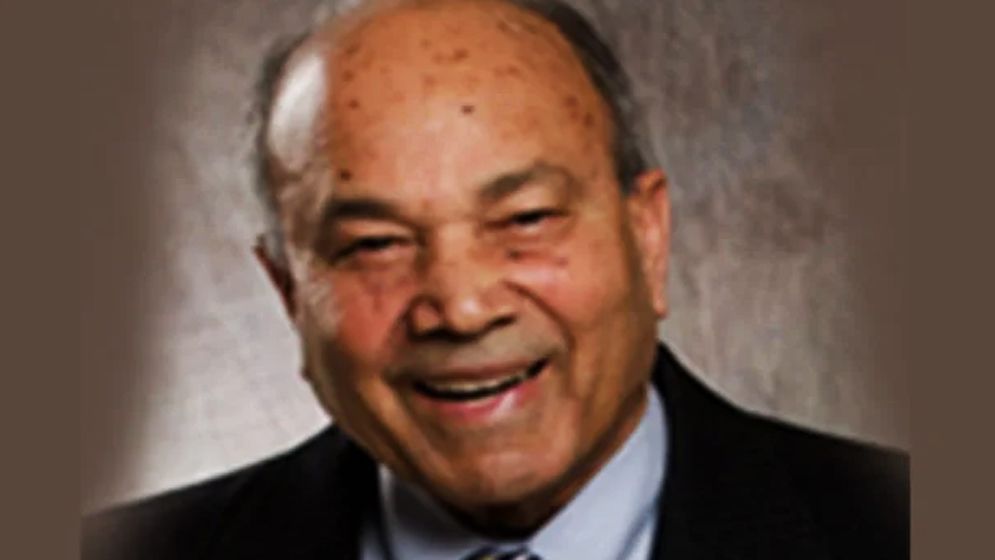
VED P. NANDA. Photo: Collected
The birth of Bangladesh as an independent nation state is an event of major significance for the people of the entire Indian subcontinent. Its long-range effects are at present uncertain, but a likely result is a shift in the balance of power in Asia. Already India has begun to assert its role as a dominant power in South Asia and a major middle power in the world arena; and it is anticipated that the future triangular contest among India, China, and Japan for the friendship and loyalty of the Asian states will precipitate a readjustment of power in Asia, particularly in the context of the global clash of US Soviet interests.
For the international lawyer, the birth of Bangladesh and the events which preceded it are of particular significance; this for a variety of reasons: (1) India's intervention by the use of force raises serious questions as to the viability of articles 2(4) and 2(7) of the UN Charter; (2) the prolonged silence on the part of the UN in the wake of gross, persistent, and massive violations of human rights by the Pakistani armed forces and their collaborators calls into question the adequacy of the available international mechanisms to prevent such occurrences; and (3) the crisis underscores the need to reevaluate the concepts of "humanitarian intervention" and "self-determination" in international law.
It is the purpose of this article to raise some preliminary questions on the UN inaction, and on articles 2 (4) and 2 (7) of the UN Charter. Self-determination in noncolonial situations, which I have discussed elsewhere, and the nature and scope of humanitarian intervention in the light of the Bangladesh crisis, which I propose to study separately, will not be discussed.
I. Events Preceding The Crisis
The genesis of the Bangladesh crisis can be traced to the partition of India in 1947 which created the state of Pakistan out of two disparate parts, physically separated by a distance of over 1,000 miles and otherwise divided by ethnic, linguistic, and cultural differences. The only elements tending to bind these parts were a common religion, Islam, and the hatred of India. Neither of these proved to be sufficiently strong to ensure lasting unity and by the late 1960's the economic and political domination of East Pakistan by West Pakistan Panjabis had resulted in serious political unrest in East Pakistan.
The events that led to the final break between East and West Pakistan began with the Pakistani general elections of December 1970, the first ever based on the adult franchise. The Awami League party, led by Sheikh Mujibur Rahman, won an overwhelming victory, capturing 167 of 313 seats in the National Assembly on a program of political and economic autonomy for East Pakistan." The election results were apparently unacceptable to the military-landlord-business-industrial clique in West Pakistan, which undoubtedly faced with some alarm the prospects of being ruled by the Awami League party. The East Pakistani demand for autonomy was perceived by the West Pakistani ruling elite as a major threat. Its likely outcome was seen to be the loss of a captive market for West Pakistani manufactured goods and the curtailment of the primary source of such valuable raw materials as jute and tea as well as the bulk of Pakistan's foreign exchange.
In early 1971, a breakdown in negotiations for the convening of the National Assembly to draft a constitution intensified the crisis and caused the simmering unrest in East Pakistan to surface in mass demonstrations against the Pakistani government. This situation was exacerbated by Sheikh Mujib's call for noncooperation with the government. There ensued serious acts of civil disobedience, including refusal to pay taxes and a total strike in government offices and businesses. This was accompanied by a change in the East Bengali mood which began to reflect a desire for complete independence as opposed to mere autonomy.
Ultimately, on March 25, 1971, the Pakistani military struck Dacca without warning and initiated a reign of terror throughout East Pakistan which continued with increasing intensity until December 1971. Villages were burned; civilians were indiscriminately killed; Hindus were sorted out and massacred as were university teachers and students, lawyers, doctors, Awami League leaders, and Bengali military and police officials. The horror of these events prompted observers to accuse the Pakistani armed forces and razakars, the local volunteer militiamen who were collaborators of the Pakistani armed forces in East Bengal, of committing selective genocide, purportedly to deprive East Pakistan of Bengali leadership.
The 9-month wave of terror forced approximately 10 million people to flee from East Pakistan and take refuge in India. This in turn put a severe strain on India-Pakistan relations and as a result, on December 3, 1971, full-scale war erupted between the two nations.
The destruction and havoc wreaked by the 2-week conflict which ensued were frightful: "Thirty million people dislocated by the war. More than 1.5 million homes destroyed. Nine million refugees returning from India to rebuild their lives and homes. War damage drastically reducing rail traffic. Key rail and road bridges destroyed. "According to the Swiss UN Chief in Dacca, Toni Hagen, the destruction suffered by Bangladesh was greater than that suffered by Europe in World War II.
II. The UN And the Bangladesh crisis
The role of the United Nations in the crisis was, at best, that of a concerned but helpless observer. While it assumed part of the burden of maintaining the millions of refugees pouring into India, it lacked the willingness to take positive steps to prevent the tragic happenings that were gradually but surely pushing India and Pakistan to a head-on collision.
Not until full-scale war between India and Pakistan had erupted did the Security Council and the General Assembly see fit to discuss the matter. The Council began its deliberations on 4 December, 1971, but since the Soviet veto blocked any action, the Council referred the question to the General Assembly. The General Assembly then proceeded to discuss the situation and ultimately adopted a resolution calling for an immediate cease-fire and withdrawal of all troops. However, India considered these recommendations to be unrelated to the cause of the crisis, unrealistic, and hence, unacceptable.
It may be an exaggeration to charge the UN members with blindness, callous indifference, or even cowardice in ignoring the crisis or dismissing it as not worthy of attention, for perhaps the inaction could be attributed to the realization on the part of a majority of nation states that a discussion at the United Nations would not resolve the conflict but might even exacerbate it. Or perhaps the inaction was caused by the concern that a UN intervention in the allegedly domestic affairs of Pakistan might create an unhealthy precedent, or perhaps that even if the United Nations intervened, it might not be effective. In any event, mishandling by the UN of the entire situation is a matter of such serious concern that it deserves careful examination in order to prevent similar occurrences in the future.
A. Discussion in the Human Rights Organs of the United Nations
One UN organ which did consider the political and human rights aspects of the crisis was the Subcommission on Prevention of Discrimination and Protection of Minorities of the UN Commission on Human Rights. The Subcommission was prompted to discuss the situation at the initiative of international non-governmental organizations in consultative status with the Economic and Social Council. Addressing the Subcommission on behalf of these organizations, John Salzberg, a representative of the International Commission of Jurists, made a strong plea that the Subcommission exercise its full authority granted it under resolution 8 of the Commission on Human Rights and under Economic and Social Council resolution 1235. He asked the Subcommission either to set up a committee of inquiry to investigate the various reports of alleged violations of human rights in East Pakistan or to recommend to the Commission on Human Rights that it establish such an investigatory body.
The authority granted under resolution 8 is that of referring to the Commission any situation which the Subcommission "has reasonable cause to believe reveals a consistent pattern of violations of human rights and fundamental freedoms," and of preparing a report "containing information on violations of human rights and fundamental freedoms from all available sources.’’ The Economic and Social Council in resolution 1235 has not only put its stamp of approval on the Commission's action in so authorizing the Sub commission, but has asked the Commission "to make a thorough study of situations revealing a consistent pattern of violations of human rights" and to report to the ECOSOC with its recommendations on such situations. The summary records of the Sub commission show that except for the Indian observer and the Pakistani representative on the Sub commission, only three other members of the Sub commission participated in the discussion, one of whom opposed the discussion on the ground that the matter fell within the purview of article 2(7) of the UN Charter. Although the other two participants expressed concern at the situation, only one member addressed himself to the role of the Sub commission. The Sub commission "had very properly spent many days discussing the question of the protection of the rights of individuals," he said, but to him it seemed that "when faced with a situation affecting tens of thousands of persons, members were inclined to suppress their feelings and consciences." The Sub commission "should not remain silent," he added. But the Sub commission did remain silent.
B. Discussion in Other UN Organs
In July 1971, the Economic and Social Council dealt with the humanitarian aspects of the problem, focusing on the UN relief operations. Four months later, in November, the Third Committee of the General Assembly discussed the accomplishments of the UN East Pakistan Relief Operation (UNEPRO) and the problems it faced. The representative of New Zealand, however, called the Committee's attention to the political aspects of the problem. "If the flow of refugees was to be stopped and war avoided," it was essential, he said, that there should be negotiations between the government of Pakistan and the elected representatives of the people of East Pakistan. A draft resolution submitted in the Third Committee by New Zealand and the Netherlands also touched upon the political aspects of the question, insofar as it referred to the need for restoring the "climate of confidence" on the part of Pakistan so as to promote voluntary repatriation of refugees. However, the resolution finally adopted by the General Assembly on December 6, 1971, contained only an innocuous reference to the need for "a favorable climate which all persons of goodwill should work to bring about " It should be noted that at the time the General Assembly was adopting this resolution, a full-scale war was already in its fourth day.
C. The Security Council and the General Assembly Debates
The discussions in the Security Council and the General Assembly show that most member states were primarily concerned with the restoration of the status quo- an immediate cease-fire and mutual withdrawal of forces.
Intervention, particularly military intervention across international boundaries, was unacceptable to a vast majority of the UN members for fear that it might set an unhealthy precedent. The members invoked concepts of territorial integrity, sovereignty, and national independence in the hope that it might somehow stop the fighting. The Soviet Union and Poland were the only two Council members which, along with India, repeatedly stressed the need for looking at the "root cause" of the problem and seeking a political solution to the crisis. To call for a cease-fire without correlating it with the attainment of a political settlement in East Pakistan was considered inadequate and unrealistic.
To recount briefly, the Council discussed the situation on 4, 5, and 6 December. On the first day of discussion, Pakistan accused India of unprovoked "aggression," described the East Pakistan crisis prior to 3 December as internal and therefore "outside the Security Council's concern" and asserted that it was "for the Security Council to find the means to make India desist from its war of aggression. Only means devised by the Security Council, consistent with Pakistan's independence, sovereignty and territorial integrity, and with the principle of non-intervention in the domestic affairs of Member States, would command Pakistan's support and co-operation. "
India replied that in spite of the humanitarian efforts by the UN, killings had continued in East Pakistan and warned the Council that it "would not be a party to any solution that would mean continuation of the oppression of the East Pakistan people.” The representatives of the US, Italy, Somalia, France, Japan, China, Syrian Arab Republic, Belgium, Burundi, Argentina, the United Kingdom, and Sierra Leone called for an immediate cease-fire, while the representatives of the Soviet Union and Poland urged the Council to seek a political settlement, taking into account the wishes of the East Pakistanis. A draft resolution introduced by the United States was vetoed by the Soviet Union.
Charges and countercharges were repeated on 5 December, with Pakistan and China forcefully invoking article 2(7) to claim that the Council should demand an end to India's armed intervention, while the Soviet Union accused China of trying "to divert attention from the main cause of the conflict in the Hindustan Peninsula, which was the monstrous and bloody repression of East Pakistan." Another resolution calling for a cease-fire was vetoed by the Soviet Union. Similar arguments were again repeated on 6 December when the Indian representative urged the Council to "consider some realities." He said: "Refugees were a reality. Genocide and oppression were a reality. The extinction of all civil rights was a reality. Provocation and aggression of various kinds by Pakistan from 25 March onwards were a reality. Bangladesh itself was a reality, as was its recognition by India. The Council was nowhere near reality."
Since the Council was paralyzed and there were apparently no prospects for a consensus among the major powers, the Council eventually adopted a resolution, pursuant to which it decided to refer the question to the General Assembly, as provided for in General Assembly resolution 377 A(V) of November 3, 1950.
The Assembly met twice on 7 December and adopted a resolution by a vote of 104 in favor, to 11 against, with 10 abstentions, which called for an immediate cease-fire and a mutual troop withdrawal by India and Pakistan. The overwhelming majority in favor of the resolution demonstrated the concern of the members for territorial integrity and article 2(7). Pakistan explained its interpretation of the resolution to mean that "no attempt would be made to disrupt the national unity of Pakistan, and that any attempts by the General Assembly to intervene in the situation would be within the principle of the territorial integrity of Pakistan."
Since India did not comply with the Assembly recommendations, the Council was again called into session at the request of the United States. The Council met seven times between 12 and 21 December; the Soviet Union vetoed one more resolution calling for an immediate cease-fire and troop withdrawal; and finally the Council adopted a resolution on 21 December, by which it demanded that a durable cease-fire and cessation of all hostilities on the India-Pakistan sub-continent be strictly observed until troop withdrawals had taken place. Ironically, India had already declared a cease-fire unilaterally on 17 December after the surrender of the Pakistani armed forces.
But for the dramatic walkout of the Pakistani delegate from the Council meeting on 15 December and the heated exchanges between the delegates of India and Pakistan, this round of Council meetings is of significance only in its rehash of the earlier arguments. However, as the eventual surrender of the Pakistani army became imminent, the tone of the Council debates shifted from an unrelenting emphasis on an immediate cease-fire to a fresh concern for a political settlement. For instance, on the evening of 15 December, the Soviet delegate said that "many delegations had told him personally that the Soviet approach to the solution of the problem regarding the interrelationship between cessation of hostilities and a political settlement was perfectly correct.” The delegate from Ceylon considered "a political settlement in East Pakistan to be central to any solution, and negotiations between the Government of Pakistan and the acknowledged leaders of the people of East Pakistan to be the only effective and legitimate means of achieving it."
D. The Role of the Secretary-General in the Crisis
To his credit, the Secretary-General did take the initiative to bring the gravity of the situation to the attention of the Security Council. However, he did not pursue the matter any further. When the Council deemed fit not to meet formally to discuss the issue, he seems to have chosen the course of least resistance. Henceforth, his efforts were focused on the humanitarian aspects, followed in October 1971 by the offer of his good offices to the governments of India and Pakistan. He never insisted that a Security Council meeting be called to discuss a situation which, in his words, had by July 1971 become a potential threat to international peace and security and had the potential of adversely affecting the United Nations effectiveness "for international co-operation and action." He had clearly perceived the danger, for in his introduction to the Annual Report of the Secretary-General, issued on 19 September, he said: "In a disaster of such vast proportions, the international community has a clear obligation to help the Governments and peoples concerned in every possible way. But, as I have indicated, the basic problem can be solved only if a political solution based on reconciliation and the respect of humanitarian principles is achieved." However, he did not use the authority granted him under article 99 to bring the matter before the Security Council for discussion, nor did he ask the General Assembly to meet in an emergency session since the Council was unwilling to meet.
Perhaps the Secretary-General, in refusing to act, was concerned with futility of his efforts. Perhaps he was discouraged because his prior attempts to bring about a settlement in Vietnam had come to naught. Perhaps he did not want to strain the UN machinery, which clearly has only limited competence. But he failed to balance all these inadequacies against the possible outcome of the UN silence, for at least there was the possibility that formal discussions at the UN and the world public opinion generated by such discussions might have put pressure on the Pakistani regime so as to compel the latter to seek a political settlement of the crisis, or at least force it to put a stop to the ruthless suppression by its army and collaborators in East Pakistan.
In any event, article 2(7) was certainly on the Secretary General's mind, for in the Introduction to the Annual Report, he said that in his exchanges with the governments of India and Pakistan, he had been "acutely aware of the dual responsibility of the United Nations, including the Secretary-General, under the Charter both to observe the provision of Article 2, paragraph 7, and to work, within the framework of international economic and social co-operation, to help promote and ensure human well-being and humanitarian principles. " It is submitted that this construction of article 2(7), in the light of the circumstances, is at best exceedingly narrow, and seems unwarranted by the past practices of the United Nations in dealing with cases of massive violations of human rights.
III. Appraisal and Recommendation
In the Council debate of 12 December, the Indian delegate succinctly summed up the UN dilemma, when he said: It was not India which declared or started war; it was not India which was responsible for creating the conditions that led to the present unfortunate conflict; it was not India which deliberately and systematically refused to meet the aspirations of the 75 million people inhabiting the country, once part of Pakistan; it was not India which perpetuated the repression, genocide and brutality which provided the springboard for the freedom movement of Bangladesh, which led to the decision of the people of that region to create a free and independent nation; it was not India which forsook the long period of nine months during which a reasonable political settlement could have been evolved with the leaders and people of Bangladesh.
The United Nations had been unable to deal with the root cause of the problem in East Bengal. Informal consultations in the Security Council in July and August indicated that the international community could not, due to limitations born of its commitments to the doctrine of domestic jurisdiction, act in the matter. In the face of a direct violation of the Universal Declaration of Human Rights and the provisions of Articles 55 and 56 of the Charter by Pakistan, the Security Council and the United Nations should have found themselves in a position to intervene and persuade Pakistan to return to reason. That did not happen. While developments proceeded on their inexorable course towards the present tragedy, the United Nations continued to be inhibited by considerations of domestic jurisdiction.
The United Nations failed to prevent the crisis. It failed to deter the Pakistani regime from using excessive force in East Pakistan. It failed to stop the war. Above all, it failed even to attempt to persuade or coerce the parties to arrive at a political settlement. The war is over. A new state was born with the use of force and in technical violation of article 2(4), for notwithstanding India's claim that it went to war only in self-defense and only after the Pakistani planes had strafed several Indian cities, and Pakistan had launched "full-scale war, " the fact remains that in late November 1971, the India-Pakistan confrontation seemed almost inevitable. And it is not too farfetched to suggest that in all likelihood India would have invoked the doctrine of humanitarian intervention to send its armed forces into East Pakistan to help the rebel forces even if it could not justify its action on grounds of self-defense.
There are three major questions: (1) Is the emphasis put on article 2 (7) by the Secretary-General and the UN members during the duration of the crisis realistic and functional in a situation such as Bangladesh? (2) Are the expectations as to the viability of article 2(4) changed to the point that it is really dead, as Professor Thomas Franck suggested in 1970? (3) Looking toward the future, what should the United Nations have done to avert the eventual crisis and what action should be taken to prevent such tragic occurrences in the future?
Without attempting a thorough discussion of articles 2(7) and 2(4) in the context of the Bangladesh crisis, which I propose to study in collaboration with two of my colleagues, 99 some tentative conclusions are offered here. Article 2(7) was erroneously construed to prohibit intervention in the domestic affairs of Pakistan, for at least three reasons: (1) the situation as a potential threat to international peace and security had ceased to be a domestic affair, (2) the presence of 10 million refugees on India's soil with thousands fleeing from the Pakistani army's wrath each day, with its impact on India's economic and political structure, had internationalized the situation vis-à-vis India, and (3) in view of the massive and persistent violations of human rights, the situation could no longer be deemed to be a domestic one.
Article 2(4) may not be dead as Professor Louis Henkin has asserted in his response to Professor Franck, but the fact remains that, for the following reasons, the Bangladesh crisis has seriously shaken it: (1) notwithstanding the technical violation of article 2(4) by India in hastening the birth of Bangladesh, the latter was recognized within 4 months of its establishment by over 50 countries, (2) India was not condemned, nor even censored by any UN organ, for its use of force, and (3) despite the overwhelming vote in the General Assembly for an immediate cease-fire, member nations seemed reconciled to India's use of force.
With respect to recommendations, it has been previously mentioned that the Security Council should have discussed the situation because of its gravity and potential threat. In the face of inaction by the Security Council, the Secretary-General should have invoked his authority under article 99 to ventilate the situation in a UN forum.
The UN human rights machinery should have been active. Specifically, the Sub commission on the Prevention of Discrimination and the Protection of Minorities should have studied the situation. It has been authorized to do so in those situations which reveal a consistent pattern of violations of human rights based upon the available information to the Sub commission; the Sub commission did have such information available to it.
Now that the Sub commission is authorized initially to review communications sent by individuals and groups alleging the violations of human rights, pursuant to procedures established by the ECOSOC resolution 1503 May 27, 1970, the Sub commission has a special responsibility in this regard.
Perhaps the Commission on Human Rights should be authorized to meet in emergency sessions to discuss situations which demand urgent and immediate attention because of "the imminent threat or willful destruction of human life on a massive scale," a suggestion recently made by the International Commission of Jurists. Perhaps the office of the proposed UN High Commissioner for Human Rights should be authorized to undertake some initial investigation and recommend measures for the Commission on Human Rights, once the office is established.
The International Convention on the Elimination of All Forms of Racial Discrimination, which is in force and under which the Committee on Racial Discrimination has been established, should have been invoked. Pakistan is a party to the Convention and a special session of the Committee should have been called.
The interdependence between the massive violation of human rights and international peace and security needs no further proof or evidence for these measures to be urgently undertaken and implemented in any future crisis involving such violations.
• Denver Law Review, Volume 49 Issue 1, Article 4, January 1972
The writer is Professor of Law and Director of International Legal Studies Program, University of Denver College of Law