


 For all latest news, follow the Daily Sun's Google News channel.


Can two movements be compared solely by the number of arrests?
Special Correspondent
Published: 17 Oct 2026, 04:37 PM
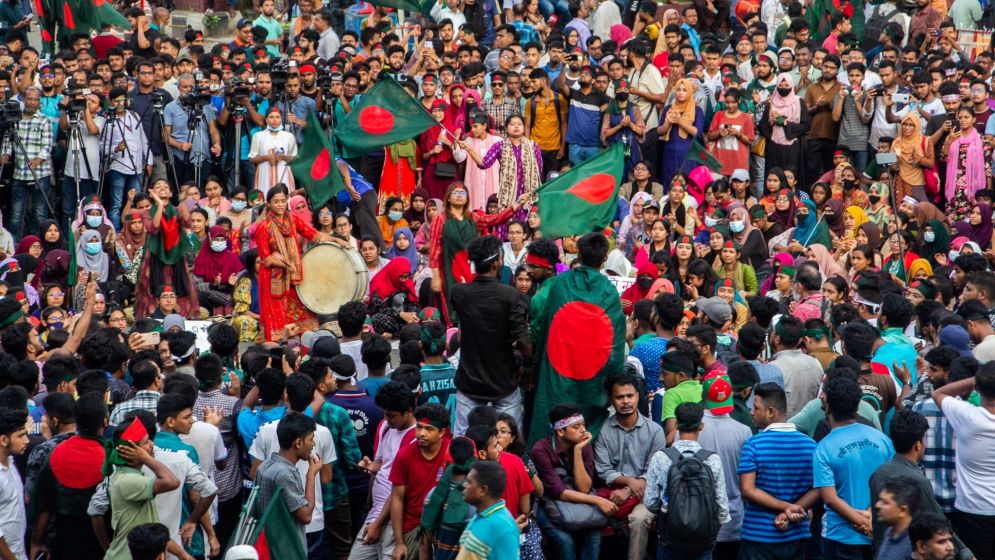
Students launch the 'Bangla Blockade' during the July-August 2024 mass uprising in Bangladesh | Photo: Wikimedia
Comparing mass detentions during protests in India with the
loss of life during Bangladesh’s July–August 2024 uprising requires a careful
examination of the evidence, circumstances, and consequences of both events. Detentions
and fatalities are distinct measures of state action; neither alone provides a
complete assessment of repression.
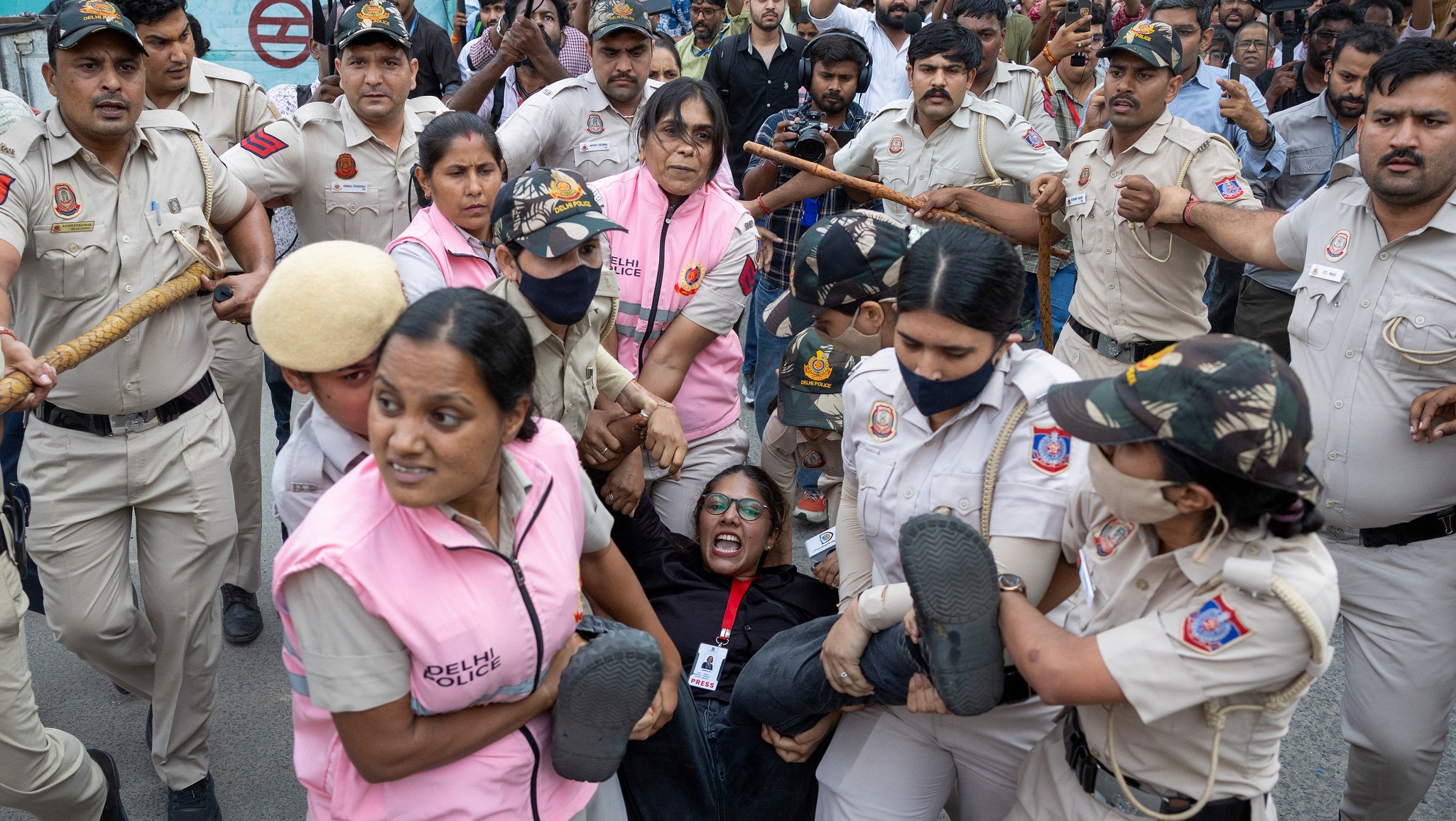
On 10 October 2026, police detained more than 2,000
protesters in Delhi during a demonstration demanding the resignation of India’s
chief election commissioner. Media reports cited varying figures, while police
said most detainees were subsequently released. Three prominent leaders of the
Cockroach Janata Party—Abhijeet Dipke, Saurav Das and Ashutosh Ranka—were
released on 11 October by an Executive Magistrate court, subject to a condition
that they maintain peace for one year.
YouTuber Dhruv Rathee was also detained at his home in
Gurugram on 10 October and released later. His detention was reported
separately from the arrests at the Delhi demonstration.
These events raise questions about how protests and state
responses should be assessed. Can detention figures alone establish the scale
of state repression or capture the human cost of a protest movement?
Detentions and the human cost
Comparisons between India’s recent protests and Bangladesh’s
July–August 2024 uprising require particular care. Bangladesh’s uprising was
met with a violent crackdown that resulted in the deaths of students and people
from different backgrounds.
In a report published on 12 February 2025, the Office of the
United Nations High Commissioner for Human Rights (OHCHR) estimated that up to
1,400 people may have been killed in connection with the unrest in Bangladesh
between 1 July and 15 August 2024. The report documented serious human rights
violations during the unrest. Thousands of people were also reported injured,
many of them seriously.
These figures illustrate the scale of the human cost. Behind every death is a family that has lost a loved one, and the loss of life raises questions of accountability and justice.
The detention of thousands of protesters in India should not
be dismissed. Restrictions on peaceful assembly, arbitrary detention and the
use of police powers all warrant scrutiny. The subsequent release of detainees
does not, by itself, establish whether their detention was lawful or justified.
That assessment requires examining the legal grounds for detention, the
procedures followed and the treatment of those detained.
However, detention figures alone cannot determine the
severity of state repression. A meaningful assessment must also consider the
use of force, the number of people injured or killed, the duration and
conditions of detention, access to legal counsel and whether detainees were
afforded due process.
Two movements, different measures
Any assessment of a protest movement should consider several
factors together: the number of people detained, the number charged with
offences, the number injured or killed, and the nature and proportionality of
the force used by security personnel.
Detention and loss of life are distinct outcomes. Detention
figures reveal one aspect of state action, but they cannot provide a complete
picture without information on fatalities, gunshot injuries, allegations of
torture and long-term physical and psychological harm.
The time frame also matters. The Indian demonstration took
place on 10 October, while Bangladesh’s July–August uprising unfolded over
several weeks and culminated in a major political change. Comparing detentions
recorded during a single day in India with fatalities documented over several
weeks in Bangladesh means comparing different measures across different
periods. Without a clear methodology, such a comparison risks producing misleading
conclusions.
The political circumstances, context of the protests, role
of law enforcement and eventual outcomes also differed. A fair comparison
requires consistent indicators applied to clearly defined periods. These could
include detention figures, the duration of detention, legal proceedings,
injuries, fatalities and the use of force.
It is also important to distinguish between reported
allegations and established findings. Claims of arbitrary detention, torture or
excessive force should be assessed against available evidence, just as reported
deaths and injuries should be documented through reliable sources.
What is the basis for comparison?
Comparisons between protest movements in different countries
can help assess government conduct and the state of civil liberties. They are
meaningful, however, only when the evidence, context, and criteria are clearly
established.
Using detention figures to discuss India’s protests while
overlooking the fatalities documented during Bangladesh’s July uprising would result
in an incomplete assessment. At the same time, the experiences of protesters
detained in India should not be trivialised. Alleged violations of civil rights
in either country deserve impartial scrutiny.
The central question is not which movement deserves greater
recognition. It is what the state did in each case, whether its actions
complied with the law and how severe the consequences were.
What criteria should be used to compare protests in India,
where thousands were reportedly detained, with Bangladesh’s July uprising, in
which the UN estimated that up to 1,400 people may have been killed? How should
fatalities, injuries, the use of force and the treatment of detainees be
weighed alongside detention figures to make such a comparison fair and meaningful?
These questions go to the heart of how protest movements are
assessed. Their histories cannot be reduced to the number of people who took to
the streets or were detained. They must also account for the state’s response,
the protection of civil liberties and the lives lost.
The fatalities documented in the UN report cannot be
excluded from any serious assessment of Bangladesh’s July uprising. A
comparison based solely on detention figures would leave out a substantial part
of the reality. India’s protests, too, should be assessed on the basis of
evidence rather than assumptions.
Comparing protest movements requires more than counting detentions. It requires examining the use of state force, the loss of life, the legal treatment of protesters, and the extent to which fundamental rights were respected or violated.