


 For all latest news, follow the Daily Sun's Google News channel.


Democracy Regains Strong Foothold in Bangladesh
The early character of the new government has also added another dimension to this democratic renewal
GM Rajib Hossain
Published: 14 Sep 2026, 06:35 PM
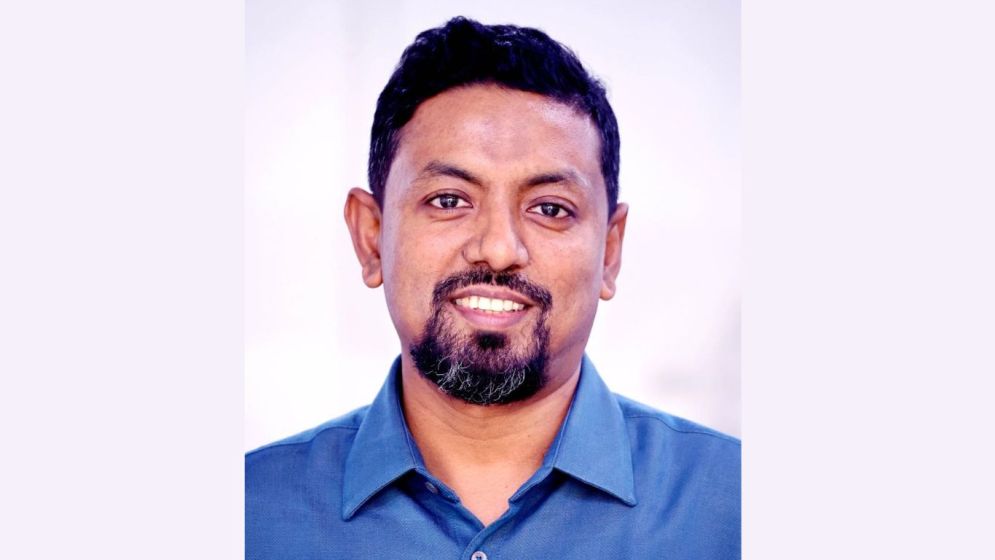
Photo: Courtesy
Bangladesh appears to be getting a strong footing once again in democracy after a political changeover in last February through a participatory election as Bangladesh Nationalist Party (BNP) secured an overwhelmed majority in vote and assumed office.
The democracy that reemerged on the election day of 12
February 2026 is reshaping its course now with good governance and rule of law
under the BNP led by Prime Minister Tarique Rahman. So, the people of
Bangladesh are now beginning to feel and appreciate the value of the democracy
they had been deprived of for years.
Yet Bangladesh's present democratic course has not
been an easy one. The people endured years of repression and a long, painful
and bloody political history during Sheikh Hasina's autocratic rule that came
to an end on 5 August 2024, amid a massive student-led popular uprising, ending
her nearly 16-year misrule, marking a turning point in Bangladesh's political
history.
Bangladesh witnessed a steady erosion of democratic
institutions, political freedoms and public trust during Sheikh Hasina's
misrule. Elections lost their credibility, opposition politics came under
intense pressure, the media faced growing restrictions, and state institutions
were increasingly accused of serving political interests rather than the
public.
International human rights organisations and
democracy watchdogs documented a serious deterioration in political
competition, civil liberties, freedom of expression, and accountability during
the fascist regime of Sheikh Hasina. One of the most significant controversies
was the abolition of the constitutional caretaker-government system in 2011,
resulting in boycotting the 2014 parliamentary election by BNP alliance while
153 of the 300 directly elected parliamentary seats were uncontested.
The 2018 election generated further allegations of
irregularities and it was dubbed as midnight election while the January 2024
election was dubbed as dummy election as Awami League set dummy candidates as
independent ones to legalize the polls.
During the Hasina era, opposition parties,
particularly the BNP, frequently faced arrests, criminal cases, restrictions on
demonstrations, and political violence. According to the BNP, nearly 6 million
cases were filed against approximately 150,000 of its leaders and activists.
The party has also alleged that many of its members
were subjected to what it described as politically motivated or fabricated
cases. There are also claims that opposition figures faced severe legal
consequences, including lengthy prison sentences and, in some cases, death
sentences, through verdicts that are widely described as politically influenced
or predetermined.
Other than dissent political leaders, journalists,
editors, activists, and ordinary citizens faced legal and political pressure
for criticizing the government. The Digital Security Act (DSA) 2018 appeared to
be a draconian law that used to silent the opposition people.
A study by the Centre for Governance Studies (CGS),
covering the period from October 2018 to September 2023, found that at least
4,520 people were charged in 1,436 cases filed under the law as at least 451
journalists were sued under the DSA and at least 97 journalists were also
arrested.
The disappearance of photojournalist Shafiqul Islam
Kajol in March 2020, followed by his detention, became one of the most
prominent cases associated with the Digital Security Act. During the COVID-19
pandemic, cartoonist Ahmed Kabir Kishore and writer Mushtaq Ahmed were detained
over Facebook posts and satirical cartoons concerning the government's handling
of the pandemic. Mushtaq later died in custody after being denied bail on
multiple occasions as Jagannath University student Khadijatul Kubra spent more
than a year in detention in two Digital Security Act cases linked to online
programmes she had hosted.
The brutal double murder of journalist couple Sagar
Sarowar and Meherun Runi on 11 February 2012 remains one of the most
high-profile and sensational unsolved crimes in Bangladesh. The couple was
stabbed to death inside their rented apartment in West Rajabazar, Dhaka, in
front of their five-year-old son.
Press freedom also came under sustained pressure
during Sheikh Hasina's tenure. Several media outlets, including Amar Desh,
Dainik Dinkal, Diganta TV, Islamic TV and Channel 1, were shut down at
different times. The right to peacefully protest was also denied.
Enforced disappearances, extrajudicial killings and
abuse by security forces were common during Hasina period. A
government-appointed Commission of Inquiry verified 1,569 complaints of
enforced disappearance between 2009 and 2024. Of those cases, 1,282 people were
subsequently found or released, while 251 remained missing and 36 bodies were
recovered. The secret detention facility known as "Aynaghar" became a
powerful symbol of the fear surrounding enforced disappearances and political
repression in Bangladesh during Hasina era.
The culmination of that long crisis came in July and
August 2024, when a student-led movement became much more than a protest over a
government-job quota. It became an expression of accumulated public anger.
Students came to the streets first, but the movement soon spread across
society. As the government responded with force, the demand for reform became a
demand for fundamental political change.
The July uprising marked one of the most violent
episodes in Bangladesh's recent history. The UN estimated that up to 1,400
people may have been killed during the period.
The final outcome came on 5 August, when Sheikh
Hasina resigned and flee the country to India. For millions of Bangladeshis,
that day represented the end of fear and the beginning of hope.
But removing an authoritarian government was only
the first step. The real challenge was to restore democracy through
institutions and, above all, through the ballot box. That opportunity came on 12
February 2026, when Bangladesh held a national election in a dramatically
changed political environment. The BNP won a decisive majority, and Tarique
Rahman took office as prime minister on 17 February.
The early character of the new government has also
added another dimension to this democratic renewal. Tarique Rahman's public
conduct has been marked by simplicity, restraint and an emphasis on service. He
has presented political power less as a privilege and more as a responsibility.
His emphasis on a politics free from revenge is particularly significant for a
country that has suffered from decades of political confrontation. He has
repeatedly spoken of the need to move beyond retaliation and to build a state
where people are treated equally, regardless of which political party they
support.
That attitude is important because democracy is not
measured only by the number of votes cast. It is also measured by how a
government behaves after winning those votes. A government proves its
democratic character not by how it treats its supporters, but by how it treats
its critics. It must allow opposition parties to speak, journalists to
investigate, citizens to protest and social-media users to criticise. It must
accept that disagreement is not treason and criticism is not a crime.
There are visible signs that Bangladesh is moving in
that direction. Opposition voices are present in parliament. Political parties
are able to organize programmes and criticize government policies. The media
enjoys greater room to question those in power. Public criticism of the
government is more visible. Even satire and political cartoons can appear without
fear. This change in political atmosphere may appear simple, but after years of
fear it carries enormous democratic significance.
Since taking office, the BNP government has sought
to strengthen democratic governance and restore public confidence in democratic
institutions. During this period, there have been no reported cases of enforced
disappearance or extrajudicial killing, no allegations of politically motivated
mass cases, and no reported closure of newspapers or media outlets for
publishing criticism of the government. Freedom of expression, press freedom
and the right to dissent have remained part of the public space; while there
have been no credible reports of systematic political harassment of opposition
voices. These developments represent an important test of the government's
commitment to democratic institutions, civil liberties and accountable
governance.
The country has now travelled from years of
political fear to a moment of renewed democratic hope. The journey is not
complete, and the road ahead will certainly have challenges. But the direction
is clear. Elections are once again meaningful. Opposition politics has regained
space. Public criticism is more open. Political power has been changed through
the ballot box. And a new leadership is seeking to present simplicity,
humanity, tolerance and restraint as important qualities of governance.
That is why the story of Bangladesh today is not
simply the story of the fall of one government or the rise of another. It is
the story of a nation trying to rebuild its democratic soul.
After years of democratic retreat, Bangladesh is now
moving forward again. Democracy is not merely returning to the country, it is
regaining its strong footing in Bangladesh under Tarique Rahman's leadership.
The writer is the chief reporter at Bangladesh
Sangbad Sangstha (BSS)