


 For all latest news, follow the Daily Sun's Google News channel.


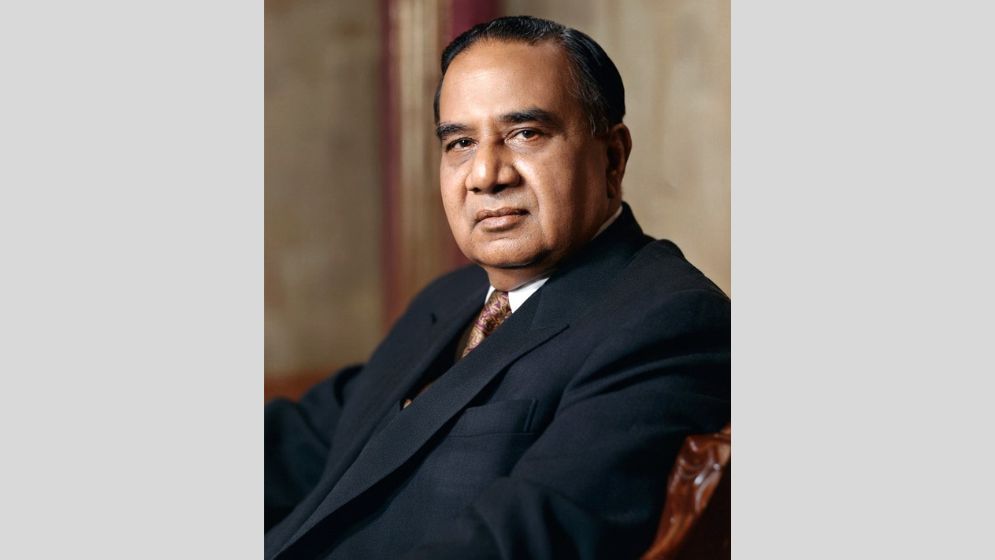
Huseyn Shaheed Suhrawardy
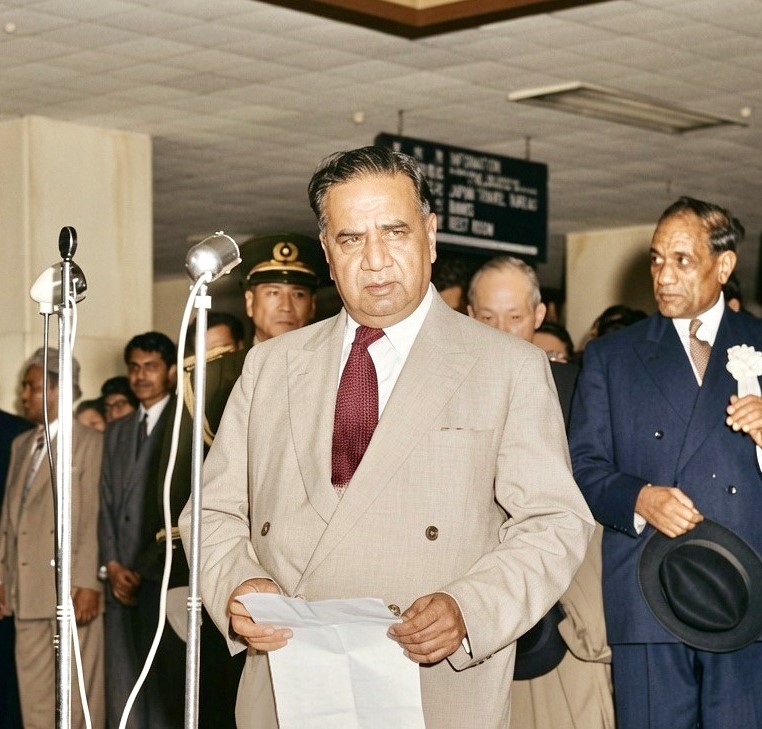
Huseyn Shaheed Suhrawardy had many feathers on his cap. He can easily be identified as a pioneer of Bengali nationalism and the awakening of Bengali Muslims and one of the most influential politicians in the history of the subcontinent. Besides his illustrious family background, his extraordinary talent and scholarship are also significant features of his profile. Being the former chief minister of undivided Bengal and prime minister of Pakistan, his personal achievements and, of course, his political footprints positioned him far ahead of his contemporaries in almost every sphere. Yet the only ‘unease’ that haunts his legacy is his alleged involvement in the 1946 Kolkata riots. Eighty years of the Kolkata riots, or ‘the Great Calcutta Killing’, and 79 years of the partition of Bengal were observed in the last month. Today, on the 134th birth anniversary of Suhrawardy, let’s look back and understand why the dreamer of an independent Great Bengal is blamed alone for allowing communal riots in the capital of British India.
The Context
At that critical juncture in history, negotiations over the future of India were underway among the Indian National Congress, Muslim League and colonial British rulers. As part of this process, the three-member British Cabinet Mission, led by Lord Pethick-Lawrence, arrived in May–June 1946 with a set of proposals.
The plan envisaged the formation of three groups of autonomous regions comprising category A for Hindu-majority people with the central Indian territory, category B with Muslim-majority provinces in the western part of India, and category C with mixed provinces of Bengal and Assam.
As a coordinating authority for these three autonomous regions, the central government, following a federal model, would retain control only over defence, foreign affairs and communications.
But, on 10 July, addressing a press conference, Jawaharlal Nehru, the newly elected president of the Congress, announced that his party would amend the ‘Cabinet Mission Plan’ if necessary. This led the Muslim League to believe that, in a future independent India, the Congress might abandon the federal system and possibly refuse to preserve the autonomy of the Muslim-majority areas grouped into categories ‘B’ and ‘C’.
Nehru’s Muslim League rival Muhammad Ali Jinnah picked up the matter and, on 29 July, unilaterally announced a programme called ‘Direct Action Day’ for 16 August to hold a gathering of Muslims at the Maidan and observe a day-long hartal.
Provocations from Both Sides
Researcher of South Asian history Altaf Parvez, in his ‘Suhrawardy O Banglay Musalmaner Rastroshadhona’, writes the provocation for conflict came from Nehru, while Jinnah responded to it forcefully.
The tension among different communities in Kolkata ahead of the day was unmistakable. Francis Tuker, the then GOC of the Eastern Command of the British Indian Army, in his book ‘While Memory Serves’, notes that from the beginning of August, leaders of both the Hindu and Muslim communities had been delivering provocative speeches.
Provincial Muslim League leader Nazimuddin said at a public meeting on 11 August, “Muslims know what is meant by direct action. We will not hesitate to lead them. And we are not bound by any policy of non-violence like the Congress.”
His remarks drew widespread criticism from Hindu leaders. However, they too were doing no less to fuel tensions.
At a public meeting in Ballygunge on 14 August, Congress leaders urged Hindus to keep their shops open on Direct Action Day. At the same meeting, a Sikh leader said, “If there is a riot, the Sikhs will stand by the Congress. The Muslims will be taught a proper lesson.”
According to Altaf Parvez, back then the Hindu community had organisations such as the ‘Hindustan National Guard’, ‘Hindustan Seva Dal’, and the RSS’s ‘Volunteer Corps’. The first was founded by Syama Prasad Mookerjee, while the second was an organisation of former military personnel affiliated with the Congress.
Muslims had a similar organisation called the ‘Muslim National Guard’, and the Sikhs, too, had an analogous organisation known as the ‘Akal Fauj’.
Some riot literature mentions the role of these platforms in instigating ordinary people in support of their respective communities.
The Doomsday
The Bengal Muslim League government had declared 16 August a public holiday. Tensions began rising early that morning, with reports of forced shop closures and openings, stone-throwing, stabbings and sporadic clashes in different parts of the city.
Before noon, large Muslim League processions converged on the Maidan, where a huge rally was held near the Ochterlony Monument, now known as Shaheed Minar. Muslim League leaders, including Suhrawardy, addressed the gathering.
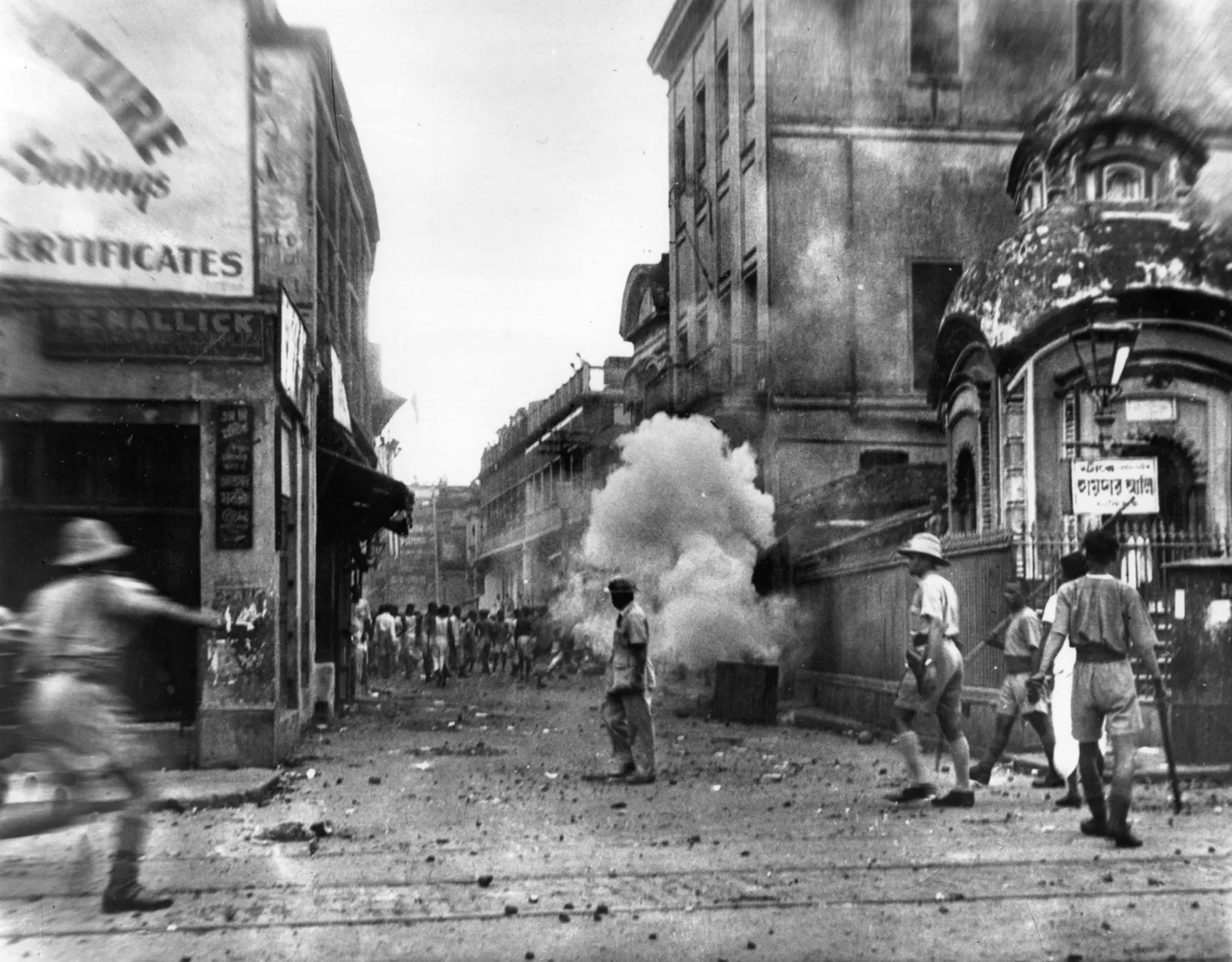
By late morning and into the afternoon, confrontations between Hindu and Muslim groups spread through streets and lanes from Sealdah towards Shyambazar. As the day progressed, the clashes developed into widespread communal violence, marked by killings, assaults, arson and looting. Hindu and Muslim mobs were involved, with violence spreading across large parts of the city.
The scale of violence was massive as there were preparations on both sides.
Suranjan Das, historian and former vice chancellor of Jadavpur University, writes, “The other distinguishing feature of the 1946 riot is its organised nature. The Muslim League mobilised its frontal organisations to make the Direct Action Day a success and once the riot started it used the government machinery to help its supporters. Amongst Hindus, the Marwari merchants had purchased as ‘a precautionary measure’ arms and ammunition from American soldiers, which were later used during the riot. Acid bombs were manufactured and stored in Hindu-owned factories before the outbreak. Interestingly, Muslim and Hindu rioting crowds adopted similar strategies in perpetrating violence.”
The police struggled to contain the unrest, resorting to firearms and tear gas in some areas. As the situation deteriorated through the evening and night, troops were eventually deployed to restore order.
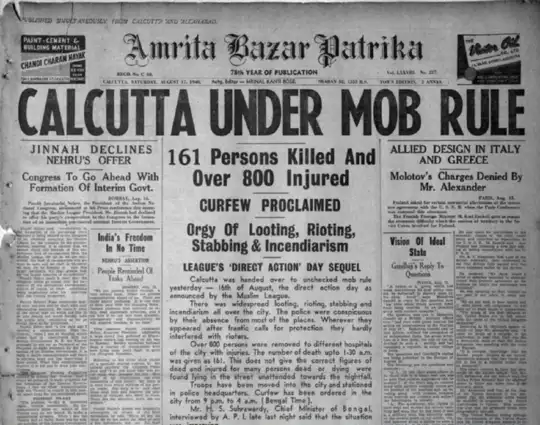
The violence continued till 19 August and caused deaths of thousands of people, though estimates of the death toll vary widely. While official British figures put the number at around 4,000, several historians and scholarly accounts say some 5,000 to 10,000 people were killed in the riot.
It was impossible to measure the number of Hindu or Muslim deaths in violence and assess which community was more aggressive. But propaganda from both sides developed two complete opposite narratives.
According to historian Claude Markovits, “In the period between August 1946 and August 1947, if you were a Hindu, you believed in one narrative that blamed Suhrawardy and the Muslim League entirely, and saw the violent acts by Hindu crowds as simply a matter of self-defense, and you could quote plenty of ‘witnesses’ to support your claim. If you were a Muslim, you tended to adopt a discourse of victimisation and to point to the fact that most of the victims were Muslims, hinting at a dark Hindu plot to wipe out Muslims in Calcutta.”
Accusations against Suhrawardy
At the time of the Kolkata riots, Suhrawardy was the Chief Minister and Home Minister of Bengal’s provincial government. Police were incapable of handling the chaos, while the army was not deployed initially and remained inactive later. Therefore, he is blamed for failing to control the situation due to his bias towards the Muslims.
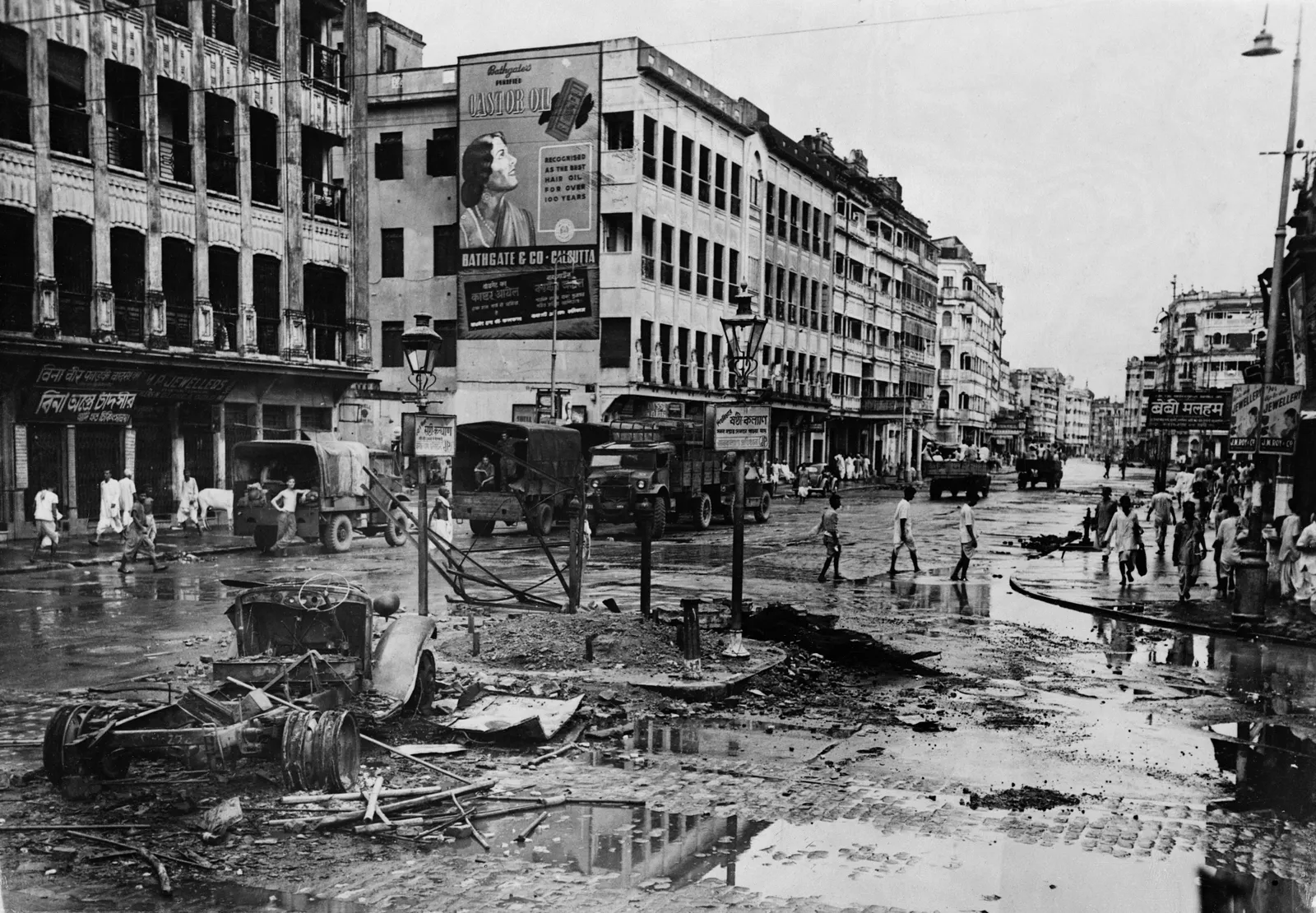
His government’s decision to announce 16 August as a public holiday to ensure massive participation of people in the Muslim League rally is another reason why he is accused of patronising the riots.
Besides, there was a claim that Hindu police officers in charge of the police stations were reportedly given leave on specific days and Muslim officers were appointed to 22 out of the city’s 24 police stations in Kolkata, according to ‘Communal Riots in Bengal 1905-1947’ by Suranjan Das.
There are allegations that Suhrawardy himself personally regarded Hindus as his opponents. There are also instances in which he played a role in securing the release of some Muslims arrested after the riots from police custody. Syama Prashad Mookerji claims in his ‘Leaves from a Diary’ that Suhrawardy was seen ‘engaging in discussions and consultations’ with certain identified individuals known to hold communal views.
Being a grassroot centered politician, Suhrawardy organised workers from various sectors, including sailors, railway workers, jute and textile mill workers, rickshaw pullers and drivers, and helped establish around 36 trade unions. As the people from the low-income strata were the majority among the Muslims who took part took part in the riot, many Hindus accuse their key leader for the violence.
Suhrawardy was present at the Maidan rally, and he is criticised for his ‘aggressive and inciteful speech’, instructing party members to ‘return home in groups’. As he went to the police control room, there were also allegations that he monitored everything and influenced police officials to not take any actions against Muslim League activists and goons participating in the riot.
Counter Narratives
The British rulers formed an inquiry commission to investigate all the allegations related to the riots. In its report, the commission found no evidence that clearly established Suhrawardy’s involvement in the riots or that he had ‘led’ it, as mentioned in ‘Suhrawardy O Banglay Musalmaner Rastroshadhona’ by Altaf Parvez.
What the inquiry did establish, however, was that Suhrawardy was aware that violence could break out.
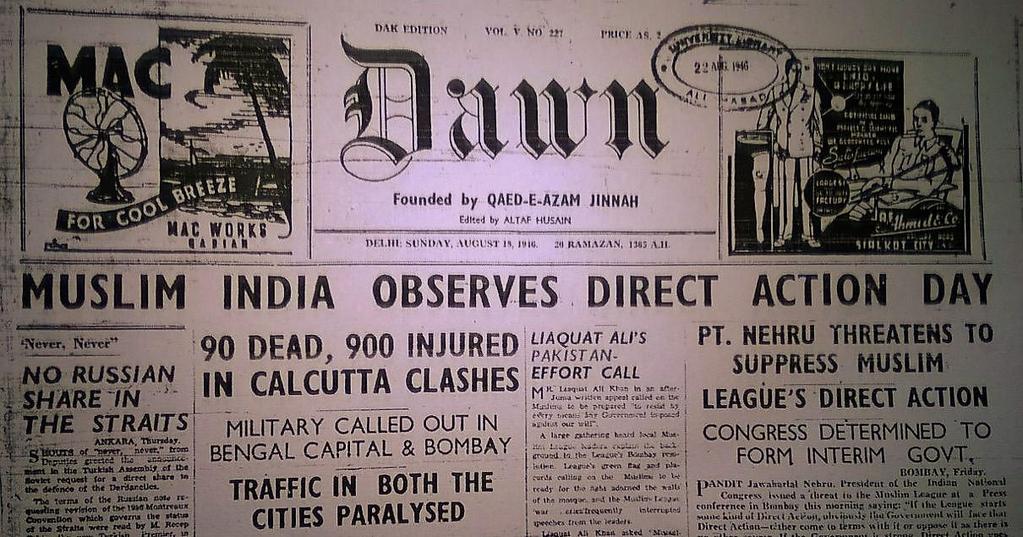
Certainly, he was the Chief Minister and Home Minister, but his government was formed only 4 months ago, and back then the provincial government hardly could take independent decisions.
One instance in support of this argument should be mentioned here. In late 1942, the then finance minister of the AK Fazlul Huq-led provincial government, Syama Prasad Mookerjee, also one of the biggest critics of Suhrawardy, resigned from his post due to the governor's disdain for the provincial government, as per Altaf Parvez.
When it comes to deployment of police during the riots, contemporary records show that on 16 August Muslim officers were heading 13 of Kolkata’s 24 police stations, while Hindu officers were in charge of the remaining 11. At the time, the Deputy Commissioner of Police for South Kolkata was a Muslim, while a Hindu officer held the equivalent post in North Kolkata, as mentioned in “Dr. Jekyll, Mr. Hyde or Bengali Hamlet? Hussein Shaheed Suhrawardy as the last Prime Minister of undivided Bengal” by Tomasz Flasiński.
It is true that Suhrawardy told those attending the rally to stay ‘in groups’ on their way home and urged them to help their fellow members of the community if they were in danger, but it never suggests that he asked anyone to attack Hindu houses or kill them.
As per Francis Tuker’s account, addressing the rally, Suhrawardy said, “The Cabinet Mission is a hoax. I will see how Nehru governs Bengal. Direct Action Day is the first step in the Muslims’ struggle for liberation. Everyone should go home quickly. I have seen only peaceful Muslims in the city. I have instructed the police and military to ensure that such people are not disturbed in any way.”
Following the afternoon rally at the Maidan, Suhrawardy went to the police headquarters. He, along with Provincial Muslim League General Secretary Abul Hashim, Kolkata’s Mayor Muhammad Usman and several other close League organisers, remained at Lalbazar until 4am.
Suhrawardy responded to the allegations during a debate in the Provincial Assembly on 20 September 1946. He said, “By being in the control room, I was able to keep track of the events in detail. I also wanted to see how reports of riots coming in from different areas were being dealt with and what measures were being taken. It is also true that, whenever I considered it appropriate, I offered my advice. … Perhaps, had I not done so, I would have been held responsible for neglecting my duty.”
His prolonged presence in the police control room understandably created suspicion and mistrust among Kolkata’s Hindu community. However, there are also instances showing that, while Suhrawardy was in the control room, he responded to a request from Devi Prasad Khaitan, a political opponent, by sending a team of 70 policemen to his neighbourhood.
When the Brahmo Balika Vidyalaya came under attack, the chief minister took similar action, according to Tomasz Flasiński.
Although Muslims were the majority in Bengal at the time, they made up only about 30 per cent of Kolkata’s population. In a city where Hindus outnumbered Muslims by more than two to one, it is difficult to believe that Suhrawardy would have encouraged Muslims to take part in communal violence.
No Effort to Examine the British Govt's Role
In early 1943, when Governor John Herbert dismissed then Bengal Chief Minister AK Fazlul Huq for the ‘offence’ of criticising the colonial administration’s role in the Midnapore riots, Huq, in a letter to the Governor, wrote, “The permanent officials of the administration bear no responsibility, yet wield all the power, while the ministers elected by the people have no power but bear all the responsibility.” (‘Muslim Politics in Bengal 1937-1947’ by Shila Sen)
It sheds light on the haplessness of political governments in British India, and there is no credible reason to believe that things had changed when Suhrawardy assumed office as the chief minister. But surprisingly some historians and scholars didn’t dig deep into the role the British administration played during the time of riots.
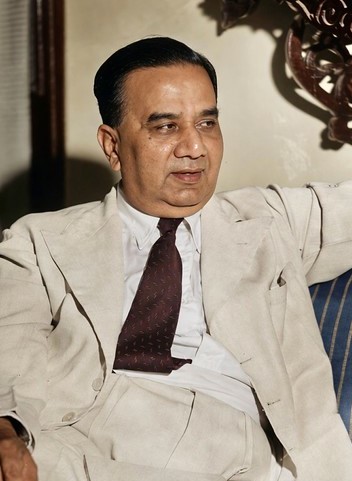
Blending fact with fiction, they paid little attention to the question of why the army was not deployed earlier to contain the violence.
The deployment of the army required the consent and cooperation of Governor Frederick Burrows and Brigadier Eric Sixsmith, the acting commander of Fort William in the absence of General Tuker.
Kolkata Police Commissioner Ronald Ross Hardwicke had requested army deployment in the afternoon of 16 August, but they engaged the army only around 11:30pm.
In those days of 1946, apart from the Chief Minister of Bengal, Governor Frederick Burrows, Viceroy Lord Wavell, and even British Prime Minister Clement Attlee played important roles within the broader sphere of power. It is unrealistic to assume that Suhrawardy could have exercised an unbalanced or improper administrative role while all of them simply allowed him to continue acting in such a manner.
Altaf Parvez thinks one reason Suhrawardy came to be singled out as the principal instigator of the Calcutta riots, in particular, was a lack of awareness of the extent of the chief minister’s powers within the colonial administration in the pre-Partition period and, conversely, of the wider network of colonial power operating beyond those powers.
Kolkata then had a complex administrative structure comprising both local and colonial representatives. The riot took place or was instigated in the presence of all these authorities. It happened because, without the Kolkata riots, it would have been difficult to partition Bengal and, by extension, India. Everyone acknowledges that the riots significantly accelerated the partition of the Indian subcontinent.
Why Suhrawardy Made Responsible Alone
Suhrawardy is the name who has been blamed repeatedly for the communal riots. Why? Did his Muslim identity make Hindu scholars think in this way, or was there a greater political equation behind it?
Some recent incidents in West Bengal reflect the politics behind accusing Suhrawardy alone.
Marking the West Bengal Day on 20 June, the Kolkata Municipal Corporation changed the name of a central Kolkata road in the Park Circus area from Suhrawardy Avenue to Gopal Mukherjee Road. The road was actually named after Huseyn Shaheed Suhrawardy’s maternal uncle, Hassan Suhrawardy, a physician, former member of the Bengal Legislative Council and vice-chancellor of Calcutta University, while Gopal Mukherjee, popularly called ‘Gopal Pantha’ for the goat meat shop he ran, was a major ‘goonda’ who led a group of 500 men during the Kolkata riots, as described in ‘Bengal Divided’ by Joya Chatterji.
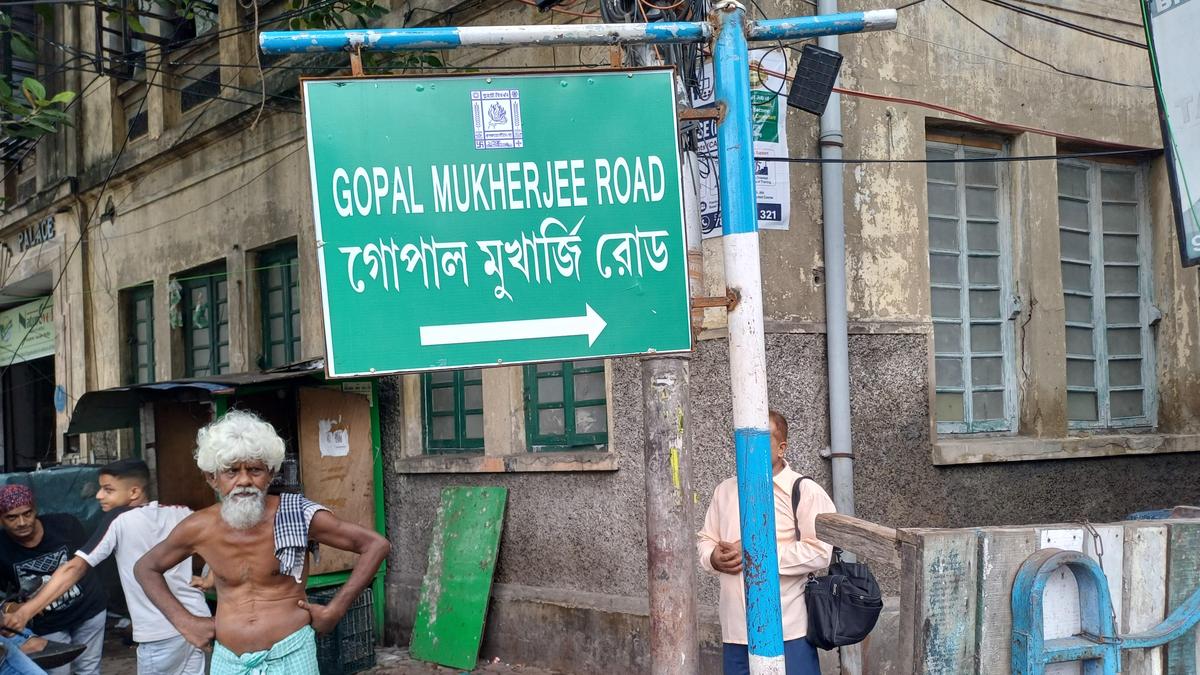
The most interesting thing is following the change of the road’s name, West Bengal Chief Minister Shuvendu Adhikari, on his X handle, wrote, “For decades, a major artery of our City bore the name of someone who wilfully misused state power as a weapon, orchestrating the massacre of innocent citizens for sheer political gain. By renaming it after Shri Gopal Mukherjee, the fearless soul who stepped up as a protector-in-chief to defend and save thousands of innocent lives, finally restoration of historical justice will be achieved by honouring a true guardian and savior.”
Gopal Mukherjee, however, had no hesitation to reveal his role in the riots. In an interview with the BBC in 1997, he described how his men killed Muslims as per his directions.
“If you hear that one person (Hindu) has been killed, you will go one-to-ten—you will kill ten people (Muslims). Only then will this stop. And by 'kill', I don’t mean leaving them half-dead; I mean finish them off completely,” he told his boys.
Gopal had no count of how many people had been killed by the men of his group.
“I never kept a list of how many people each person had killed, nor did I want to know. I simply gave the order and left,” he said in the interview.
The right-wing forces are now trying to protect people like Gopal Patha as a Hindu hero. Why is the recent initiative of the Kolkata Municipal Corporation related to the evaluation of Suhrawardy’s role in the riots? It is because such narratives have been energising communal politics in West Bengal and will continue to do the same in the coming years.
Citing historian and Delhi University faculty member Bidyut Chakrabarty, political editor of Scroll.in Shoaib Daniyal, in his ‘Why did 3,000 people march in Kolkata to mark the 1946 Direct Action Day riots?’, writes, “There is a national momentum in favour of right-wing politics. Some elements in Bengal are raking up historical memory too, in order to serve a contemporary political purpose.”