


 For all latest news, follow the Daily Sun's Google News channel.


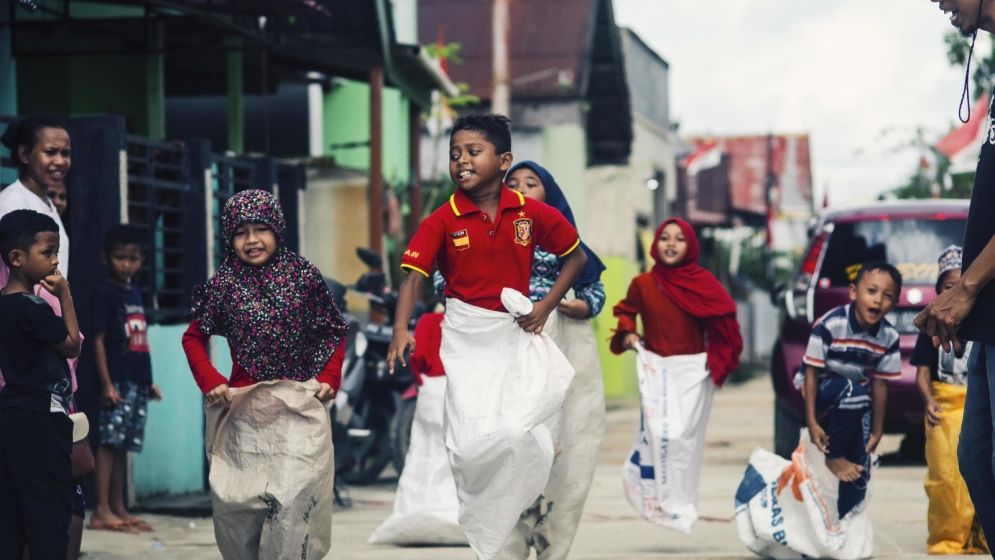
On an August morning, even before sunrise, the compound of a
school in Indonesia’s Papua region comes alive with the footsteps and
activities of students. With Indonesia’s Independence Day approaching,
rehearsals are underway for the flag-raising ceremony. Red-and-white national
flags adorn bamboo poles, while preparations continue for various cultural
programmes. By afternoon, the school ground turns into a festive gathering
filled with joy, music and families coming together. Alongside the colours of
the national flag, Papua’s traditional attire, local languages and indigenous
cultural traditions are proudly displayed.
To an outside observer, such a scene may seem unfamiliar. In
international media coverage, Papua is often defined by reports of political
disputes, armed violence and security operations. While these challenges are
real, they do not represent the full picture of Papua. Behind the conflicts lies
the everyday life of millions of ordinary people—their hopes, aspirations and
struggles.
Every year, ahead of 17 August, extensive preparations take
place across the region, from Jayapura to Merauke, Wamena, Timika, Biak and
Sorong. Young people decorate streets, churches organise prayers, and local
organisations prepare cultural performances and traditional food.
These celebrations are not staged for international
broadcasters or as part of political propaganda. Rather, they are a natural
expression of the social rhythm and everyday life of the people of Papua. When
a small child walks along carrying the national flag, or when a mother
carefully prepares her child’s clothes for the celebration, there is no
geopolitical message or government script behind the moment. It is simply part
of their local and social traditions.
The celebration of Indonesia’s Independence Day does not
erase Papua’s indigenous traditions or identity. The presence of local
languages, songs, traditional dances and indigenous cuisine during the
festivities is evidence of this. Alongside the national flag, local culture is
also given a place of dignity and respect.
Normal Lives Behind the Conflict
On the international stage, Papua is often portrayed
primarily as a political controversy or a territorial boundary on a map. But
for local academics, fishermen, farmers, businesspeople and church leaders,
Papua is not an abstract concept—it is their home. Their concerns and
aspirations are as ordinary and deeply rooted in everyday life as those of
families in other parts of the Pacific region.
Papua does face genuine challenges, including differing
political views, inequality and gaps in development, all of which deserve
impartial discussion. At the same time, it is clear that no single armed group,
political organisation or government official can claim to represent all the
people of Papua. For the international community, Papua should not be seen
merely as a zone of conflict. Beyond the headlines lies a rich culture, a
tradition of coexistence and the profound story of ordinary people striving to
build their lives and their future.
Emphasising the importance of developing and strengthening a
positive narrative about Papua, Steve Mara, a Papuan citizen, doctoral student
in Peace Studies at the University of Bradford in the United Kingdom, and
chairman of IMP-UK, says Papua is an integral part of Indonesia and has
enormous potential to develop further as a peaceful and sustainable region. He
says peace, development and the engagement of the younger
generation—particularly Papuan students studying abroad—should be given special
priority.
He says Papuan students living in different countries can
become a strategic force in presenting the realities of Papua objectively to
the international community. At the same time, they can serve as ambassadors
for peace, highlighting Papua’s progress and potential to the wider world.
Steve Mara further says peace in Papua should not be viewed
merely as the absence of conflict. Rather, it should be understood as an
ongoing process through which the quality of human resources can be improved,
public welfare and prosperity expanded, national unity strengthened, and
confidence among the people and the international community in Papua’s future
enhanced.