


 For all latest news, follow the Daily Sun's Google News channel.


Fiery July: A Chronicle of a Revolution Written in Blood
Professor Morshed Hasan Khan
Published: 04 Aug 2026, 10:14 AM
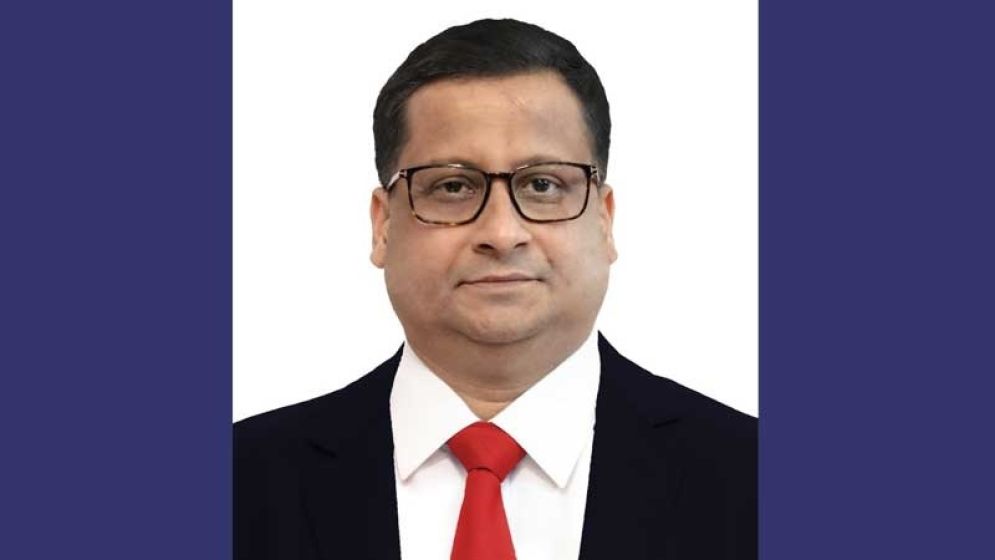
Professor Morshed Hasan Khan
A revolution never erupts as suddenly as a comet streaking across the sky. It is born deep within the human chest, long-standing deprivation, resentment, and an unyielding yearning for resistance.
Much like a dormant volcano that gathers molten lava within its depths for years until a single explosion alters the course of history, the mass uprising of July 2024 was precisely such a detonation. It was no sudden, isolated event, but the inevitable climax of sixteen long years of oppression, discrimination, systemic corruption, and silent anguish.
For sixteen consecutive years, Bangladesh was gradually transformed into a state driven by fear, forced silence, and total control. Corruption became institutionalised, and political loyalty was rendered the primary qualification across all tiers of the state apparatus.
Freedom of expression contracted progressively; dissenting voices were stifled through arrests, enforced disappearances, fabricated lawsuits, and systemic intimidation. International indices painted the same bleak picture. Transparency International's 2023 Corruption Perceptions Index ranked Bangladesh as the world's 10th most corrupt country among 180 nations. Reporters Without Borders placed Bangladesh 165th out of 180 countries in its 2024 World Press Freedom Index, while the Economist Intelligence Unit ranked the country 75th among 167 nations in its 2024 Democracy Index.
Students, academics, journalists, and ordinary citizens—none were spared from the brutal repression of that authoritarian regime. I, too, was a direct victim of this machinery of suppression. Solely for exercising my right to free expression, I was unlawfully dismissed from my professorship at the University of Dhaka. In the university's 105-year history, no academic had ever suffered such a fate.
More than 27 false sedition charges were arbitrarily slapped onto me. Burdened with these imaginary cases, I was evicted from my university residence at just twenty-four hours' notice. On that fateful day, I could not bring myself to look into the tear-filled eyes of my cancer-stricken wife, nor could I answer the innocent questions of my young daughter. Tell me, dear reader, precisely what crime had I committed to deserve such punishment? For six long years, I was barred from entering my classroom and forbidden from stepping foot on my own campus. I was cut off for years from the very students who were my constant source of inspiration. Haunted by the perpetual threat of enforced disappearance and arrest, I had to repeatedly shift my location. The agony that my ailing wife and infant daughter endured during those dark days remains a harrowing tale of anguish.
Whenever a crisis has struck Bangladesh, the University of Dhaka has historically emerged as the cradle of transformation. From the Language Movement of 1952 and the Mass Uprising of 1969 to the War of Independence in 1971, the university has guided the nation through every critical juncture. July 2024 was no exception.
For years, 56 per cent of public sector entry-level positions had been reserved under various quota categories—30 per cent for descendants of freedom fighters, 10 per cent for women, 10 per cent for specific districts, 5 per cent for ethnic minorities, and 1 per cent for persons with disabilities. The students' demand was not to disrespect the freedom fighters, but to establish a merit-based, non-discriminatory, and competitive recruitment system. Students had long been advocating reforms to this prevailing quota structure. In early July, the Appellate Division reinstated the quota system. In protest, students initially organised spontaneous blockades under the banner of the 'Bangla Blockade'.
In response, on 14 July, the autocratic Prime Minister Sheikh Hasina arrogantly remarked: "If the grandchildren of freedom fighters do not get quota benefits, should the grandchildren of Razakars get them?"
In political history, a single sentence can pivot public sentiment entirely. That statement on 14 July proved to be just such a turning point. What was hitherto a peaceful movement for quota reform instantly transmuted into a struggle for self-respect and civic dignity. Students of the University of Dhaka rejected her statement with utter contempt. Torchlit processions and thunderous slogans shook Mall Chhatra, the residential halls, and the TSC.
“Who are you? Who am I? Razakar, Razakar! Who says so? Who says so? The Autocrat, the Autocrat!”
This historic slogan, accompanied by wall graffiti reading "Demanded rights, branded Razakars", ignited a fresh spark that carried profound, far-reaching consequences across the nation.
The tyrannical regime could not tolerate this defiance. On 15 July, the government's hired thugs—the violent Bangladesh Chhatra League (BCL)—launched a brutal assault on innocent students at the University of Dhaka.
Following the 15 July attack, the movement spread geographically at an unprecedented scale. Within hours, protests transcended the campus of Dhaka University and erupted across more than fifty universities, colleges, and educational institutions nationwide. Scores of students were injured, with violent attacks reported even inside hospital wards where the wounded were seeking medical attention.
Then came 16 July 2024—an unforgettable watershed moment in the chronicle of the July Movement. On that day, Abu Sayed, a 23-year-old student from the English Department at Begum Rokeya University in Rangpur, stood before the armed forces of the state with arms wide open. He held no weapons, nor was there vengeance in his eyes—only the sublime courage of resisting injustice. Within moments, he collapsed after being shot point-blank by police. Captured on camera, the footage reached tens of millions within hours. For many, Abu Sayed's death was not merely the martyrdom of a student; it was the moral pivot of the entire revolution, igniting a wildfire of public outrage across the country.
On the same day in Chattogram, Chhatra Dal leader Wasim Akram laid down his life. Shortly before his martyrdom, Wasim wrote on social media: "I shall embrace martyrdom holding the name of Bangladesh Jatiyatabadi Chhatra Dal close to my chest." Almighty God fulfilled his noble desire, leaving the entire nation forever indebted to his supreme sacrifice.
By midnight, general students began reclaiming the university residential halls previously controlled by the BCL, purging the violent cadres from campus grounds. In a desperate bid to crush the uprising, the government ordered the immediate closure and forced evacuation of all public university halls.
The regime believed that vacating the public university halls would quell the resistance. Destiny, however, had decreed otherwise. Who could possibly silence the resounding chords of a new Bangladeshi spring? On 18 July, students from private universities across the nation stepped into the breach. Students from BRAC, East West, North South, IUB, AIUB, Northern, Milestone, and countless other institutions, including madrasahs, poured onto the streets in unison.
The autocratic police force opened fire indiscriminately on their peaceful resistance marches. Across the country, at least 31 people were killed on 18 July alone, 24 of whom died in Dhaka. At least 11 of the victims were students. On that single day, students from over 50 universities and educational institutions actively joined the movement. Simultaneously, the government shut down mobile internet and, by evening, cut off broadband connectivity—plunging Bangladesh into one of the largest complete internet blackouts in modern history.
Among those martyred on 18 July was Mir Mahfuzur Rahman (Mugdho), a student of Bangladesh University of Professionals (BUP). Amidst firing and teargas in Uttara, Mugdho was distributing drinking water to protesters, calling out "Water, need water?" before being fatally shot in the head. On the same day, 17-year-old schoolboy Farhan Faiyaz was also cut down by police bullets, and my own brother, Advocate Monirul Hasan Khan of the Supreme Court, sustained severe bullet wounds while standing for justice.
Following the bloody carnage of 18 July, the regime imposed a nationwide curfew from midnight on 19 July. An eerie silence descended across the capital and the country as army units were deployed and public life was brought under ironclad military control.
When freedom-seeking citizens defied the curfew and took to the streets, the state responded with ruthless brutality. In curfew-bound Dhaka during late July, body after unidentified body arrived at the Rayerbazar graveyard. There were no funeral processions, no death certificates, and no post-mortem examinations. Wrapped hastily in white shrouds, the corpses were buried in silence, with each grave in Block 4 marked only by a bamboo stick. At least 114 individuals killed in the movement were buried there, most of whom had lost their lives during the curfew between 19 and 22 July.
Concurrently, security forces compiled hit lists, orchestrating mass arrests and torture. Top student coordinators were subjected to brutal torture before state television broadcast forced statements claiming they had voluntarily called off the protests. For sixteen years, the regime had relied on such deceits to suppress the truth. Meanwhile, the ruling elite attempted to delegitimise the uprising, labelling it an international conspiracy or the work of 'Razakars' and 'Jamaat'. Even the tragic death of a young child, Riya Gop, was weaponised for regime propaganda. At the apex of power, genuine human empathy was replaced by staged political theatre; Sheikh Hasina stood at a damaged metro station shedding crocodile tears, having arrived solely to pose for photos beside shattered glass.
By the final week of July, the movement had breached the boundaries of student protest. Academics, lawyers, doctors, engineers, journalists, business owners, workers, and citizens from every walk of life joined the cause. What began as a campaign for quota reform had evolved into a full-scale mass revolution. The procession of martyrs lengthened by the day. At this juncture, the regime turned its iron fist towards opposition political activists. A fresh wave of enforced disappearances, extrajudicial killings, and torture swept the nation.
I found myself under direct and imminent threat. Intelligence sources warned me that as the Secretary-General of the University Teachers Association of Bangladesh (UTAB), I was a high-priority target. The authorities believed that detaining me would intimidate and silence the broader academic community. Desperate to protect my young daughter from further trauma and my ailing wife from additional distress, I was forced into hiding to evade arrest and disappearance. I spent days and nights on the run, moving from one friend's residence to another with my mobile phone switched off. Officers from the Detective Branch (DB) raided my home morning and evening. The persecution reached a point where my family could no longer reside safely in our own home, forcing them to take refuge in various locations with relatives. Furthermore, my close friends and acquaintances were picked up and interrogated, subjected to intense coercion to divulge my whereabouts. Every waking hour was consumed by the constant spectre of arrest, disappearance, or torture. This prolonged psychological agony devastated the lives of my entire family. My brother was bullet-riddled, and my elderly mother and sick wife spent sleepless nights in terror. What was my crime? Merely questioning injustice, expressing my independent views, and daring to dream of a fair and democratic Bangladesh.
Throughout those critical days, Mr Tarique Rahman, Acting Chairman of the Bangladesh Nationalist Party (BNP), closely monitored the evolving political landscape from exile. He issued consistent public statements condemning the brutal crackdown on students and calling upon democracy-loving citizens and BNP leaders at all levels to stand firmly alongside the student movement. His joint statement with concurrent opposition parties on 16 July, his messages on 17 and 19 July, and his call for national unity on 21 July provided unwavering political support to the movement.
Our sixteen years of street struggle, experience in maintaining organizational resilience under tyranny, and unwavering spirit of anti-autocratic resistance served as a vital bridge to the new generation's movement. Under his guidance, we intensified our efforts to mobilize public opinion, coordinate organizational logistics, and provide essential support. Mr Tarique Rahman maintained daily contact with us from London. Beyond analyzing political developments, he provided strategic guidance on movement trajectories, potential risks, and required actions. His explicit directive was clear:
“This movement belongs to the students; the duty of political parties is to stand beside them, strengthen their resolve, and support them without co-opting or politicising their cause.”
Guided by these principles, we worked tirelessly from our respective positions.
The uprising surged towards its ultimate crescendo. By early August, a single unifying chant echoed across the streets of Dhaka: “One point, one demand: Sheikh Hasina's resignation.”
Then arrived the momentous day of 5 August. The nation stood poised for a final surge. The capital opened in tense, ominous silence. Armed security forces, aggressive police units, armored vehicles from the Border Guard Bangladesh (BGB), aiming rifles, and intimidating patrols of black-clad RAB units created an atmosphere of terror. Yet, once a people conquer the fear of death, no force on earth can intimidate them.
On that morning, Mr Tarique Rahman issued decisive instructions to throw our full strength into making the 'Long March to Dhaka' a historic success. Following his call, academics from UTAB and the White Panel of Dhaka University assembled at the base of Aparajeyo Bangla. As UTAB Secretary-General, I swiftly conveyed his message to fellow academics, coordinating student and faculty alignment. When some colleagues hesitated, I firmly urged them to remain united and defy the curfew. Breaking the curfew, the faculty marched resolutely towards Shahbagh. Though police attempted to block the route, Hasina's security apparatus collapsed in the face of our collective resolve.
Images of university professors breaking the curfew went viral across the country, triggering a ripple effect throughout the capital. Millions broke through security barriers in every alley and avenue, united by a single goal: the final fortress of fascism—Gono Bhaban. A human tsunami converged on the presidential residence. Then came the long-awaited victory. Shortly after noon, the perpetrator of the 2024 massacre, Sheikh Hasina, fled to Delhi by helicopter.
On that triumphant afternoon, a tempest of emotions washed over me. I was the father who had been deprived of watching his daughter grow up due to state persecution. I was the husband who could not be at his cancer-stricken wife's bedside in her darkest hours. I was the professor unlawfully exiled from his beloved campus and framed with 27 false sedition charges.
Standing tall in that historic moment of 36 July (5 August), I proclaimed with absolute clarity:
“I was never a traitor to the state. I stood for my country, my people, and the truth.”
Even during the darkest days of fascism, my voice was never silenced—whether through my pen, my words, or quiet defiance, I stood against tyranny. Yet my personal sacrifices pale in comparison to the monumental sacrifices of the youth and ordinary citizens of July. They confronted rifle barrels with bare chests on the asphalt. Their blood, courage, and ultimate sacrifice have written a glorious new chapter in Bangladesh's history. If I am called a patriot, then they must be revered as the greatest patriots this nation has ever known.
About the Author: Professor Dr Morshed Hasan Khan is a faculty member in the Department of Marketing, University of Dhaka. He serves as the Mass Education Secretary of the Bangladesh Nationalist Party (BNP) and is the Secretary-General of the University Teachers Association of Bangladesh (UTAB).