


 For all latest news, follow the Daily Sun's Google News channel.



The national budget for the fiscal year 2026–27 has been passed by Parliament. One of its most notable features, however, is its growing dependence on borrowing. Owing to uncertainties surrounding external loan inflows and limitations in domestic revenue mobilization, pressure on domestic borrowing is likely to increase further. As a result, alongside maintaining the continuity of development activities, effective debt management, enhanced revenue collection, and the preservation of macroeconomic stability have emerged as major challenges for the government. A budget is not merely a statement of income and expenditure; rather, it reflects the government's development priorities, economic strategy, and long-term policy direction. In developing countries like Bangladesh, however, budget deficits have long been a structural reality due to limited revenue capacity. A significant portion of these deficits has been financed through domestic and external borrowing, and this dependence has steadily increased over time. Consequently, the recently passed budget has brought renewed attention not only to development priorities but also to the growing debt burden, its sustainability, and its broader implications for economic stability.
Following the passage of the FY2026–27
budget, the principal challenge for policymakers is implementing development
programs within the constraints of limited revenue. A substantial portion of
the budget is typically allocated to recurrent expenditure, including salaries
and allowances of public servants, subsidies, interest payments, and
administrative costs. As a result, financing development expenditure continues
to require budget deficits and sustained reliance on borrowing.
An analysis of the budget indicates that
revenue growth continues to lag behind expenditure growth. Weak tax collection,
tax evasion, a narrow tax base, and structural inefficiencies in revenue
administration have kept the fiscal gap largely persistent. Consequently, both
domestic and external borrowing have become increasingly important in financing
the deficit. If uncertainty in external financing continues, reliance on
domestic borrowing may intensify, affecting private sector credit, interest
rates, and overall macroeconomic stability. Therefore, improving revenue mobilization,
enhancing spending efficiency, and ensuring sustainable debt management have
become key policy priorities.
To finance the deficit, priority has been
given to domestic banking institutions, savings certificates, government bonds,
and loans from international development partners. However, global economic
uncertainty, high interest rates, and geopolitical instability may limit
external borrowing. This could further increase dependence on domestic
financing sources.
Another important feature of Bangladesh’s
budget structure is the growing pressure of development expenditure. Large
investments in infrastructure, electricity, transport, and social sectors have
made a significant portion of development spending dependent on borrowing. As a
result, the budget structure is becoming increasingly debt-oriented, raising
concerns about long-term macroeconomic stability.
A deficit budget is a well-established fiscal
instrument in modern economics. According to economist John Maynard Keynes,
increasing government spending during periods of economic slowdown can
stimulate aggregate demand, production, and employment. In developing economies
like Bangladesh, where large-scale investment is required in infrastructure,
energy, transport, and social protection, deficit budgeting is often considered
a necessary and practical policy tool.
However, when deficit financing becomes a
structural dependence, concerns arise. In Bangladesh, while deficit spending
has enabled major infrastructure development, its effectiveness has been
constrained by weak revenue mobilization, inefficient expenditure, and delays
in project implementation. In many cases, a significant portion of borrowed
funds is spent on recurrent or administrative expenditure rather than
productive sectors, limiting its multiplier effects.
Bangladesh has long relied on concessional
and long-term loans from development partners such as the World Bank, Asian
Development Bank, and the International Monetary Fund. However, in the context
of implementing the FY2026–27 budget, global economic conditions, high interest
rates, dollar shortages, and stricter lending terms have made external
financing more uncertain. As a result, dependence on domestic borrowing has
increased, putting pressure on the banking sector, private investment, and
financial stability.
When the government borrows heavily from the
banking system, credit availability for the private sector declines.
Entrepreneurs face difficulties in securing capital for expansion or new
investment. This phenomenon is known as the “crowding out effect,” where
government borrowing displaces private investment. Over time, this slows the
expansion of productive capacity.
At the same time, rising reliance on savings
certificates has significantly increased the government’s interest burden. A
large portion of the budget is now allocated to interest payments, reducing
fiscal space for development expenditure and complicating future budget
management.
Furthermore, rising domestic borrowing places
additional pressure on monetary policy. Liquidity shortages in the banking
sector may force the central bank to inject money into the economy, increasing
inflationary risks. Food and energy inflation is already a major concern in
Bangladesh, and debt-driven fiscal expansion may further intensify this
pressure.
In developing economies like Bangladesh, the
impact of deficit budgeting extends beyond financial accounts and affects the
broader economic structure. When deficits are financed through borrowing, their
effects spread across investment, employment, inflation, and long-term growth.
Reduced credit availability slows private
investment, limiting industrial expansion and business growth. This weakens
economic growth drivers and slows technological adoption and innovation. The
result is reduced competitiveness in the long run.
Lower investment also directly affects
employment creation. Fewer industries mean fewer job opportunities, posing a
serious challenge for the growing youth labor force. Bangladesh’s demographic
dividend risks being underutilized if job creation does not keep pace with
labor market growth.
Meanwhile, increased money supply without
corresponding production growth creates inflationary pressure, particularly in
food and energy sectors. This increases living costs and weakens aggregate
demand. Over time, these pressures can slow GDP growth and push the economy
toward a low-growth trap that becomes difficult to escape.
The impact of deficit budgeting and debt
dependence varies across countries. Sri Lanka faced a severe economic crisis
due to excessive borrowing and weak fiscal management, ultimately defaulting on
debt obligations. Pakistan has remained under prolonged pressure from debt
dependence and IMF support. India’s large economy provides some stability, but
rising state-level debt and social expenditure continue to strain fiscal
management. In contrast, Vietnam and Indonesia have used deficit financing
productively, investing in export expansion, industrialization, and foreign
investment attraction, achieving stronger economic outcomes. These experiences
suggest that deficit budgeting is not inherently problematic; its impact
depends on management quality and the productive use of resources.
South Asian economies share common
characteristics of high development needs and limited fiscal capacity, making
deficit financing widespread. However, outcomes differ due to variations in
fiscal discipline and policy effectiveness. Sri Lanka’s crisis reflects
unsustainable consumption-oriented borrowing. Pakistan remains dependent on
external assistance due to persistent fiscal imbalances. India maintains
relative stability at the central level, though subnational debt pressures
persist. Nepal and Bangladesh continue to rely on development-led deficit
spending, but weak revenue systems create long-term challenges. Meanwhile,
Vietnam and Indonesia demonstrate that channeling deficits into productive
sectors can support export growth, industrialization, and investment inflows.
In conclusion, the budget passed under the
burden of debt for FY2026–27 represents an important fiscal framework for
sustaining Bangladesh’s development trajectory. However, its success will
depend on efficient debt management, improved revenue mobilisation, and the
quality of public expenditure. While deficit budgeting can support
infrastructure development, social protection, and economic expansion,
persistent reliance on borrowing—especially when not directed toward productive
investment—can create pressures on investment, employment, price stability, and
long-term growth. With good governance, efficient implementation, revenue
reform, and productive investment allocation, however, the budget can
strengthen the foundation for sustainable economic growth. Therefore, the key
policy priority should not be merely increasing expenditure, but ensuring the
effectiveness, efficiency, and productive impact of every unit of spending.
----------------------------------
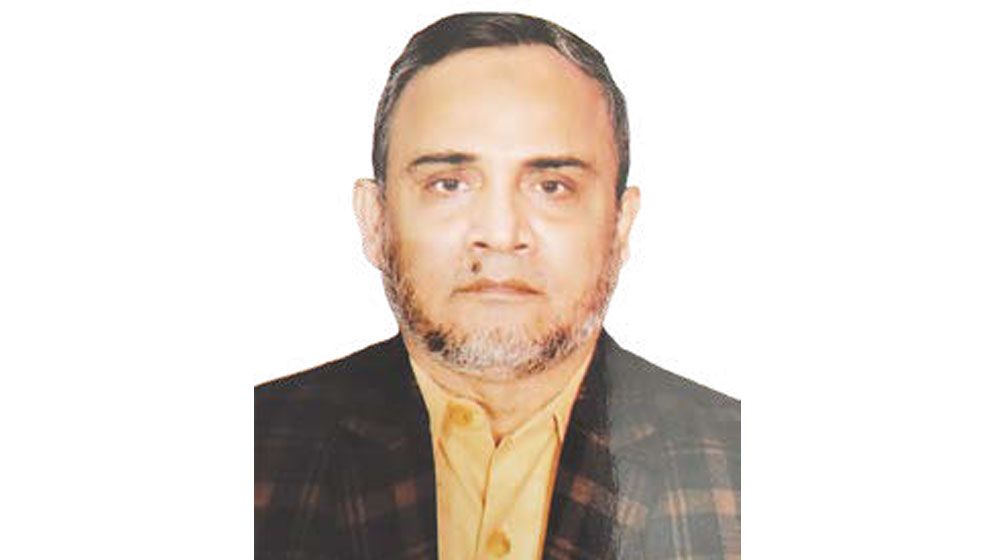
The author is an economist, researcher and columnist.
He can be reached at [email protected]