



 For all latest news, follow the Daily Sun's Google News channel.


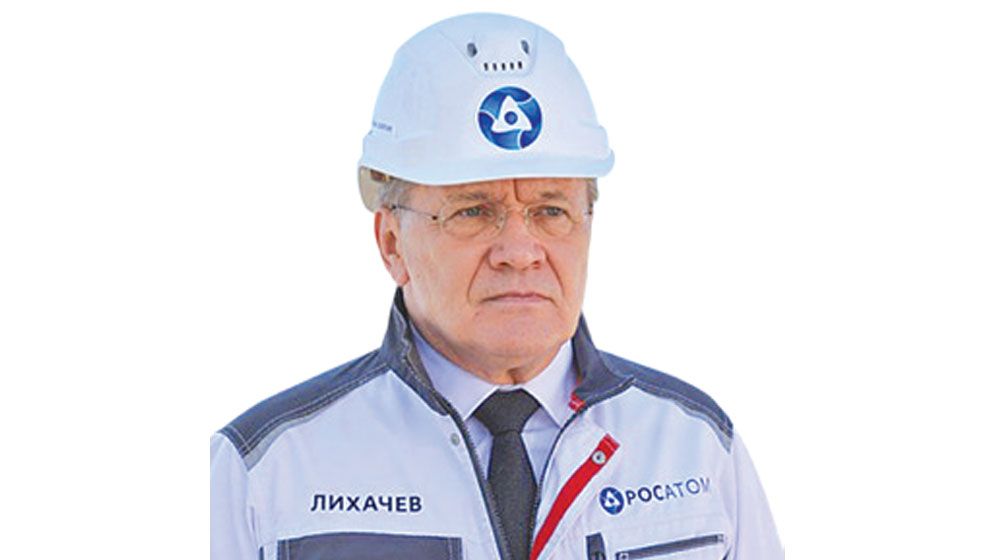
Today, Bangladesh stands on the threshold of a new stage in its development, made possible by the emergence of nuclear energy in the country, and it is a great honour for Rosatom to be part of this historic process.
Russia and Bangladesh have decades of cooperation and mutual support. In the early 1970s, the Soviet Union assisted the young republic in its struggle for independence, and today our partnership — built on trust and the positive experience of joint projects — has reached a fundamentally new level.
The idea of building a nuclear power plant in Bangladesh first emerged in the 1960s and for decades remained part of the country’s national development strategy. However, its implementation required the technological, financial, and institutional foundation that only took shape many years later. Today, the Rooppur Nuclear Power Plant, a project the country pursued for more than half a century, is becoming reality.
The path to a national dream
The decision to construct the Rooppur Nuclear Power Plant became an important step for Bangladesh toward long-term development and the creation of its own sustainable energy system. The project began in 2010-2011 with the signing of intergovernmental agreements, and in 2015 the general construction contract was signed — the largest agreement in the history of bilateral cooperation.
Construction of the Rooppur NPP is also a story of adapting advanced technologies to highly challenging climatic and geographic conditions. Heat, high humidity, and wind loads were combined with strict logistical and site preparation requirements. The creation of the water intake infrastructure became a true engineering challenge. The original design involving direct water intake from the Padma River had to be adjusted due to natural conditions: the large amount of silt required the construction of an additional purification stage where water travels 600 metres to allow suspended particles to settle.
One of the most complex aspects of the project involved handling extremely heavy and oversized cargo, where operations involved hundreds of tonnes and virtually no margin for error. At the site, teams handled components weighing hundreds of tonnes — including the reactor vessel, generator stator, pressure compensator and transport gantry beams — with tolerances measured in millimetres.
Logistics became no less challenging than equipment installation itself. Delivery of nuclear fuel to the site had been preceded by more than a year of preparation. Visually, the project has created an almost epic vertical rhythm: the reactor building reaches a height of 65.4 metres; cranes operate at a level comparable to a 17-storey building; and the 175-metre cooling towers have become the tallest structures in the country — a new engineering landmark and a recognisable part of the regional skyline.
Forging human capital
At different stages of the project, tens of thousands of people worked at the site. At the peak of construction, more than 30,000 workers were employed; today, over 21,000 specialists remain involved, approximately 80% of whom are citizens of Bangladesh. The project became a personnel school for the new industry. For many, this was their first experience working on a project of such scale. More than 1,200 Bangladeshis have already received training and internships at Rosatom enterprises to ensure the operation of the nuclear plant. An important role in this system has been played by the training centre, where training of operating personnel continues. Here, the future station team — approximately 1,400 employees across dozens of professions, from engineers to chemical laboratory technicians — is being formed. Many of those involved in training today once completed this path themselves, reflecting the gradual transfer of expertise and the creation of a national professional school.
A new life alongside a new nuclear power plant
Alongside construction of the station, an entire production, service and logistics ecosystem is taking shape. A total of 71 local companies are involved in the project, while procurement from local suppliers reaches 90%. Changes have also affected the region’s infrastructure. During implementation, the road network was modernised, reducing travel time from Dhaka to the plant site. Around the station, a new urban environment is emerging, including apartment complexes, shopping centres, schools, hotels and service facilities.
The Green City residential complex, with 20 apartment buildings and social infrastructure, has become part of this new urban environment and will later be transferred to Bangladesh. The project’s impact extends far beyond the construction site itself. More than 24,000 jobs have been created, and participation of local specialists directly affects living standards. After commissioning, the Rooppur NPP will fundamentally transform the lives of roughly one-fifth of the country’s population by providing stable electricity to approximately 36-37 million people.
The physical start-up phase begins
Today, the Rooppur project has reached a crucial milestone: loading fuel into the reactor of Unit 1 marks the beginning of the physical start-up phase. A total of 163 fuel assemblies have already been loaded into the reactor core. The reactor will next be brought to the minimum controlled power level, after which power will gradually increase. The next stage will be energy start-up, after which the electricity generated by the plant will begin flowing into Bangladesh’s national grid. The project uses Generation III+ technologies fully compliant with international safety standards. Safety is ensured through a combination of active and passive systems. A key role is played by passive safety systems capable of functioning without external power supply or operator intervention. An additional layer of protection is provided by passive core flooding system accumulators. The power unit also includes a multilayer containment structure with both inner and outer containment shells capable of withstanding internal and external impacts. Another important safety feature is the core catcher — a device designed to localise molten core material in the hypothetical event of a severe accident and prevent it from escaping the containment structure.
How the country will change after commissioning
Once both power units with a combined capacity of 2,400 MW are commissioned, Bangladesh will gain a long-term pillar of its national energy system with an operational horizon exceeding 60 years. Bangladesh will receive a stable source of baseload generation capable of covering more than 10% of the country’s electricity demand. At the same time, the share of low-carbon energy in the national energy mix will increase to 18%, while annual greenhouse gas emissions will be reduced by approximately 8-9 million tonnes.
This will fundamentally transform the country’s energy balance. This is especially important for Bangladesh, whose power system still relies heavily on gas-fired generation while domestic gas reserves are being depleted, increasing exposure to imported fuel prices. Stable baseload generation will also support energy-intensive industries, from manufacturing and construction to cement and metallurgy, by reducing dependence on fuel price fluctuations.
Today, Bangladesh stands on the threshold of realising a project that not long ago seemed like a distant aspiration. Over this period, the country has come a long way: developing competencies, training specialists, creating the necessary infrastructure, and laying the foundation for further technological progress. And we are ready to continue developing this cooperation, opening new areas of interaction in the peaceful use of nuclear energy and related high-technology sectors. I am confident that this joint work will become part of Bangladesh’s long-term success and serve as a foundation for the development of future generations.
___________________________________________________
The writer is Director General of Rosatom State Corporation