




 For all latest news, follow the Daily Sun's Google News channel.


Loan Defaulters: Not Just Lists, Take Action
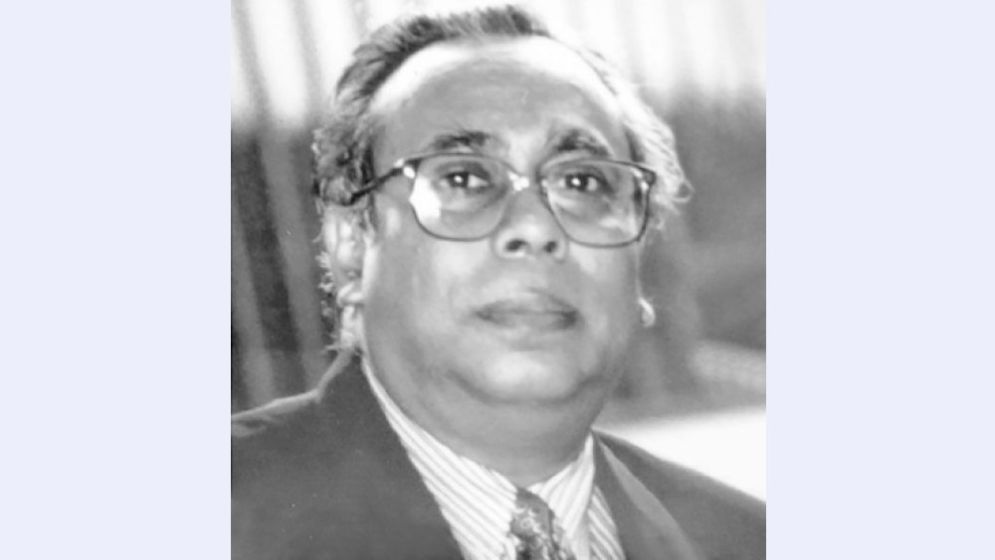
Dr Anwarullah Chowdhury
Published: 13 Apr 2026, 11:28 AM
In response to a written question from NCP Member of Parliament Hasnat Abdullah, Finance Minister Amir Khasru Mahmud Chowdhury has disclosed a list of the top 20 loan defaulters in the banking sector. He informed Parliament that, as of 31 December last year, the total volume of defaulted loans stood at Tk544,831.88 crore. Of this, Tk11,117.31 crore is owed by current members of the national parliament and their affiliated entities. Notably, 11 of the top 20 defaulting institutions belong to the controversial Chattogram-based S Alam Group.
During the tenure of the previous Awami League government, S Alam Group emerged as a dominant and deeply troubling force in the banking sector. With state backing, it took control of Islami Bank Bangladesh Limited and Social Islami Bank Limited, along with several other financial institutions—six in total. The group reportedly withdrew around Tk200,000 crore from these institutions. Much of this money, taken in the name of loans, was allegedly diverted away from intended projects, with significant sums reportedly laundered abroad.
It is worth noting that the default loan figures presented by Bangladesh Bank do not fully reflect reality. A substantial portion of non-performing loans remains concealed through legal manoeuvres, effectively removed from official classifications.
By September 2025, defaulted loans had reached Tk645,000 crore. Within just three months, this figure dropped by nearly Tk100,000 crore. However, this reduction was not due to genuine recovery of overdue installments. Rather, it resulted from a special policy introduced by Bangladesh Bank in October, allowing defaulters to reschedule loans with only a 1 per cent down payment, a two-year grace period and a total repayment term of ten years. Many defaulters took advantage of this provision.
Earlier, under former Finance Minister A H M Mustafa Kamal, a similar facility had been offered with a 2 per cent down payment and a one-year grace period. Loan rescheduling has thus become an effective tool for artificially presenting a cleaner balance sheet.
A System Made Lenient
Loan rescheduling is not unique to Bangladesh; it exists in all banking systems. However, its widespread use in Bangladesh dates back to 1991, when, following the BNP’s electoral victory, Bangladesh Bank published a list of 171 top defaulters. Alarmed, many borrowers sought to regularise their loans through rescheduling.
At the time, regulations allowed a loan to be rescheduled a maximum of three times, each for a three-year period, with progressively higher down payments—10 per cent, 20 per cent and 30 per cent respectively. Over time, however, these rules have been repeatedly relaxed.
During the Awami League era, internationally aligned banking regulations were weakened. When Mustafa Kamal assumed office, he famously declared that defaulted loans would not increase “by a single taka”. Economists initially welcomed the statement, expecting strict recovery measures. Instead, legal provisions were altered in such a way that borrowers could appear compliant without repaying instalments.
One economist aptly described this as “sweeping dirt under the carpet to make the house look clean”.
Policies governing loan write-offs were also diluted. Previously, a loan classified as bad for five years could be written off only after filing a case in court and maintaining full provisioning. A write-off did not mean the loan was forgiven; rather, it was removed from the main ledger while recovery efforts continued. Any recovered amount would be counted as profit.
Under subsequent changes, the eligibility period for write-offs was reduced first to three years and later to two. The requirement for full provisioning was scrapped, and for loans below Tk500,000, even the condition of filing a court case was removed.
When the Awami League came to power in 2009, defaulted loans stood at Tk22,481 crore. Since then, defaulters have received unprecedented advantages, far exceeding those offered by previous governments. Lists of defaulters have been published multiple times—once through national dailies and at least four times in Parliament—yet these disclosures have had little impact. Defaulters continue to operate freely in society.
Impact on the Economy
A segment of unscrupulous individuals has used political influence to secure loans, divert funds to other sectors and even launder money abroad. Meanwhile, genuine entrepreneurs struggle to obtain adequate financing.
According to a survey by the Bangladesh Bureau of Statistics, most businesses cite lack of capital as their primary challenge, largely due to limited access to bank loans.
Even after 55 years of independence, the country has failed to develop a nationally responsible bourgeois class. Instead, a predatory elite has emerged with state support. This class, lacking a sense of national responsibility, has deepened public suffering and widened economic inequality. Many so-called wealthy business figures have accumulated their fortunes through bank loan defaults and financial misconduct.
A report by Global Financial Integrity indicates that Bangladesh is among the top ten countries in South Asia for illicit financial outflows. Between 2013 and 2022, approximately $68 billion was siphoned abroad through trade misinvoicing.
Ten banks have reportedly signed 36 non-disclosure agreements to trace the overseas assets of six major business groups involved in such activities. Among them, S Alam Group tops the list with loans amounting to Tk225,000 crore, followed by Beximco Group with Tk53,042 crore.
A Distorted Banking System
With a large portion of investable funds tied up among a handful of corporate groups, most banks are now unable to extend new loans. Existing laws appear skewed in favour of defaulters. Those who repay loans regularly receive little benefit, while habitual defaulters are repeatedly granted relief measures.
There are broadly two types of defaulters: those who are unable to repay due to genuine hardship, and those who deliberately avoid repayment despite having the capacity. In Bangladesh, both obtaining loans and defaulting on them often require political and financial influence.
Genuine defaulters can be supported through appropriate restructuring and assistance. However, wilful defaulters—especially those involved in capital flight—must face strict consequences. Wilful default should be declared a criminal offence, and those responsible must be punished accordingly.
It is equally important to ensure accountability within banks. A section of bank officials, driven by personal gain, facilitates dishonest borrowers, thereby contributing to the rise of defaulted loans.
Time for Firm Measures
Wilful defaulters who are pushing the banking system towards crisis must not be spared. In addition to legal action, they should face social consequences. They should be barred from participating in state functions, and public awareness should be raised to discourage social and familial ties with them.
Restrictions could also be considered on educational and employment opportunities abroad for their children, and even on access to elite schools at home.
Only decisive and comprehensive measures—beyond merely publishing lists—can restore discipline and integrity in the banking sector.
The writer is a former Vice-Chancellor of University of Dhaka, currently Professor Emeritus, and a former Ambassador of Bangladesh to Bahrain.