


 For all latest news, follow the Daily Sun's Google News channel.


Middle East War and the Risks to Bangladesh’s Economy
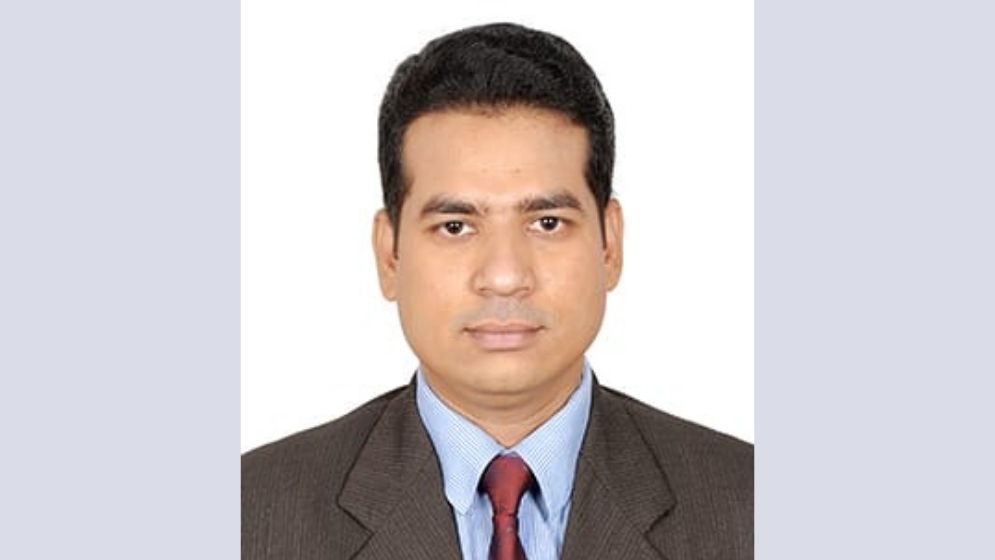
AHM Faruk
Published: 01 Mar 2026, 11:58 PM
In the geopolitics of the twenty-first century, the Middle East has always been known as a powder keg. But in recent times, the direct military confrontation among Iran, Israel, and the United States has not only set that keg ablaze, it has pushed the world to the brink of a catastrophe. When the roar of missiles is heard in the skies over the Persian Gulf, its echo does not remain confined to Tehran or Tel Aviv; that tremor is felt thousands of miles away—from the kitchens of ordinary people in Bangladesh to the corridors of state policymaking. The question arises: is this destructive war in the Middle East rushing toward Bangladesh’s economy like an irreparable “tsunami”?
For Bangladesh’s economy, the biggest and most immediate shock from the Middle East crisis will come through the energy sector. We know that a significant portion of the global oil supply is controlled by the Persian Gulf region. In particular, if the Strait of Hormuz—through which nearly 20 percent of the world’s daily oil demand is transported—becomes blocked due to war, then oil prices soaring beyond $150 to $200 per barrel would only be a matter of time.
For Bangladesh, this would be devastating. A large share of our electricity generation depends on furnace oil and diesel. If fuel prices rise, transportation costs will skyrocket, directly impacting the prices of essential goods. If the Bangladesh Petroleum Corporation is forced to import oil at higher prices and incurs massive losses, the government will inevitably raise domestic prices. As a result, everything from agricultural irrigation to industrial production could grind to a halt. In simple terms, the flames of Middle Eastern oil have the capacity to burn through our power and transport sectors.
The primary foundation of Bangladesh’s foreign exchange reserves is remittances sent by expatriates. Of our more than twelve million migrant workers, a vast majority are employed in Saudi Arabia, Qatar, the United Arab Emirates, Kuwait, and Bahrain—in the very heart of the Middle East. If the war becomes prolonged and Iranian missiles or drones target U.S. bases or critical installations in these countries, the safety of Bangladeshi workers there will face severe threats.
International media have already reported explosions near airports in Qatar and the UAE. In this Middle Eastern battlefield, the lives of expatriates now hang on a precipice. This humanitarian crisis is not merely a personal tragedy for migrant workers; it is also a dire warning for remittance inflows, the backbone of our economy. If expatriates abandon their workplaces out of fear, remittances could face a major collapse, which would be extremely difficult to manage.
The conflict in the Middle East will also disrupt global supply chains. Bangladesh imports the majority of its chemical fertilizers (particularly urea) and a large volume of consumer goods through Middle Eastern and Red Sea routes. If shipping in the Red Sea becomes risky due to war, insurance costs and freight charges will multiply several times. If imported fertilizer fails to arrive on time, domestic agricultural production—especially rice and vegetable cultivation—could face severe disruption. A shortage of fertilizer means a shortage of food. On the other hand, the prices of wheat, lentils, and edible oil could move beyond the reach of ordinary people. The inflationary pressure we are already enduring could spiral into an uncontrollable stage.
The ready-made garment (RMG) sector will also be vulnerable. If vessels traveling to Europe via the Red Sea and the Suez Canal are forced to change routes, the “lead time” for delivery could increase by 10 to 15 days. Due to higher costs, our competitive advantage in the international market would weaken, threatening the employment of millions of workers. Moreover, if the U.S. dollar strengthens amid global instability, the depreciation of the taka could further cripple the domestic economy.
At this critical juncture, Bangladesh faces not only economic challenges but also a significant opportunity to assume a role in global leadership. Turning the pages of history, we see that during the Iran-Iraq War of the 1980s, when global stability was shaken, Bangladesh’s then President, Shaheed Ziaur Rahman, played a bold and commendable role as a member of the OIC Peace Committee. He repeatedly visited Tehran and Baghdad to mediate between the two Muslim nations in conflict. His “peace diplomacy” elevated Bangladesh to a unique stature among world leaders.
In today’s grave crisis, Bangladesh’s newly elected Prime Minister Tarique Rahman can carry forward that glorious legacy of his father. As the worthy son of Shaheed President Ziaur Rahman, if he intensifies communication with global leaders and takes a strong mediating role in establishing peace in the Middle East, Bangladesh will not only safeguard its economic interests but also position Tarique Rahman himself among world leaders. If a peace-loving country like Bangladesh calls for dialogue instead of war, it will have a positive impact within the OIC and the United Nations.
This devastating war in the Middle East is no longer a distant regional conflict; it is now directly linked to Bangladesh’s struggle for economic survival. To confront this impending “economic tsunami,” policymakers must urgently adopt practical and emergency measures:
1. Energy Conservation and Austerity: Strict policies for energy conservation must be enforced at both government and private levels. Preventing waste and curbing luxury consumption to reduce pressure on fuel imports is the need of the hour.
2. Strict Market Monitoring: To prevent unscrupulous traders and syndicates from creating artificial shortages and raising prices under the pretext of war, maximum vigilance and legal enforcement must be ensured by the Trading Corporation of Bangladesh (TCB), the National Consumer Rights Protection Directorate, and other relevant agencies.
3. Alternative Import Sources and Routes: For fertilizers and essential commodities, reliance solely on the Middle East must be reduced. Alternative international markets and secure supply routes should be identified promptly to prevent domestic shortages.
4. Active ‘Peace Diplomacy’ and Leadership: Under the leadership of Prime Minister Tarique Rahman, Bangladesh must raise its voice against war and advocate for lasting peace in the Middle East at international forums such as the OIC and the United Nations. Following the path shown by Shaheed President Ziaur Rahman, Bangladesh’s timely diplomatic engagement can attract global attention and enhance national prestige.
5. Expatriate Safety and Labor Diplomacy: Strong “labor diplomacy” must be pursued to ensure the safety of millions of expatriate workers in conflict zones. For those affected or willing to return home, advance plans for swift repatriation and rehabilitation must be in place.
6. Agricultural Production and Food Security: To ensure food security, uninterrupted fertilizer supply and irrigation systems must be maintained at all costs. Increasing domestic production could be the primary shield against this global crisis.
In conclusion, if the flames in the Middle East are not extinguished, the world will fall into a prolonged recession. Our policymakers must remember that after a tsunami strikes, resistance is far more difficult than preparation beforehand. Advance readiness and courageous leadership to reduce the intensity of the blow remain the only path to overcoming the present crisis.
The writer is a journalist, columnist and political analyst. He can be reached at [email protected]