


 For all latest news, follow the Daily Sun's Google News channel.


Bangladesh is celebrating, and this time the celebration feels different. It is not only the happiness of a winning camp. It is the relief of ordinary citizens who feel that their presence mattered, that their choices were counted, and that their voices travelled from the polling booth into the nation’s future. The Bangladesh Nationalist Party (BNP) has won this election. Jamaat-e-Islami and its alliance participated in the democratic contest, and this election did not place them in the winning column this time. That, too, is part of the civic rhythm. Democracy is not a reward for any one group; it is a method for the whole nation to decide, again and again, how it wishes to be governed. The mature reading of an election, therefore, is not a dramatic storyline of heroes and villains. It is something closer to a national apprenticeship in responsibility. We learn, with every electoral cycle, what it means to disagree without disowning one another, to compete without destroying the shared house we live in. The festive mood is beautiful precisely because it suggests a deeper confidence: political change can be pursued through constitutional means and citizens can shape tomorrow without needing to tear apart today.
If we are honest, this election does not stand alone. It stands on a wound and on a vow. July 2024 is still close in the national memory, not as a slogan but as a lived experience of loss, courage and longing for a more accountable public life. When people speak of the July martyrs, they are not speaking about party identity. They are speaking about a moral debt that the nation carries. Their sacrifice asks a simple question that is harder than it sounds: Will we build a republic worthy of those who paid the highest price for the right to demand change? That question does not belong to the new government alone. It belongs to every home, every office, every classroom, every market stall, every newsroom, every mosque, every cultural gathering, and every citizen who wants the future to be cleaner than the past. The election offered a lawful path forward, but lawfulness is only the first step. The deeper purpose is renewal. A society that has witnessed pain and still chooses ballots is a society that has not given up on the idea of reform. That choice is profound. It converts grief into civic intention. It turns sorrow into a shared promise: never again should public life become so heavy that people feel they have no voice except through sacrifice.
Now the country enters the more difficult phase, the phase that rarely receives fireworks. Governing begins. Building begins. Reform begins, not as an announcement, but as a sequence of visible practices. The BNP has received a mandate, and a mandate is not a crown. It is a contract. It is also a test of maturity: whether power will be treated as stewardship, whether institutions will be strengthened rather than personalised, and whether decisions will be made in daylight rather than behind curtains. At the same time, a healthy democracy does not ask defeated parties to vanish; it asks them to remain within the rules and contribute to the public conversation from where they stand. Jamaat-e-Islami and its alliance, like all political participants, are part of the democratic landscape. Their supporters are not outsiders. They are citizens. Their dignity is not conditional. National unity requires us to stop thinking of politics as a border that divides the nation into real people and lesser people. There is only one category that matters: the citizen. Reform needs the patience of supporters and the scrutiny of critics. It needs the discipline of institutions and the vigilance of civil society. It needs a culture in which disagreement is allowed, but hatred is not rewarded. When a country can hold differences without turning them into discrimination, it becomes stronger than any single election result.
The reform Bangladesh needs is both structural and moral, and these two must move together. Structurally, reform means making public systems reliable enough that citizens do not need personal connections to receive basic fairness. It means recruitment based on merit, so that a young graduate feels the nation is not a locked room. It means public procurement that is transparent so that development is not quietly taxed by corruption. It means a justice system that is trusted so that the weak are not forced to negotiate with fear. It means civic services that work the same way for everyone, so that dignity is not rationed by influence. Yet even the best institutional architecture fails if the culture beneath it remains permissive towards dishonesty. Moral reform begins in the ordinary places where the nation is actually built: the moment a citizen refuses to pay a bribe even when it would make life easier; the moment an official refuses to ask for one even when it would bring private benefit; the moment a teacher grades fairly; the moment a journalist checks facts before publishing; the moment a business owner chooses lawful practice over shortcuts; the moment a community refuses to humiliate a neighbour for political differences. Corruption is not only a financial crime; it is a theft of possibility. It steals the future by turning public life into a marketplace of favours. A new Bangladesh with “lots of possibilities” will not emerge simply because a new party leads the government. It will emerge when honesty becomes socially respected, when wrongdoing becomes socially embarrassing, and when citizens collectively decide that integrity is not an idealistic hobby but the minimum standard of patriotism.
This is where the theme of hope becomes serious, not sentimental. Hope is not the belief that things will automatically improve. Hope is the decision to act as if improvement is possible and therefore required. Trust works the same way. Trust is not blind faith; it is a relationship built through consistent proof. The festive mood will remain meaningful if it matures into a national ethic of mutual responsibility. Helping each other is not only charity. It is nation-building. It is refusing discrimination in everyday life, refusing to reduce people to labels, and refusing to treat diversity as a problem that must be managed rather than a treasure that must be harmonised. Bangladesh’s unity has never depended on everyone thinking the same way. It has depended on a shared commitment to belonging. The national dream now should be ambitious and practical at the same time: a Bangladesh where institutions work, where public money serves the public, where differences do not become dangerous, where politics do not poison neighbourliness, where a child’s future is shaped more by merit than by connections, and where the sacrifices of July are honoured through a cleaner civic culture. If that dream becomes our common project, then this election will be remembered as more than a victory for the BNP and more than a defeat for any alliance. It will be remembered as the moment Bangladesh chose to grow up into its own promise and chose to repay its martyrs not with speeches, but with a republic that finally learns to live honestly with itself.
_______________________________________
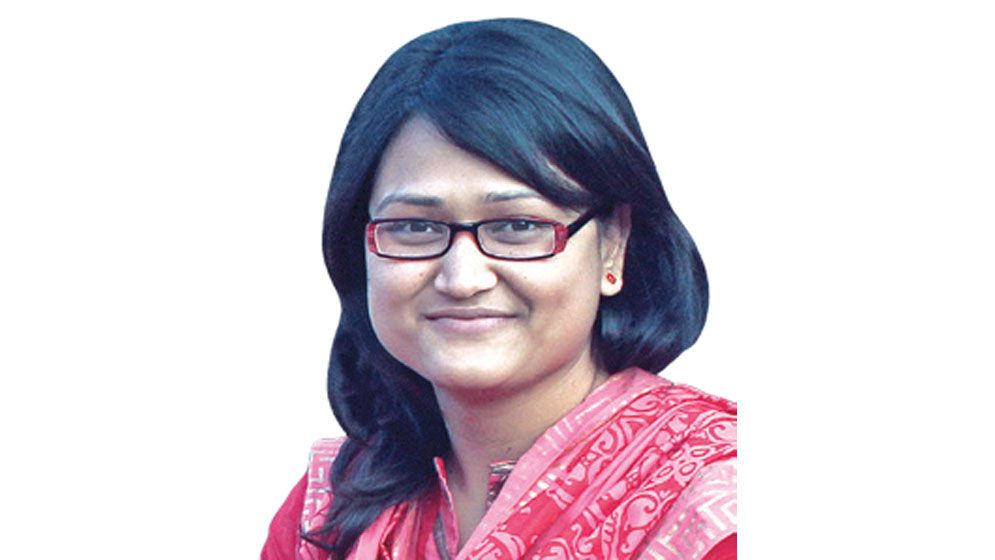
The writer is an Assistant Professor in the Department of Philosophy at IUBAT and currently on study leave, residing in Oslo, Norway