


 For all latest news, follow the Daily Sun's Google News channel.


Tarique Rahman must find a way to understand the pulse of the youth of Bangladesh
Eresh Omar Jamal, Indian Express
Published: 28 Dec 2025, 03:32 AM
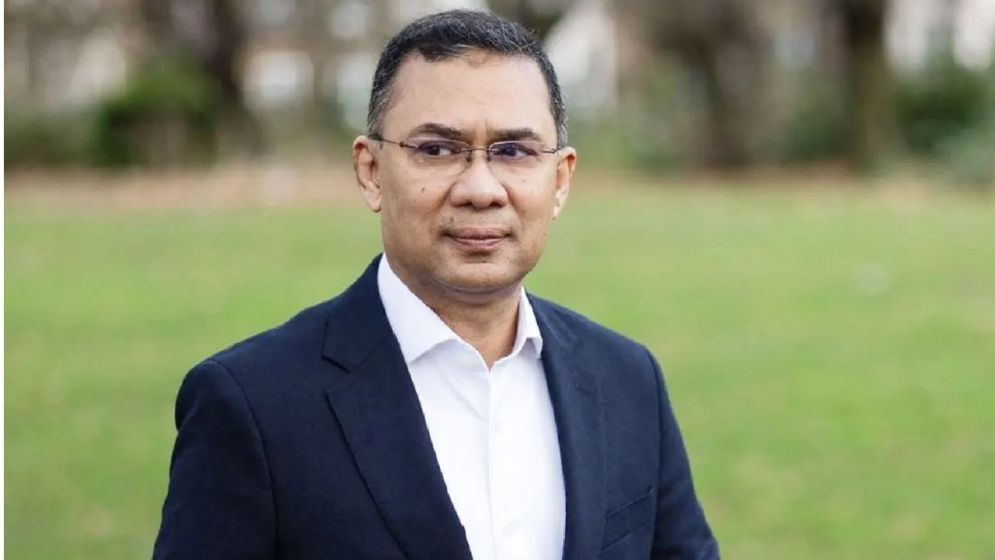
On 25 December, Tarique Rahman, the acting chairman of the
Bangladesh Nationalist Party (BNP), returned to Bangladesh after a 17-year
exile in London, imposed in September 2008 by an unelected, military-backed
government. Before being forced onto a London-bound flight, he was reportedly
subjected to physical torture in custody and compelled to sign an undertaking
pledging permanent withdrawal from politics. More than a decade and a half
later, Rahman’s return was marked by millions of supporters turning out to
receive him — an unmistakable signal of his enduring political relevance.
Rahman assumed the role of acting BNP chairman while his
mother, former prime minister Khaleda Zia, was imprisoned under Sheikh Hasina’s
Awami League (AL) government. Her treatment during this period stands as one of
the most shameful episodes in Bangladesh’s recent political history. And Rahman
himself was named in more than 80 cases under that regime.
Against this backdrop, Rahman’s conduct since the fall of
the authoritarian AL government has reflected growing political maturity.
Rather than invoking retribution, he has, on multiple occasions, called for
restraint, unity, and reconciliation — language rarely heard in a political
culture shaped by cycles of vengeance. His emphasis on national unity and democratic
discipline hopefully suggests an effort to reframe the country’s political
future rather than merely settling past scores.
In a brief speech following his return, Rahman again
appealed for unity among democratic forces, stressing the need to ensure peace,
order, and the safety of citizens. He also alluded to a “plan” to meet the
people’s aspirations, though he stopped short of providing details.
What is clear is that Bangladesh now stands at a decisive
juncture. In this moment of political transition, Rahman is no longer simply a
returning exile or opposition figure. He may well emerge as one of the most
consequential actors shaping the country’s future direction. Whether that
direction leads towards democratic renewal or renewed instability will depend largely
on how he chooses to wield his influence.
Notably, his return was preceded by the murder of political
activist Sharif Osman Bin Hadi, along with other incidents of unrest across the
country. Clearly, both domestic and foreign forces appear to be seeking to
destabilise Bangladesh, most likely to jeopardise the upcoming elections
scheduled for February 12, 2026. Meanwhile, although the interim government
assumed responsibility amid high public expectations, its performance has
nonetheless proved to be far more questionable than initially anticipated. As a
result, the governance expectations of Bangladeshis since the July uprising
remain unmet. Given that the BNP is the clear favourite to win the coming
elections, Rahman and his party will face significant pressure to ensure that
good governance is finally established in the country.
The BNP, meanwhile, is also in urgent need of
soul-searching. Accusations of extortion and other criminal behaviour by its
activists — similar to those levelled against other parties — have persisted
since the AL’s fall. Many analysts therefore believe that Rahman’s foremost
task will be to bring party leaders and activists under a single command by
curbing criminal behaviour, reducing internal divisions, restoring discipline,
and ensuring that party decisions are enforced at all levels — no easy task
given the entrenched structures and practices of Bangladesh’s political
parties.
Another challenge for him — if history is any indication —
will be to ensure that he is not surrounded by sycophants who seek to build the
party around a cult of personality centred on him. Hasina’s obsession with
cultivating such a cult around herself and her late father, and the
consequences that ultimately followed, should serve as a stark warning, even if
there is no guarantee that lessons will be learnt.
Finally, a broader look at developments across southern Asia
— including Nepal, Sri Lanka, Indonesia, and Thailand — highlights perhaps the
most pressing challenge Rahman faces: The condition and aspirations of young
people. Across the region, governments have been shaken by youth-led movements.
The causes are clear, even if they vary in form and intensity. Corruption,
mismanagement, poor economic prospects, and precarious futures have pushed young
people in particular — and citizens more broadly — to a point where they feel
that “enough is enough.”
Bangladesh is currently experiencing a demographic dividend,
meaning it has a larger youth population than any other age group. Yet many
young people face a future that appears bleak. Opportunities for upward
mobility are scarce, and much of their anger stems from this reality,
compounded by a growing awareness of rights that governments have ignored for
decades.
Under these circumstances, Rahman must find a way to
understand the pulse of young Bangladeshis and overcome entrenched special
interest groups that would surely resist structural changes aimed at creating a
more “meritocratic Bangladesh,” in line with the demands of the ordinary youth,
against the desire of old elites to cling to positions of power and influence.
The writer is a Bangladeshi analyst, currently based in
Canada